
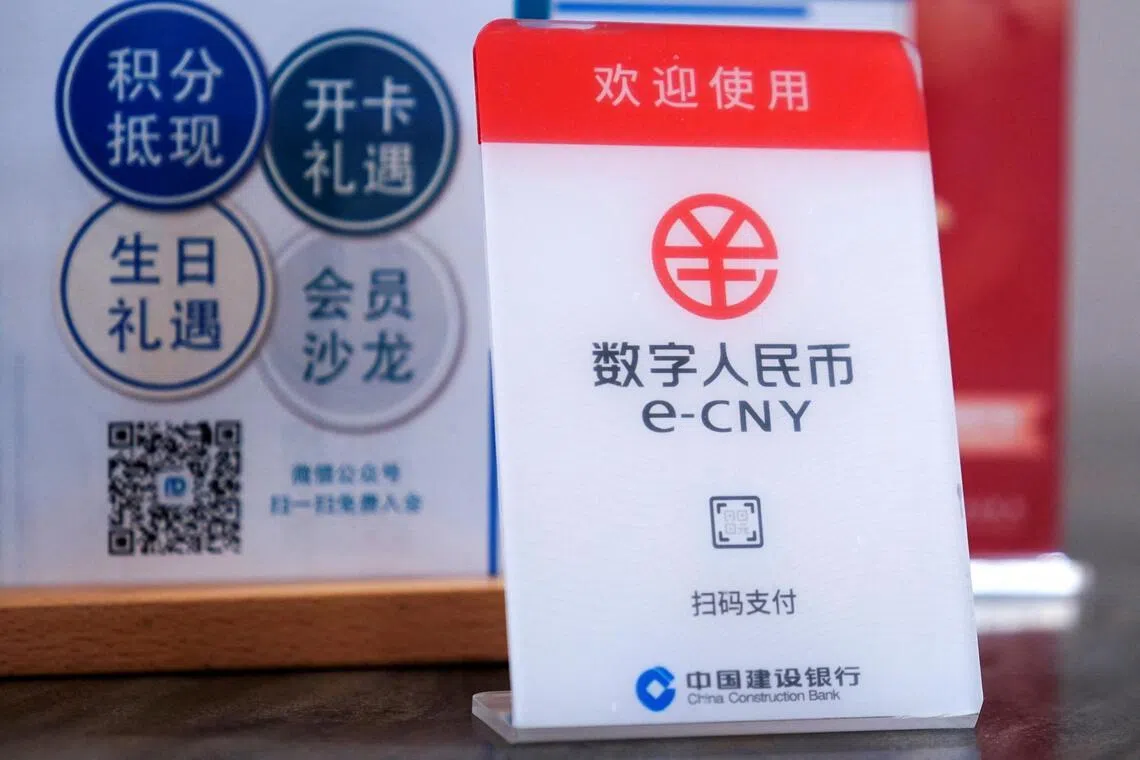
Digital Renminbi Expansion | 12 New Banks Enable Cross-Border Payment Savings for Sellers
- PBOC authorizes 22 total banks to handle e-CNY; sellers gain access to lower-cost payment corridors outside SWIFT; potential 2-4% fee reduction on China-Asia trade routes
Overview
China's central bank is fundamentally reshaping cross-border payment infrastructure by authorizing 12 additional banks to handle digital renminbi (e-CNY) transactions, expanding the total authorized network to 22 institutions as of March 2025. This expansion includes major players like Shanghai Pudong Development Bank, China Everbright Bank, and Bank of Ningbo—seven joint-stock banks and five city commercial banks—signaling accelerated rollout of state-controlled digital currency infrastructure designed to operate independently from the US dollar-dominated SWIFT system.
For cross-border e-commerce sellers, this represents a critical payment optimization opportunity. Digital renminbi transactions have reached 16.7 trillion yuan ($3.1 trillion) cumulatively since 2019 launch, with 128 trillion yuan in total payments during 2025 alone. The PBOC's Shanghai operation center (established 2025) and interest-bearing e-CNY holdings (effective January 1, 2025) signal aggressive internationalization strategy. Sellers sourcing from China or trading within Asia-Pacific can expect faster settlement times (T+0 to T+1 vs. 3-5 days for traditional wire transfers) and reduced intermediary fees—potentially saving 2-4% on transaction costs compared to USD-based corridors. For a seller processing $500K monthly in China-Asia trade, this translates to $10K-20K annual savings.
The immediate payment advantage concentrates in B2B cross-border settlements rather than retail commerce. While platforms like Alipay and WeChat Pay already dominate domestic payments, e-CNY's strategic value lies in establishing alternative settlement infrastructure for supplier payments, invoice financing, and working capital flows. Sellers with China-based suppliers can now negotiate payment terms denominated in e-CNY, eliminating FX conversion spreads (typically 0.5-1.5%) and reducing exposure to USD volatility. The expansion of authorized banks creates competitive pressure on payment fees—expect traditional cross-border payment providers (Wise, Remitly, PayPal) to reduce margins on China-Asia corridors by 15-25% within 6-12 months to retain market share.
Strategic implications for seller cash flow optimization: Sellers can now structure supplier payments through e-CNY-enabled banks to unlock working capital improvements. Invoice financing against e-CNY receivables will likely emerge as a new product category, with fintech lenders offering 8-12% APR (vs. 12-18% for traditional trade finance). The interest-bearing feature of e-CNY holdings creates a cash management arbitrage—sellers can park settlement proceeds in e-CNY accounts earning 1.5-2.5% annual yield while awaiting reinvestment, improving cash conversion cycles by 3-5 days. For sellers with $1M+ in monthly China trade, this unlocks $12K-25K in annual financing cost savings plus yield generation.
Questions 8
How can sellers reduce payment fees by using digital renminbi for China-Asia trade?
The PBOC's expansion to 22 authorized banks enables sellers to process supplier payments and customer settlements through e-CNY corridors, reducing transaction costs by 2-4% compared to USD-based SWIFT transfers. Traditional cross-border payments charge 0.5-1.5% in FX conversion spreads plus 0.3-0.8% intermediary fees; e-CNY eliminates FX conversion entirely and reduces intermediary fees to 0.1-0.3% through direct bank-to-bank settlement. For a seller processing $500K monthly in China-Asia trade, this saves $10K-20K annually. The 22 authorized banks (including Shanghai Pudong Development Bank, China Everbright Bank, Bank of Ningbo) now offer competitive e-CNY payment corridors, creating pricing pressure on traditional providers like Wise and PayPal.
Which seller segments benefit most from e-CNY payment infrastructure expansion?
B2B cross-border sellers with $500K+ monthly China-Asia trade benefit most immediately, as the PBOC's expansion targets B2B settlement infrastructure rather than retail commerce. Sellers sourcing from China (electronics, apparel, home goods manufacturers) can negotiate supplier payment terms in e-CNY, eliminating FX conversion spreads and reducing payment settlement time from 3-5 days to T+0/T+1. Sellers exporting to Asia-Pacific markets can also accept e-CNY payments from regional customers, avoiding SWIFT intermediaries. The 22 authorized banks include major institutions serving SME exporters, making e-CNY accessible to sellers with $100K-$5M annual trade volume.