





Palantir's Enterprise Data Platform Powers Supply Chain Intelligence for E-Commerce Sellers
- Morgan Stanley projects 39% revenue growth through 2030; Ontology technology creates competitive moat for sellers adopting AI-driven inventory and logistics optimization






















Overview
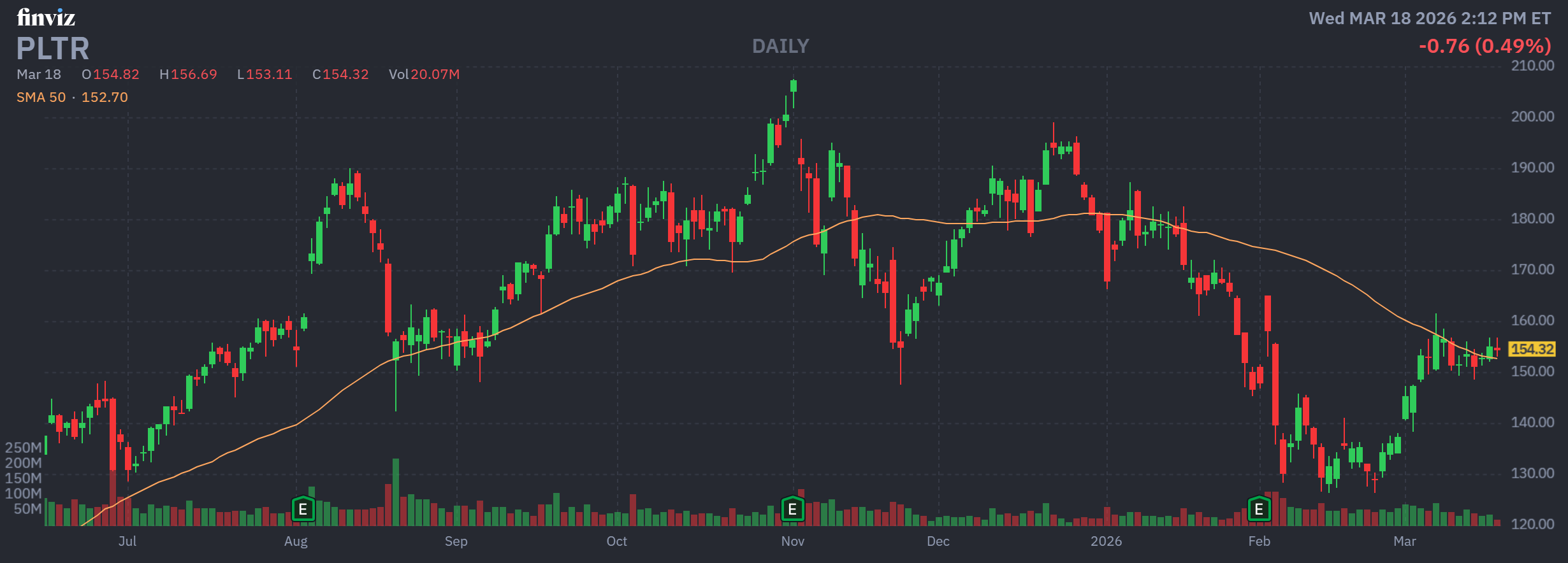
Palantir Technologies (PLTR) represents a critical infrastructure play for enterprise e-commerce operations, with Morgan Stanley maintaining a $205 price target (30% upside from $155.68 March 19 close) despite valuation concerns at 64x 2027 free cash flow. The core investment thesis centers on Palantir's Ontology technology—a real-time data unification platform that maps raw data into actionable business intelligence—which Morgan Stanley projects will drive 39% revenue compounding through 2030 with operating margins reaching 68%.
For cross-border e-commerce sellers, this development signals accelerating adoption of AI-powered supply chain intelligence tools. Palantir's Foundry platform, which integrates enterprise data sources and enables automated decision-making, directly addresses seller pain points in inventory optimization, demand forecasting, and logistics routing. The company's 20+ years of deployments in demanding environments (U.S. intelligence agencies, NATO allies) have created institutional knowledge competitors cannot easily replicate—a structural advantage that translates to platform stickiness and pricing power. Morgan Stanley's field checks confirm sustained U.S. commercial momentum, indicating enterprise customers are increasingly willing to invest in data infrastructure.
The competitive advantage lies in Ontology's ability to create organization-specific domain knowledge that cannot be automated or purchased off-the-shelf. For sellers managing complex supply chains across multiple regions, this means Palantir's platform can model real-world relationships between inventory, demand signals, and logistics networks in ways generic tools cannot. The technology enables sellers to reduce time-to-value in deploying AI-driven optimizations—critical for mid-market and enterprise sellers competing against Amazon's internal logistics advantages. Morgan Stanley's long-term model projects EPS growth from $0.75 (2025) to $1.92 (2027), reflecting confidence in sustained customer acquisition and margin expansion to 57.5% in fiscal 2026.
However, Morgan Stanley flags two material risks affecting seller adoption timelines. First, Palantir's reliance on large deals with few customers creates uneven financial performance—meaning platform availability and feature roadmap could shift based on enterprise customer priorities rather than SMB seller needs. Second, potential margin expansion slowdowns could reignite debates about whether Palantir is a software or consulting company, affecting pricing models and implementation costs for sellers. The critical test occurs May 11 when Palantir reports Q1 2026 results; sustained beats on top-line and bottom-line metrics, plus field confirmation of accelerating Ontology deployment, would validate the investment thesis and likely accelerate seller platform adoption.
Questions 8
How does Palantir's Ontology create structural lock-in for sellers?
According to Morgan Stanley's analysis, Ontology's competitive advantage stems from its ability to model organization-specific relationships between data sources that cannot be easily replicated. Once sellers invest in building high-quality Ontology models for their supply chains—mapping inventory, demand, logistics, and customer data into a unified real-time model—switching to competitors becomes prohibitively expensive. The platform's deep domain knowledge requirements mean sellers develop proprietary optimizations and workflows specific to their business, creating switching costs. Morgan Stanley's interviews with forward-deployed engineers confirm that this organization-specific knowledge cannot be automated or purchased off-the-shelf, giving Palantir pricing power and customer retention advantages that benefit long-term investors.
What are the key risks to Palantir's platform adoption among e-commerce sellers?
Morgan Stanley flags two material risks: first, Palantir's reliance on large deals with few customers creates uneven financial performance, meaning platform availability and feature roadmap could shift based on enterprise customer priorities rather than SMB seller needs. Second, potential margin expansion slowdowns could reignite debates about whether Palantir is a software or consulting company, affecting pricing models and implementation costs for sellers. Additionally, Palantir's 20+ years of deployments in demanding environments (U.S. intelligence agencies, NATO allies) have created institutional knowledge competitors would need years to replicate, but this also means the platform's design may prioritize government/defense use cases over e-commerce workflows. Sellers should evaluate whether Ontology's complexity justifies implementation costs for their specific supply chain challenges.