




International Institutional Accountability Crisis | Geopolitical Risk Impact on Global Trade Compliance
- ICC faces existential credibility crisis amid conflicting investigative standards; 125-member court paralyzed by US sanctions and prosecutor absence; sellers must monitor regulatory uncertainty in conflict-affected regions
Overview
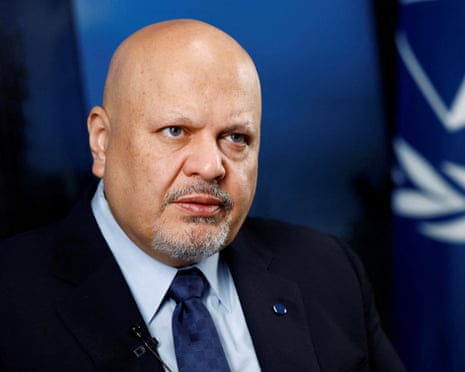
The International Criminal Court faces a critical institutional credibility crisis as its governing body navigates conflicting investigative standards regarding allegations against Chief Prosecutor Karim Khan. The March 2026 disciplinary review reveals fundamental tensions between the UN Office of Internal Oversight Services' fact-finding methodology and an independent judges' panel applying "beyond reasonable doubt" criminal standards—a divergence that exposes weaknesses in international accountability mechanisms. Khan has been on leave since May 2025 following allegations of non-consensual sexual contact, with the UN inquiry identifying factual basis for claims while the judges' 85-page report concludes insufficient evidence of misconduct under criminal thresholds.
This institutional paralysis occurs amid severe geopolitical pressures: the United States imposed sanctions against Khan and other ICC prosecutors for investigating alleged Israeli war crimes in Gaza, resulting in Prime Minister Netanyahu's indictment. The court's 125-member structure excludes major powers (US, China, Russia), all of which oppose Khan's arrest warrants for sitting leaders including Putin and Netanyahu. This creates a cascading credibility problem—the ICC simultaneously faces accusations of selective prosecution while its leadership faces sexual misconduct allegations, undermining its legitimacy as the "world's court of last resort for international crimes."
For cross-border sellers and supply chain operators, this institutional crisis signals elevated regulatory uncertainty in conflict-affected regions. The ICC's compromised authority weakens enforcement of international humanitarian law, potentially destabilizing trade compliance frameworks in Gaza, Ukraine, and other conflict zones. Sellers operating in or sourcing from regions under ICC investigation face compounding risks: geopolitical sanctions (like US restrictions on Khan), supply chain disruptions from conflict, and regulatory ambiguity regarding sanctions compliance. The March 24, 2026 Assembly decision on Khan's fate remains pending, with no official confirmation despite media reports of potential exoneration. This prolonged uncertainty—combined with the court's demonstrated inability to resolve investigative conflicts—creates operational risk for sellers managing compliance in jurisdictions where ICC authority is contested or where geopolitical actors actively undermine the court's legitimacy.
The broader implication: international institutions designed to provide predictable legal frameworks are increasingly politicized and unreliable, forcing sellers to develop redundant compliance systems and diversify supply chains away from high-uncertainty regions. Sellers should monitor the Assembly's final decision and assess whether ICC credibility recovery affects their risk exposure in conflict-adjacent markets.
Questions 7
How does the ICC's institutional crisis affect cross-border sellers operating in conflict regions?
The ICC's compromised credibility and leadership paralysis (Khan on leave since May 2025, pending March 24, 2026 disciplinary decision) weakens enforcement of international humanitarian law in conflict zones like Gaza and Ukraine. For sellers sourcing from or shipping to these regions, this creates regulatory ambiguity: the court's authority to enforce sanctions compliance is questioned by major powers (US, China, Russia), making it unclear which international legal standards apply. Sellers should implement redundant compliance systems and avoid supply chain concentration in regions where ICC authority is contested, as geopolitical actors actively undermine the court's legitimacy. The US sanctions against Khan himself demonstrate how institutional leadership can become a sanctions target, creating cascading compliance risks.
How should sellers adjust supply chain strategy given the ICC's geopolitical paralysis?
Sellers should implement three immediate adjustments: (1) Diversify sourcing away from regions where ICC authority is contested (Gaza, Ukraine, Myanmar) and develop alternative supply routes through non-conflict-adjacent regions; (2) Establish redundant compliance monitoring systems that track both ICC decisions and US/EU/UN sanctions independently, rather than relying on a single institutional framework; (3) Monitor the March 24, 2026 Assembly decision and reassess risk exposure if Khan is exonerated (signals institutional weakness) or removed (signals leadership instability). The court's 125-member structure and exclusion of major powers means sellers cannot rely on ICC authority alone for regulatory predictability. Consider shifting inventory allocation away from high-uncertainty regions and increasing compliance buffer costs (5-10% margin allocation) for conflict-adjacent markets until institutional credibility is restored.