
Freight Costs Surge 23% Despite Flat Volumes | Seller Logistics Crisis
- Spot rates jump to $2.01/mile amid fuel spikes; contract repricing imminent for 3PL-dependent sellers
Overview
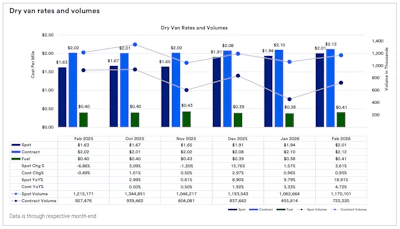
The freight market is experiencing a supply-led cost crisis disconnected from demand fundamentals. According to the U.S. Bank Freight Payment Index and DAT Freight Analytics data from February 2026, spot linehaul rates climbed 23.3% year-over-year (March 2025–February 2026) while spot volumes fell 3.7%—a critical divergence signaling carrier selectivity rather than demand growth. Spot rates specifically jumped from $1.65/mile in November 2025 to $2.01/mile by February 2026, with December 2025 marking a dramatic 15.76% month-over-month spike. This surge is driven by Middle East geopolitical tensions inflating fuel costs, forcing 94% of carriers (per March 2026 DAT Convoy Platform survey of 543 carriers) to materially adjust load decisions, with 45% pursuing shorter routes and lighter loads to preserve margins.
The contract-to-spot rate compression creates immediate repricing pressure for e-commerce sellers. The premium has collapsed from $0.39/mile one year ago to just $0.11/mile currently, eliminating the buffer that historically protected contract rates from spot volatility. Contract rates edged upward 5% year-over-year ($2.02 to $2.12/mile), yet contract volumes dropped 22.1%—indicating carriers are rejecting unprofitable freight and forcing renegotiations. For sellers relying on 3PL providers and freight forwarders, this means existing contracts will reprice sharply when renewal dates arrive, typically within 30–90 days. Ken Adamo, chief of analytics at DAT Freight Analytics, emphasized that without fuel hedging, surcharges, or contract escalation clauses, carriers face accelerating attrition and must demand higher spot rates to survive.
Immediate logistics actions are critical to mitigate cost impact. Sellers should: (1) Audit current 3PL contracts immediately to identify repricing dates and negotiate fuel surcharge caps before rates reset; (2) Shift to shorter-haul regional consolidation—align inventory positioning to reduce per-mile costs by 8–15% through regional fulfillment centers rather than long-haul truckload moves; (3) Evaluate LTL (less-than-truckload) alternatives for lighter shipments, as 45% of carriers now favor lighter loads, making LTL pricing more competitive; (4) Lock in Q2–Q3 capacity now before summer peak season repricing; (5) Diversify carrier relationships to avoid single-carrier dependency as selective freight acceptance accelerates. For cross-border sellers, consider shifting inbound consolidation to Mexico or Canada to reduce domestic trucking miles by 20–30%, offsetting fuel-driven rate increases through route optimization.
Questions 8
Why are freight costs rising when shipping volumes are actually declining?
Freight costs are rising due to fuel price spikes tied to Middle East geopolitical tensions, not demand growth. The U.S. Bank Freight Payment Index shows spot rates jumped 23.3% year-over-year while spot volumes fell 3.7%—a supply-led market where carriers are becoming selective. According to DAT Freight Analytics, 94% of carriers report fuel costs materially affect their load decisions, forcing them to pursue shorter routes and lighter loads. This means carriers are rejecting unprofitable freight and demanding higher rates to compensate for pump prices, creating a cost crisis independent of seller demand. Sellers must renegotiate contracts immediately before repricing cycles hit.
What is the contract-to-spot rate premium and why does its collapse matter?
The contract-to-spot premium—the price difference between long-term contracts and spot market rates—has compressed from $0.39/mile one year ago to just $0.11/mile today. This $0.28/mile collapse eliminates the buffer that historically protected contract rates from spot volatility. When the premium is wide, contract rates stay stable even if spot rates spike; when compressed, contract rates must follow spot rates upward. With contract volumes down 22.1% and carriers rejecting unprofitable freight, sellers face imminent repricing when contracts renew. This leaves shippers with minimal margin to absorb volatility, making budget flexibility essential.