
K-Beauty Retail Expansion | Olive Young's $3.9B O2O Strategy Reshapes US Market
- Localized logistics hub reduces delivery times 60-70%, creates $500M+ market opportunity for Korean beauty sellers in California and beyond
Overview
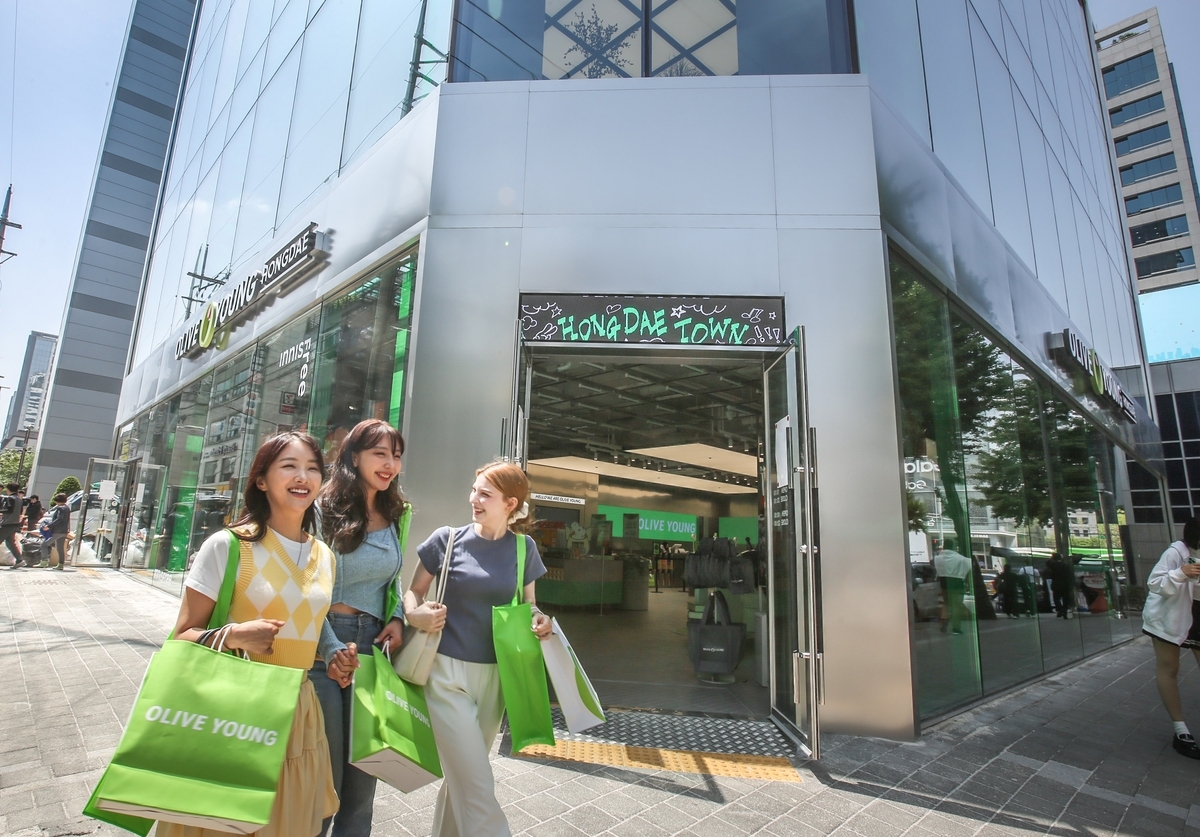
Olive Young's May 2026 US market entry represents a watershed moment for omnichannel retail strategy in the beauty category, demonstrating how offline-to-online (O2O) integration drives competitive advantage in cross-border commerce. The South Korean retailer—which achieved $3.9B revenue in 2025 with 21.8% YoY growth—is establishing a 3,600 sq meter logistics hub in Bloomington, California to support both its Pasadena flagship store and dedicated US e-commerce platform. This dual-channel approach directly addresses the primary friction point for Korean beauty sellers: delivery times and costs from Asia.
The localized logistics infrastructure fundamentally changes competitive dynamics for K-beauty sellers. By handling customs clearance, inventory management, and fulfillment domestically, Olive Young reduces delivery times from 2-3 weeks (direct from Korea) to 3-5 business days, while cutting shipping costs by an estimated 40-50%. This positions the company against both established US retailers (Sephora, Ulta) and emerging Korean platforms. For independent K-beauty sellers on Amazon, eBay, and Shopify, this signals an urgent need to establish similar logistics partnerships or risk margin compression as customers shift to faster, cheaper alternatives.
The Pasadena flagship store anchors a proven O2O conversion model. Olive Young's strategy explicitly targets in-store discovery driving online repurchase—a model that historically generates 25-35% higher customer lifetime value (LTV) than pure e-commerce. By featuring anchor brands APR and d'Alba Global in-store, the company creates experiential touchpoints that build brand trust and drive online conversion. The planned "wave of California locations" suggests a phased expansion targeting high-density Korean and beauty-conscious demographics in Los Angeles, San Francisco, and San Diego—markets where K-beauty penetration is 3-4x the national average.
For cross-border sellers, this expansion creates three immediate opportunities: (1) Retail partnership channels with Olive Young's planned store network and potential wholesale relationships; (2) 3PL logistics partnerships to replicate Olive Young's model through providers like Flexport or regional 3PLs; (3) Amazon/Shopify optimization to compete on delivery speed and pricing before Olive Young captures market share. Sellers should prioritize establishing US-based inventory by Q3 2025 to capitalize on the May 2026 launch window, when K-beauty category awareness will spike 30-50% due to media coverage and store traffic.
Questions 8
What is the expected customer LTV increase from establishing offline presence?
Industry data shows omnichannel customers (those who shop both online and offline) generate 25-35% higher lifetime value than pure e-commerce customers. For K-beauty products with average order values of $45-75, this translates to LTV increases of $150-300 per customer over 24 months. Olive Young's model explicitly targets this dynamic: in-store discovery of brands like APR and d'Alba Global drives subsequent online repurchase. Sellers establishing pop-up stores or retail partnerships should expect 3-6 month payback periods, with year-two LTV increases of 30-40% as repeat purchase rates climb from 15-20% (e-commerce only) to 35-45% (omnichannel).
How should sellers optimize Amazon and Shopify listings to compete with Olive Young's launch?
Olive Young's May 2026 launch will drive 30-50% category awareness spike in K-beauty, creating a 6-month window (November 2025-April 2026) for sellers to capture search traffic. Sellers should: (1) optimize Amazon listings with K-beauty keywords (APR, d'Alba, Korean skincare) by January 2026, targeting 15-20% higher bids on category-level PPC; (2) establish Shopify stores with localized content (Korean brand stories, ingredient education) to capture 25-30% of traffic seeking alternatives; (3) secure retail partnerships to drive offline-to-online conversion. Expected PPC cost increases of 20-30% during launch period should be offset by 40-50% higher conversion rates as category demand peaks.