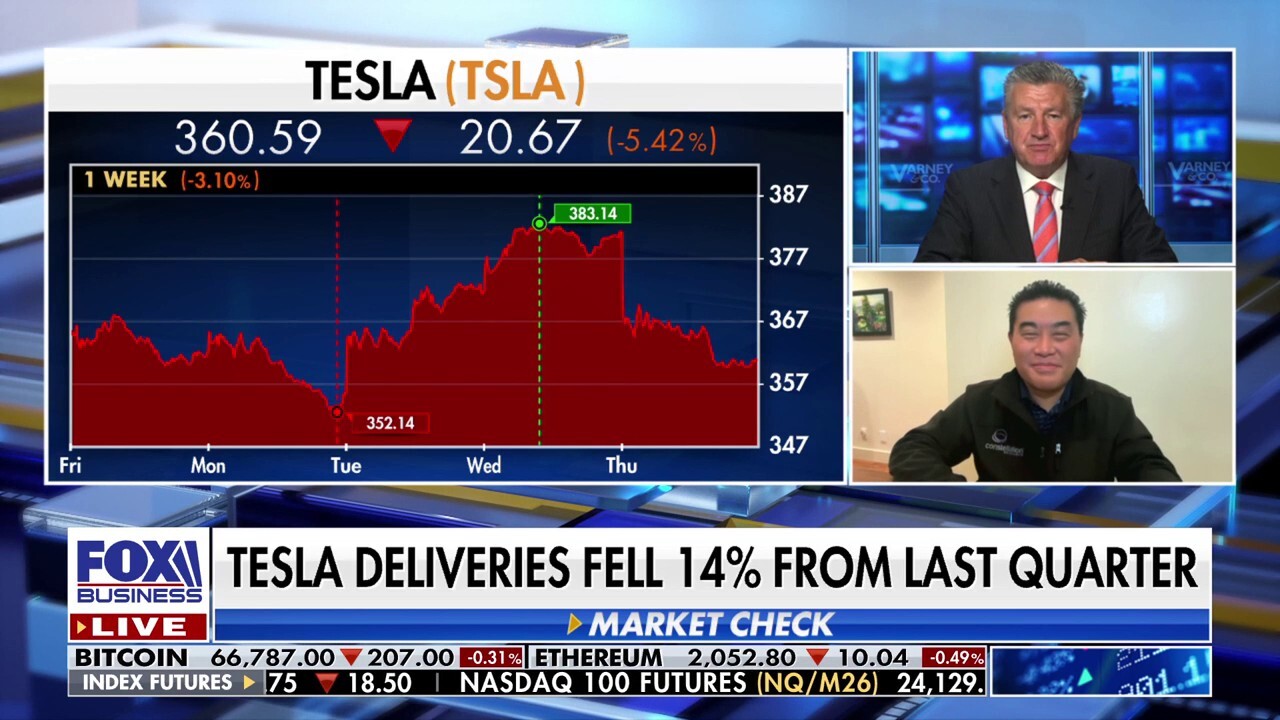


Tesla's 2025 financial deterioration—with net income collapsing 47%, operating income down 38%, and vehicle deliveries declining 9%—signals a critical inflection point in the electric vehicle supply chain that directly impacts cross-border e-commerce sellers in automotive components, battery technology, and manufacturing equipment sectors. The company's valuation disconnect (trading at 327x trailing P/E on just 4% profit margins) reflects investor expectations for robotaxi and AI platforms that remain largely theoretical, with prediction markets assigning only 12.5% probability to California robotaxi launch by June 2026 and 23% probability for Optimus humanoid robot viability by end-2026.
For e-commerce sellers, this represents a critical market restructuring opportunity. Tesla's 1.6 million vehicle delivery target for 2025 (despite current production challenges) indicates sustained demand for EV components, battery packs, thermal management systems, and manufacturing equipment. The company's energy business—the only bright spot with 25% Q4 revenue growth—signals accelerating demand for battery storage components, power electronics, and renewable energy integration products. Sellers specializing in lithium-ion battery components, thermal paste, connector assemblies, and manufacturing automation equipment should anticipate increased sourcing from Tesla's supply chain as the company optimizes production efficiency to defend margins.
The broader implication: Tesla's margin compression (4% profit margin) forces aggressive supply chain cost reduction, creating opportunities for sellers offering alternative component suppliers, manufacturing equipment, and logistics solutions. Cross-border sellers in Southeast Asia, India, and Eastern Europe can capitalize on Tesla's shift toward lower-cost suppliers as the company prioritizes cash flow over growth. The energy business's 25% growth trajectory suggests emerging demand for battery management systems, inverters, and grid integration technology—categories where Chinese and Indian manufacturers have competitive advantages in cross-border e-commerce channels like Amazon Global, Alibaba, and specialized B2B platforms.
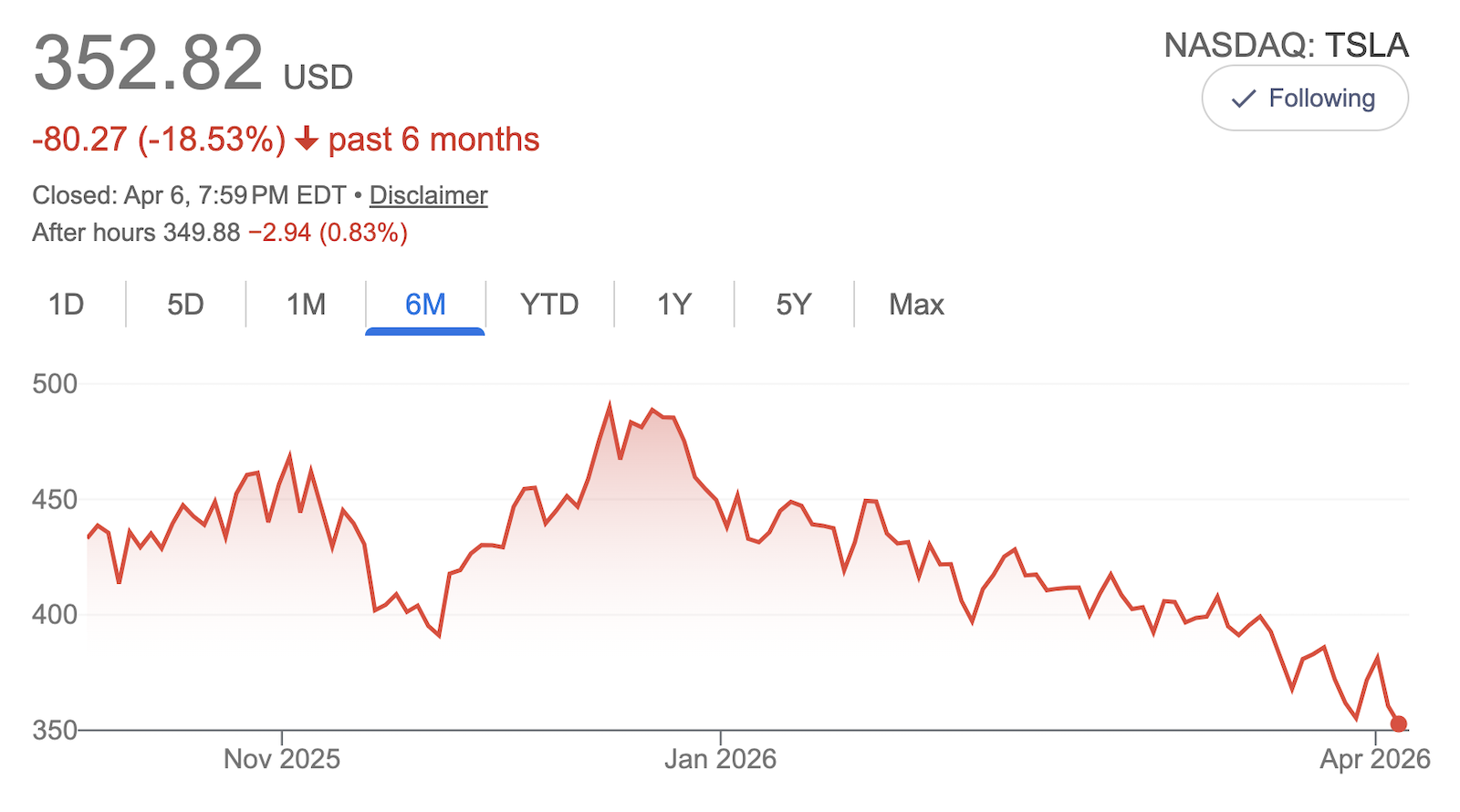
Tesla trading 22% below its $401.55 50-day moving average (with analyst consensus at $416.15) signals potential financial stress and increased supplier payment scrutiny. Historically, automotive manufacturers facing valuation pressure implement extended payment terms (60-90 days instead of 30 days), demand volume discounts of 10-20%, and conduct aggressive supplier audits. Cross-border sellers should expect Tesla to prioritize suppliers offering flexible payment terms and volume commitments. The stock decline may also trigger Tesla's cost reduction initiatives, accelerating the shift toward lower-cost suppliers from Asia-Pacific regions. Sellers should monitor Tesla's quarterly supplier announcements and SEC filings for evidence of supply chain restructuring. The valuation pressure creates opportunity for sellers offering supply chain financing solutions, inventory management services, and logistics optimization—services that help suppliers manage extended payment cycles and reduced margins.
Prediction markets assign only 12.5% probability to California robotaxi launch by June 2026 and 23% probability for Optimus humanoid robot viability by end-2026, indicating these future revenue streams remain highly speculative. For sellers, this means Tesla will prioritize cash flow and automotive profitability over R&D spending, reducing demand for specialized robotics components and AI hardware in the near term (2025-2026). However, the long-term opportunity remains significant: if either robotaxi or Optimus achieves commercialization, demand for autonomous vehicle sensors, computing platforms, and robotic actuators will surge. Sellers should monitor Tesla's quarterly earnings for R&D spending trends and supply chain announcements. The delay signals Tesla will focus on cost reduction in core automotive operations, creating immediate opportunities for sellers offering manufacturing efficiency solutions and lower-cost component alternatives. Sellers should avoid over-investing in robotics-specific inventory until market probability improves above 40-50%.
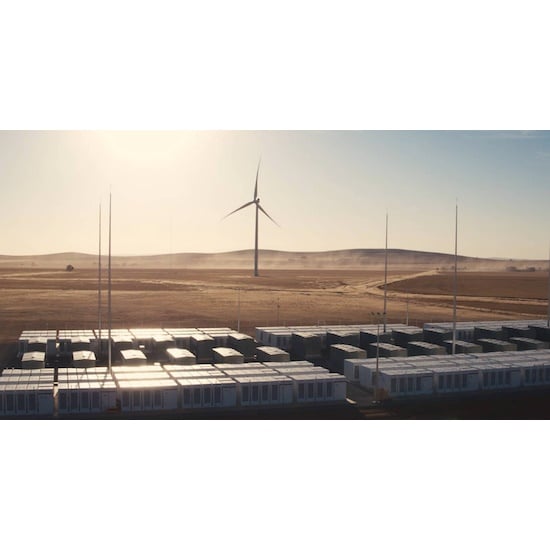
Tesla's 25% energy business growth creates opportunities for sellers to serve the broader stationary energy storage market without direct Tesla supply relationships. The energy storage market is growing 25-30% annually, driven by renewable energy integration, grid stabilization, and residential backup power demand. Sellers can source battery management systems, inverters, thermal management solutions, and monitoring software from manufacturers serving utilities, commercial facilities, and residential customers. Key product categories include lithium-ion battery packs (residential 5-15 kWh, commercial 100-500 kWh), DC-DC converters, battery balancing circuits, and energy management software. Cross-border sellers should target Amazon Industrial, Alibaba, and specialized platforms like Wesco, Heilind, and ScanSource for B2B distribution. The energy business growth indicates Tesla's confidence in long-term energy storage demand, validating seller investment in this category. Sellers should prioritize suppliers with UL certification, grid interconnection approvals, and proven performance in utility-scale deployments. The 25% growth trajectory suggests this market segment will reach $50-75B globally by 2027, creating sustained opportunities for component suppliers.
Despite current production challenges, Tesla's 1.6 million vehicle delivery target indicates sustained demand for EV components across the supply chain. Sellers should maintain inventory in high-velocity categories: battery connectors, thermal paste, power electronics, and manufacturing equipment. The target represents approximately 15-20% of global EV production, meaning suppliers serving Tesla indirectly serve the broader EV ecosystem. Sellers should diversify supplier relationships beyond Tesla to include other EV manufacturers (BYD, Volkswagen, Hyundai) experiencing stronger growth. The 9% vehicle delivery decline suggests Tesla's market share pressure, making it strategic for sellers to expand relationships with competing EV manufacturers. Inventory positioning should emphasize modular components (battery cells, connectors, thermal solutions) that serve multiple vehicle platforms rather than Tesla-specific assemblies, reducing concentration risk.
Tesla's energy division—the only segment showing strength with 25% Q4 revenue growth—signals accelerating demand for battery storage components, power electronics, inverters, and grid integration technology. Cross-border sellers should prioritize sourcing battery management systems (BMS), DC-DC converters, and thermal management solutions for stationary energy storage applications. The energy business growth indicates Tesla is diversifying beyond automotive, creating opportunities in categories like lithium iron phosphate (LFP) battery components, battery pack assembly equipment, and energy management software. Sellers with access to Chinese battery component manufacturers (where 60%+ of global EV battery supply originates) can capitalize on this trend through Amazon Industrial, Alibaba, and specialized B2B platforms. The 25% growth rate suggests this segment could reach $15-20B annually by 2026, creating sustained demand for component suppliers.
Tesla's net income collapse from $14.7B (2024) to approximately $7.8B (2025) forces aggressive supply chain cost optimization, creating immediate opportunities for sellers offering alternative component suppliers and lower-cost manufacturing solutions. The company's 4% profit margin (down from 10%+ historically) means Tesla will prioritize suppliers offering 15-25% cost reductions. Cross-border sellers in battery components, thermal management, and connector assemblies should expect increased RFQ (request for quotation) volume from Tesla's procurement teams. Specifically, sellers offering lithium-ion battery components from Chinese, Indian, or Vietnamese manufacturers can capture market share as Tesla shifts from premium to cost-competitive suppliers. The 9% vehicle delivery decline indicates production inefficiencies, creating demand for manufacturing automation equipment and process optimization tools that sellers can source from industrial equipment manufacturers.
Tesla's aggressive cost reduction and margin pressure may incentivize suppliers to cut corners on quality, creating compliance risks for cross-border sellers. Automotive suppliers must maintain IATF 16949 certification, ISO 9001 quality management, and meet Tesla's specific technical specifications. The 9% vehicle delivery decline may reflect production quality issues, increasing Tesla's scrutiny of supplier quality metrics. Sellers should ensure suppliers maintain rigorous testing protocols, traceability documentation, and defect rate monitoring (typically <100 PPM for critical components). Cross-border sellers must also navigate tariff implications: Tesla's cost pressure may accelerate reshoring of critical components to North America (under USMCA), reducing opportunities for Asian suppliers. Sellers should monitor Tesla's quarterly earnings calls for supply chain commentary and quality-related charges. Additionally, sellers should verify supplier compliance with conflict minerals regulations (3TG), environmental standards (RoHS, REACH), and labor practices—areas where Tesla faces increasing scrutiny from ESG investors and regulators.
Tesla's margin compression and cost reduction imperatives favor suppliers in Southeast Asia (Vietnam, Thailand, Indonesia), India, and Eastern Europe (Poland, Hungary, Czech Republic) where manufacturing costs are 30-50% lower than Western suppliers. Vietnam has emerged as a critical EV battery component hub, with companies like VinFast and battery manufacturers expanding capacity. Indian suppliers offer competitive advantages in thermal management, connectors, and power electronics. Cross-border sellers should prioritize sourcing relationships in these regions, particularly for commodity components (connectors, fasteners, thermal paste, wiring harnesses) where cost competition is intense. Chinese suppliers remain dominant in battery cells and pack assembly, but Tesla's cost pressure may accelerate adoption of Indian and Vietnamese alternatives. Sellers should evaluate supplier certifications (ISO 9001, IATF 16949) and quality metrics before committing to new geographic sources. The restructuring creates 12-18 month windows for sellers to establish relationships with emerging suppliers before Tesla's procurement teams fully transition.
Tesla trading 22% below its $401.55 50-day moving average (with analyst consensus at $416.15) signals potential financial stress and increased supplier payment scrutiny. Historically, automotive manufacturers facing valuation pressure implement extended payment terms (60-90 days instead of 30 days), demand volume discounts of 10-20%, and conduct aggressive supplier audits. Cross-border sellers should expect Tesla to prioritize suppliers offering flexible payment terms and volume commitments. The stock decline may also trigger Tesla's cost reduction initiatives, accelerating the shift toward lower-cost suppliers from Asia-Pacific regions. Sellers should monitor Tesla's quarterly supplier announcements and SEC filings for evidence of supply chain restructuring. The valuation pressure creates opportunity for sellers offering supply chain financing solutions, inventory management services, and logistics optimization—services that help suppliers manage extended payment cycles and reduced margins.
Prediction markets assign only 12.5% probability to California robotaxi launch by June 2026 and 23% probability for Optimus humanoid robot viability by end-2026, indicating these future revenue streams remain highly speculative. For sellers, this means Tesla will prioritize cash flow and automotive profitability over R&D spending, reducing demand for specialized robotics components and AI hardware in the near term (2025-2026). However, the long-term opportunity remains significant: if either robotaxi or Optimus achieves commercialization, demand for autonomous vehicle sensors, computing platforms, and robotic actuators will surge. Sellers should monitor Tesla's quarterly earnings for R&D spending trends and supply chain announcements. The delay signals Tesla will focus on cost reduction in core automotive operations, creating immediate opportunities for sellers offering manufacturing efficiency solutions and lower-cost component alternatives. Sellers should avoid over-investing in robotics-specific inventory until market probability improves above 40-50%.
Tesla's 25% energy business growth creates opportunities for sellers to serve the broader stationary energy storage market without direct Tesla supply relationships. The energy storage market is growing 25-30% annually, driven by renewable energy integration, grid stabilization, and residential backup power demand. Sellers can source battery management systems, inverters, thermal management solutions, and monitoring software from manufacturers serving utilities, commercial facilities, and residential customers. Key product categories include lithium-ion battery packs (residential 5-15 kWh, commercial 100-500 kWh), DC-DC converters, battery balancing circuits, and energy management software. Cross-border sellers should target Amazon Industrial, Alibaba, and specialized platforms like Wesco, Heilind, and ScanSource for B2B distribution. The energy business growth indicates Tesla's confidence in long-term energy storage demand, validating seller investment in this category. Sellers should prioritize suppliers with UL certification, grid interconnection approvals, and proven performance in utility-scale deployments. The 25% growth trajectory suggests this market segment will reach $50-75B globally by 2027, creating sustained opportunities for component suppliers.
Despite current production challenges, Tesla's 1.6 million vehicle delivery target indicates sustained demand for EV components across the supply chain. Sellers should maintain inventory in high-velocity categories: battery connectors, thermal paste, power electronics, and manufacturing equipment. The target represents approximately 15-20% of global EV production, meaning suppliers serving Tesla indirectly serve the broader EV ecosystem. Sellers should diversify supplier relationships beyond Tesla to include other EV manufacturers (BYD, Volkswagen, Hyundai) experiencing stronger growth. The 9% vehicle delivery decline suggests Tesla's market share pressure, making it strategic for sellers to expand relationships with competing EV manufacturers. Inventory positioning should emphasize modular components (battery cells, connectors, thermal solutions) that serve multiple vehicle platforms rather than Tesla-specific assemblies, reducing concentration risk.
Tesla's energy division—the only segment showing strength with 25% Q4 revenue growth—signals accelerating demand for battery storage components, power electronics, inverters, and grid integration technology. Cross-border sellers should prioritize sourcing battery management systems (BMS), DC-DC converters, and thermal management solutions for stationary energy storage applications. The energy business growth indicates Tesla is diversifying beyond automotive, creating opportunities in categories like lithium iron phosphate (LFP) battery components, battery pack assembly equipment, and energy management software. Sellers with access to Chinese battery component manufacturers (where 60%+ of global EV battery supply originates) can capitalize on this trend through Amazon Industrial, Alibaba, and specialized B2B platforms. The 25% growth rate suggests this segment could reach $15-20B annually by 2026, creating sustained demand for component suppliers.
Tesla's net income collapse from $14.7B (2024) to approximately $7.8B (2025) forces aggressive supply chain cost optimization, creating immediate opportunities for sellers offering alternative component suppliers and lower-cost manufacturing solutions. The company's 4% profit margin (down from 10%+ historically) means Tesla will prioritize suppliers offering 15-25% cost reductions. Cross-border sellers in battery components, thermal management, and connector assemblies should expect increased RFQ (request for quotation) volume from Tesla's procurement teams. Specifically, sellers offering lithium-ion battery components from Chinese, Indian, or Vietnamese manufacturers can capture market share as Tesla shifts from premium to cost-competitive suppliers. The 9% vehicle delivery decline indicates production inefficiencies, creating demand for manufacturing automation equipment and process optimization tools that sellers can source from industrial equipment manufacturers.
Tesla's aggressive cost reduction and margin pressure may incentivize suppliers to cut corners on quality, creating compliance risks for cross-border sellers. Automotive suppliers must maintain IATF 16949 certification, ISO 9001 quality management, and meet Tesla's specific technical specifications. The 9% vehicle delivery decline may reflect production quality issues, increasing Tesla's scrutiny of supplier quality metrics. Sellers should ensure suppliers maintain rigorous testing protocols, traceability documentation, and defect rate monitoring (typically <100 PPM for critical components). Cross-border sellers must also navigate tariff implications: Tesla's cost pressure may accelerate reshoring of critical components to North America (under USMCA), reducing opportunities for Asian suppliers. Sellers should monitor Tesla's quarterly earnings calls for supply chain commentary and quality-related charges. Additionally, sellers should verify supplier compliance with conflict minerals regulations (3TG), environmental standards (RoHS, REACH), and labor practices—areas where Tesla faces increasing scrutiny from ESG investors and regulators.
Tesla's margin compression and cost reduction imperatives favor suppliers in Southeast Asia (Vietnam, Thailand, Indonesia), India, and Eastern Europe (Poland, Hungary, Czech Republic) where manufacturing costs are 30-50% lower than Western suppliers. Vietnam has emerged as a critical EV battery component hub, with companies like VinFast and battery manufacturers expanding capacity. Indian suppliers offer competitive advantages in thermal management, connectors, and power electronics. Cross-border sellers should prioritize sourcing relationships in these regions, particularly for commodity components (connectors, fasteners, thermal paste, wiring harnesses) where cost competition is intense. Chinese suppliers remain dominant in battery cells and pack assembly, but Tesla's cost pressure may accelerate adoption of Indian and Vietnamese alternatives. Sellers should evaluate supplier certifications (ISO 9001, IATF 16949) and quality metrics before committing to new geographic sources. The restructuring creates 12-18 month windows for sellers to establish relationships with emerging suppliers before Tesla's procurement teams fully transition.
Tesla trading 22% below its $401.55 50-day moving average (with analyst consensus at $416.15) signals potential financial stress and increased supplier payment scrutiny. Historically, automotive manufacturers facing valuation pressure implement extended payment terms (60-90 days instead of 30 days), demand volume discounts of 10-20%, and conduct aggressive supplier audits. Cross-border sellers should expect Tesla to prioritize suppliers offering flexible payment terms and volume commitments. The stock decline may also trigger Tesla's cost reduction initiatives, accelerating the shift toward lower-cost suppliers from Asia-Pacific regions. Sellers should monitor Tesla's quarterly supplier announcements and SEC filings for evidence of supply chain restructuring. The valuation pressure creates opportunity for sellers offering supply chain financing solutions, inventory management services, and logistics optimization—services that help suppliers manage extended payment cycles and reduced margins.
Prediction markets assign only 12.5% probability to California robotaxi launch by June 2026 and 23% probability for Optimus humanoid robot viability by end-2026, indicating these future revenue streams remain highly speculative. For sellers, this means Tesla will prioritize cash flow and automotive profitability over R&D spending, reducing demand for specialized robotics components and AI hardware in the near term (2025-2026). However, the long-term opportunity remains significant: if either robotaxi or Optimus achieves commercialization, demand for autonomous vehicle sensors, computing platforms, and robotic actuators will surge. Sellers should monitor Tesla's quarterly earnings for R&D spending trends and supply chain announcements. The delay signals Tesla will focus on cost reduction in core automotive operations, creating immediate opportunities for sellers offering manufacturing efficiency solutions and lower-cost component alternatives. Sellers should avoid over-investing in robotics-specific inventory until market probability improves above 40-50%.