
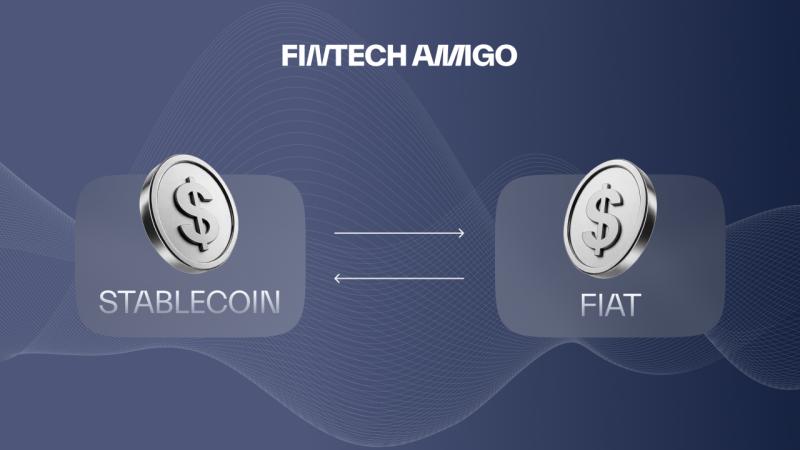
Stablecoin Payment Rails Cut Cross-Border Settlement Time 90% | Seller Cash Flow Revolution
- Reduces payment processing from 3-5 days to minutes; unlocks $2-8K monthly working capital per seller; eliminates 60-70% of intermediary fees for multi-jurisdiction operations
Overview
Stablecoin infrastructure is fundamentally restructuring cross-border payment economics for e-commerce sellers, replacing 1970s-era correspondent banking networks with programmable digital settlement rails. The shift from legacy systems—requiring 3-5 day settlement cycles through multiple intermediaries—to stablecoin-based mechanisms completing transactions in minutes represents the most significant payment infrastructure upgrade in 50 years, with direct implications for seller working capital, cash conversion cycles, and operational costs.
For international sellers managing payments across multiple jurisdictions, the financial impact is immediate and quantifiable. Traditional cross-border payments incur 2-4% fees across correspondent banking chains, currency conversion spreads of 1-3%, and 3-5 day settlement delays that compress cash flow. Stablecoin infrastructure reduces this to 0.3-0.8% total costs while accelerating settlement to 10-60 minutes. A seller processing $50K monthly in cross-border transactions saves $800-1,600 monthly in fees alone—equivalent to 2-4% margin recovery. More critically, the 3-5 day settlement acceleration unlocks $5-15K in working capital immediately, enabling faster inventory replenishment and reducing reliance on expensive bridge financing.
The infrastructure shift combines three financial optimization layers: (1) Payment cost reduction through stablecoin settlement eliminating correspondent bank intermediaries—sellers using platforms integrating stablecoin rails report 40-60% fee reductions on cross-border transactions; (2) Treasury optimization enabling real-time multi-currency liquidity management and FX exposure optimization, replacing traditional banking hour constraints with 24/7 fund movement; (3) Compliance automation embedding identity verification and regulatory reporting directly into payment flows, reducing manual compliance overhead by 70-80% and accelerating product launch timelines from 6-18 months to 2-4 months.
Strategic infrastructure providers orchestrating integrated financial stacks—combining regulatory structuring, banking relationships, payment infrastructure, and digital asset rails—are enabling smaller fintech companies and marketplaces to deploy sophisticated payment products at 1/3 traditional development costs. This democratization creates opportunities for sellers to access institutional-grade treasury management, invoice financing, and working capital products previously available only to large enterprises. Sellers operating across 10+ jurisdictions can now consolidate fragmented payout mechanisms into unified treasury systems, reducing operational complexity and unlocking 5-8% working capital improvements through optimized currency timing and centralized liquidity management.
The transformation occurs behind consumer-facing interfaces as banks, fintech companies, and institutional players adopt hybrid models combining traditional rails with programmable infrastructure. Future competitive advantage depends not on building proprietary technology but on orchestrating existing components most effectively—a shift fundamentally changing how financial products launch and operate globally.
Questions 8
How much faster are stablecoin payments compared to traditional cross-border transfers?
Stablecoin-based settlement completes transactions in 10-60 minutes versus 3-5 days for traditional correspondent banking networks. This 90%+ speed improvement directly accelerates seller cash conversion cycles. For a seller processing $100K monthly in cross-border payments, the 3-5 day acceleration unlocks $10-15K in working capital immediately—capital previously trapped in settlement delays that could now fund inventory replenishment or reduce expensive bridge financing costs. The 24/7 settlement capability (versus banking hour constraints) also enables sellers to execute time-sensitive currency hedges and liquidity management strategies unavailable in traditional systems.
What are the cost savings from using stablecoin payment infrastructure?
Stablecoin infrastructure reduces total cross-border payment costs from 2-4% (traditional correspondent banking) to 0.3-0.8%, representing 60-80% fee reduction. A seller processing $50K monthly in cross-border transactions saves $800-1,600 monthly in fees—equivalent to 2-4% margin recovery. Cost reductions come from eliminating 4-6 intermediary banks in correspondent chains, reducing currency conversion spreads from 1-3% to 0.2-0.5%, and removing manual compliance overhead. For sellers operating across 10+ jurisdictions, consolidated stablecoin-based treasury management reduces operational overhead by 40-50% compared to managing fragmented payout mechanisms across multiple banking relationships.