




GENIUS Act Stablecoin Rules 2026-2027 | Cross-Border Payment Transformation
- Federal agencies implement 21 rulemakings by January 2027; bank-backed stablecoins unlock settlement speed gains and 15-30% payment cost reductions for international sellers


































Overview
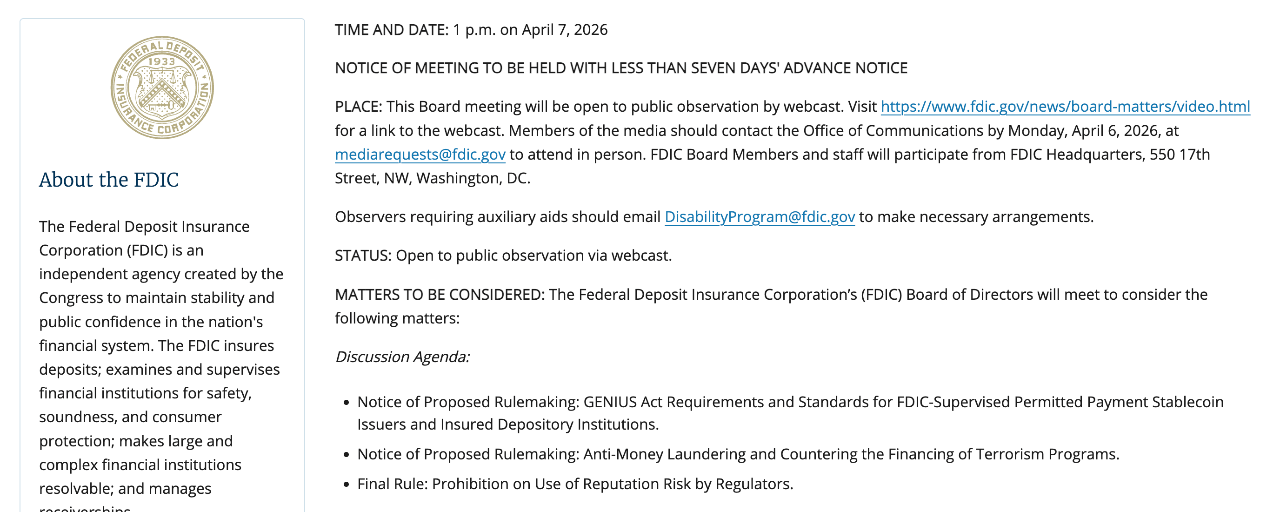
The GENIUS Act (enacted July 2024) mandates 21 federal rulemakings establishing comprehensive regulatory frameworks for stablecoin issuance, reserve requirements, and anti-money laundering compliance. The FDIC approved prudential standards on April 7, 2026, while the U.S. Treasury (FinCEN/OFAC) issued AML/CFT compliance rules on April 8, 2026. Full implementation takes effect January 18, 2027 (18 months post-enactment), though regulatory experts note Congressional deadlines are frequently aspirational—the Dodd-Frank Act's 400+ mandated rulemakings demonstrate dozens remain incomplete today.
For cross-border e-commerce sellers, this regulatory clarity unlocks transformative payment infrastructure opportunities. The $323 billion stablecoin market is now attracting traditional banks (Circle, Tether competitors), enabling sellers to reduce international settlement times from 3-5 business days to minutes while cutting transaction costs by 15-30% versus wire transfers. Bank-backed stablecoins provide institutional credibility and FDIC insurance parity for tokenized deposits, reducing counterparty risk for merchants accepting digital currency payments.
Payment cost optimization is immediate. Sellers currently paying 2-4% fees on cross-border wire transfers can access stablecoin rails at 0.1-0.5% processing costs. High-volume merchants ($500K+ annual cross-border revenue) can unlock $7,500-$20,000 annual savings. The FDIC's reserve requirement framework (April 7, 2026 proposal) establishes capital standards and redemption procedures, enabling safer stablecoin adoption. Tokenized deposits receive identical Federal Deposit Insurance Act treatment as traditional deposits, eliminating regulatory uncertainty that previously deterred institutional participation.
Compliance complexity increases operational costs for smaller sellers. Treasury's AML/CFT rules require stablecoin issuers to implement robust compliance programs with risk-based internal controls, regular auditing, and sanctions screening. These compliance burdens will likely translate to 0.2-0.5% fee increases on stablecoin transactions by mid-2027. Sellers engaged in high-volume international transactions ($100K+ monthly) face more rigorous identity verification and transaction monitoring, potentially adding 2-5 business days to settlement during compliance reviews.
Strategic timing is critical. The Paradigm GENIUS Act tracker (publicly available) enables sellers to monitor rulemaking progress and submit comments during NPRM periods (60-day windows). Sellers should prepare operational adjustments before January 2027 implementation: evaluate stablecoin payment processor integration, assess fee structures post-compliance, and consider geographic arbitrage opportunities in markets with currency instability (emerging markets, high-inflation regions). Early adopters accepting bank-backed stablecoins by Q3 2026 gain competitive advantages in cross-border markets with limited banking access.
Questions 8
What geographic arbitrage opportunities exist for sellers in stablecoin markets?
Sellers can exploit FX arbitrage opportunities as bank-backed stablecoins reduce currency conversion costs and settlement times. In high-inflation markets (Argentina, Turkey, Venezuela), sellers can accept stablecoin payments pegged to USD, eliminating local currency depreciation risk. Emerging market sellers can access global payment rails without traditional banking infrastructure, reducing reliance on expensive remittance services (2-5% fees). Sellers in regions with capital controls (China, Russia, Iran) may find stablecoin payment options provide alternative settlement mechanisms, though regulatory compliance varies by jurisdiction. The GENIUS Act framework establishes U.S. regulatory clarity, but international adoption depends on local regulatory implementation. Sellers should monitor FATF (Financial Action Task Force) guidance on stablecoin regulation across jurisdictions to identify geographic arbitrage windows before mainstream adoption.
How do FDIC reserve requirements protect seller funds in stablecoin systems?
The FDIC's April 7, 2026 prudential standards establish comprehensive requirements covering reserve assets, redemption procedures, capital standards, and risk management protocols for stablecoin issuers. The framework clarifies that tokenized deposits meeting statutory deposit definitions receive identical treatment under the Federal Deposit Insurance Act as traditional deposits, providing up to $250,000 FDIC insurance coverage per account. This eliminates counterparty risk concerns that previously deterred merchant adoption. The FDIC also established guidelines for FDIC-supervised institutions providing custodial and safekeeping services related to payment stablecoins, ensuring professional asset management. These prudential standards reduce the risk of stablecoin issuer insolvency affecting merchant funds, enabling safer adoption for high-volume sellers.