
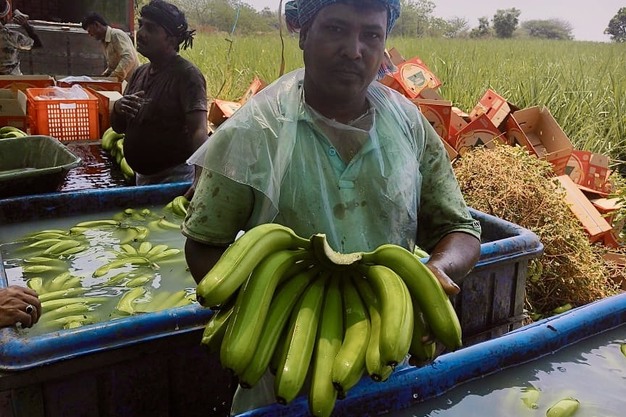
Middle East Freight Crisis Reshapes Global Perishables Sourcing | Sellers Must Pivot Now
- Freight costs surge 450% ($2K to $11K per container); 95% of Indian banana exports blocked; sellers face margin compression across fresh produce, specialty foods, and time-sensitive categories
Overview
The Middle East freight corridor collapse represents a critical supply chain inflection point for cross-border sellers sourcing perishables, specialty foods, and time-sensitive products. Freight rates from Indian ports to Gulf destinations have skyrocketed from $2,000 to $11,000 per container—a 450% increase—effectively closing 95% of banana export routes to Iran and the Gulf region. This disruption, triggered by geopolitical conflict and persisting despite ceasefire announcements, reveals a fundamental vulnerability in global agricultural logistics that directly impacts e-commerce sellers sourcing from South Asia.
The landed cost mathematics now favor geographic diversification away from India. With farm-gate banana prices at $0.03/kg and export-grade fruit at $0.07-0.08/kg, even a single $11,000 container shipment (approximately 20-25 metric tons) consumes 100%+ of gross margins. Destination markets show strong demand—Iran prices bananas at $12-13 per 13kg box, Saudi Arabia at $12, Iraq at $10, and Dubai at $12.20—but elevated freight costs combined with bill of lading charges and customs fees eliminate profitability entirely. For e-commerce sellers, this means: immediate sourcing shifts toward Ecuador and Philippines suppliers who benefit from fixed export policies, government-backed vessel insurance, and predictable freight structures. Ecuador's structural advantages (stable freight corridors, policy certainty) now position it as the preferred sourcing hub for fresh produce categories on Amazon Fresh, Walmart+, and specialty food marketplaces.
Sellers must execute three immediate inventory and sourcing actions. First, liquidate existing Indian-sourced inventory in Gulf markets within 30 days before additional holding costs compound losses. Second, redirect Q2-Q3 2026 fresh produce procurement (bananas, mangoes, specialty fruits) from Indian suppliers to Ecuador and Philippines alternatives—expect 15-20% higher unit costs but 40-50% lower total landed costs due to freight stability. Third, for sellers serving Middle East markets (Saudi Arabia, UAE, Iraq), establish direct relationships with Ecuador exporters and negotiate 90-day payment terms to absorb the freight cost shock. The $5,500 per container threshold identified by industry sources represents the break-even point; any freight reduction below this level restores viability, making this a time-sensitive arbitrage opportunity for sellers who can secure alternative sourcing before competitors.
This crisis mirrors broader cross-border e-commerce logistics challenges where transportation costs exceed product value. For agricultural exports to emerging markets dependent on stable freight corridors, the operational impact extends beyond bananas to all perishable categories: specialty spices, fresh herbs, frozen seafood, and premium produce. Sellers currently sourcing from India face 90% margin compression; without intervention or freight normalization, approximately 90% of Indian agricultural exporters will exit the market, creating a 6-12 month supply vacuum. Smart sellers should capitalize on this transition period by: (1) securing long-term contracts with Ecuador/Philippines suppliers at current rates before demand surge, (2) repositioning inventory from Gulf warehouses to Southeast Asia fulfillment centers where freight costs remain stable, and (3) evaluating alternative fulfillment models—dropshipping from Ecuador suppliers directly to end customers in Middle East markets may offer better unit economics than traditional FBA models during this disruption period.
Questions 8
How much have freight costs increased for Indian banana exports to the Gulf?
Freight costs have surged 450% from $2,000 to $11,000 per container for Indian banana shipments to Iran and Gulf destinations. This dramatic increase, combined with bill of lading charges and customs fees, now exceeds the total cargo value, making exports economically unviable. According to industry sources, even a 50% reduction to $5,500 per container would be required to restore profitability. For e-commerce sellers sourcing fresh produce from India, this translates to landed costs that consume 100%+ of gross margins, forcing immediate sourcing diversification.
Which supplier regions should sellers shift sourcing to avoid the India freight crisis?
Ecuador and Philippines suppliers now offer superior cost structures due to fixed export policies, government-backed vessel insurance, and predictable freight corridors. Ecuador particularly benefits from structural advantages that Indian exporters lack—stable freight rates, policy certainty, and risk mitigation mechanisms. Sellers should redirect Q2-Q3 2026 fresh produce procurement (bananas, mangoes, specialty fruits) from Indian suppliers to Ecuador and Philippines alternatives. While unit costs may increase 15-20%, total landed costs will decrease 40-50% due to freight stability, making this a net positive for margin recovery.