



Federal Reserve's Delicate Economic Balancing Act Signals Cautious Monetary Strategy
- Navigating Uncertainty: How Interest Rate Decisions Impact Global Financial Ecosystems






















Overview
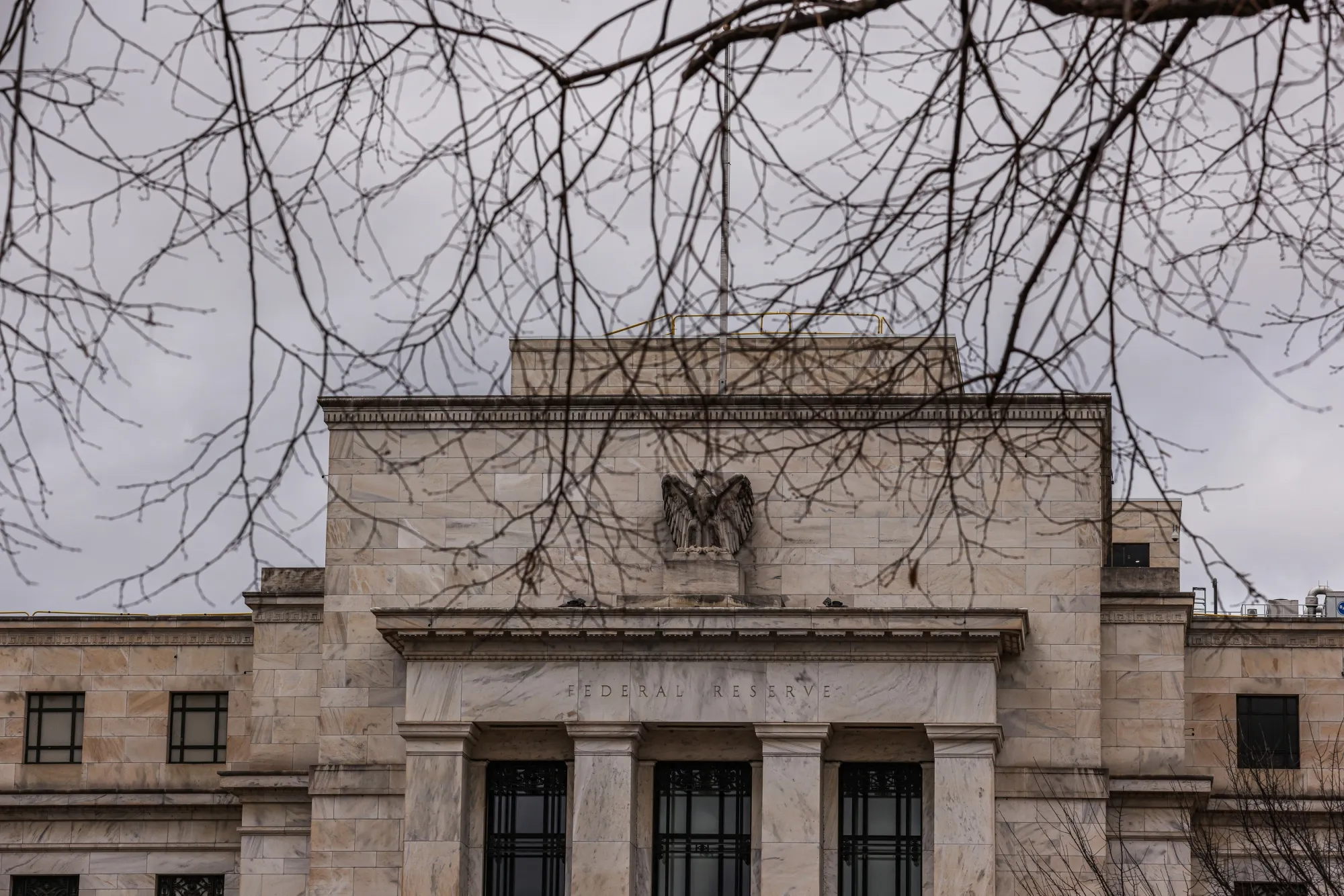
The Federal Reserve's latest monetary policy moves reveal a nuanced strategy of economic navigation amid unprecedented uncertainty. By implementing a quarter-percentage point rate cut, bringing the benchmark rate to 3.50-3.75%, the Fed has signaled a measured approach that balances multiple complex economic signals.
Strategic Monetary Calibration emerges as the core narrative. Unlike market expectations of multiple rate cuts, the Fed's projections suggest only one cut in 2026 and another in 2027, reflecting an extraordinarily cautious stance. This deliberate restraint stems from multiple competing economic indicators: persistent inflation pressures, potential employment risks, and ongoing global economic volatility.
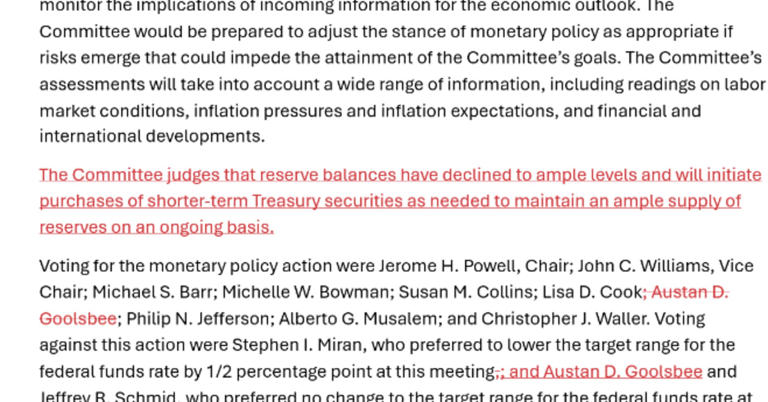
For cross-border financial strategists, the implications are profound. The Fed's approach suggests a risk-mitigation framework where monetary policy becomes less about aggressive intervention and more about strategic patience. Six policymakers preferring no rate cut this year underscores the committee's deep uncertainty about economic trajectories.
The decision's most critical aspect is its indirect signaling to global markets. By emphasizing employment risks and maintaining flexibility, the Fed is essentially telling businesses and investors to prepare for continued economic complexity. Currency exchange dynamics, international trade flows, and financing strategies will need to adapt to this environment of calculated uncertainty.
Particularly noteworthy is the Fed's acknowledgment of structural economic challenges, including data normalization difficulties following the recent federal government shutdown. This suggests that traditional economic indicators might be less reliable, requiring more sophisticated analytical approaches from financial decision-makers.
The overarching message is clear: businesses must develop adaptive financial strategies that can withstand potential economic shifts. The era of predictable monetary policy has been replaced by a more nuanced, context-dependent approach that demands continuous reassessment and strategic flexibility.
Questions 3
How should businesses prepare for the Fed's current monetary policy approach?
Businesses should focus on building financial resilience through diversified revenue streams, maintaining flexible supply chain financing, and developing robust hedging strategies. The key is creating adaptable financial models that can quickly respond to potential economic changes without significant disruption.
What are the key risks for international financial strategies given the current Fed stance?
Primary risks include potential currency exchange rate instability, uncertain inflation trajectories, and the possibility of unexpected economic shifts. The Fed's projection of only one rate cut in 2026 indicates a highly cautious environment where traditional financial forecasting models may become less reliable.