


USPS Rate Hikes & 38% Package Surcharge | Critical Shipping Cost Impact for E-Commerce Sellers
- USPS implementing 5% postage increases and 38% package surcharge effective April 2026; sellers face 8-15% shipping cost increases; immediate carrier diversification required for margin protection








































Overview
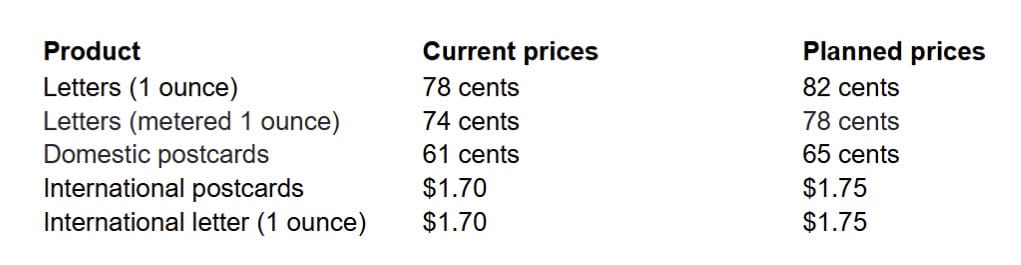
The United States Postal Service faces an acute liquidity crisis that directly threatens e-commerce seller profitability through cascading shipping cost increases. USPS announced a 5% postage increase effective July 12, 2026, with first-class forever stamps rising from 78 cents to 82 cents, while implementing a 38% package surcharge effective April 2026 to offset escalating transportation costs. The agency is temporarily suspending approximately $400 million monthly contributions to the Federal Employees Retirement System (FERS), freeing $2.5 billion in fiscal 2024 to cover operational expenses. Postmaster General David Steiner warned Congress in March 2024 that USPS will exhaust cash reserves within 12 months without substantial regulatory reforms, with the agency posting a $1.3 billion loss in Q1 FY2026 alone.
For cross-border e-commerce sellers, these increases represent immediate margin compression across all USPS shipping categories. Small and medium-sized sellers relying on USPS Priority Mail International and domestic parcel services face 8-15% cumulative shipping cost increases when combining the 5% postage hike with the 38% package surcharge. A seller shipping 1,000 units monthly at average USPS rates of $8-12 per package will see monthly shipping costs increase by $800-1,800, directly impacting profitability. The 38% package surcharge specifically targets parcel shipping—the primary service for e-commerce businesses—making USPS significantly less competitive versus UPS and FedEx for volume shippers.
The financial instability reflects structural challenges absent in competitor services. USPS has posted billion-dollar net losses almost every year since 2007, driven by pre-funding requirements for retirement benefits and declining mail volumes. Unlike UPS and FedEx, which operate self-sustaining business models, USPS's government-mandated pension obligations create inflexible cost structures. The agency previously implemented a similar FERS contribution suspension in June 2011 during an acute financial crisis, which lasted several months before resuming. Current projections suggest this suspension may extend through fiscal 2026-2030 as USPS pursues multiple relief strategies, including Congressional authorization to repurpose $2.4 billion in fiscal 2026 and $3 billion annually through fiscal 2030 from retiree benefit reserves.
Sellers must immediately diversify shipping carriers to mitigate exposure to further USPS rate increases. Negotiate volume discounts with UPS and FedEx now—carriers typically offer 15-25% discounts for sellers committing to 500+ monthly shipments. Evaluate regional 3PL providers and regional carriers (DHL, OnTrac) for specific corridors where they offer competitive rates. Consider implementing dynamic shipping cost pass-through in pricing strategies, allowing real-time adjustment of shipping charges to customers based on carrier rates. Monitor USPS announcements for potential service reductions (cutting delivery days, closing post offices) that could further degrade service reliability and justify carrier switching for customer satisfaction reasons.
Questions 8
Should sellers switch from USPS to UPS or FedEx due to rate increases?
Yes, sellers should immediately evaluate carrier diversification. UPS and FedEx typically offer 15-25% volume discounts for sellers committing to 500+ monthly shipments, making them competitive with USPS for medium-to-high volume shippers. USPS remains cost-effective for lightweight, low-value items and certain international routes, but the 38% package surcharge eliminates this advantage for standard parcels. Negotiate volume discounts with UPS and FedEx now, and consider regional carriers (DHL, OnTrac) for specific corridors. Implement dynamic shipping cost pass-through in pricing to adjust charges based on carrier rates in real-time.
What is the financial impact of USPS rate increases on seller margins?
For a seller with 30% gross margins shipping 1,000 units monthly at $10 average USPS cost, the 8-15% shipping increase ($800-1,500 monthly) reduces net margins by 2-5 percentage points. Small sellers with 20-25% gross margins face margin compression of 3-7 points, potentially pushing profitability below break-even. Sellers unable to pass shipping costs to customers must absorb the increase or reduce inventory investment. The impact is most severe for low-margin categories (apparel, home goods) where shipping represents 15-25% of product cost. High-margin categories (electronics, collectibles) can more easily absorb increases through pricing adjustments.