



Gen Z AI Skepticism Reshapes E-Commerce Strategy | Transparency & Trust Now Competitive Advantage
- 69% of Gen Z prefer human-made content; only 18% hopeful about AI; sellers must pivot from automation-first to trust-first positioning











)




Overview
The Critical Shift: Gen Z's Deteriorating AI Sentiment Demands Immediate E-Commerce Strategy Recalibration
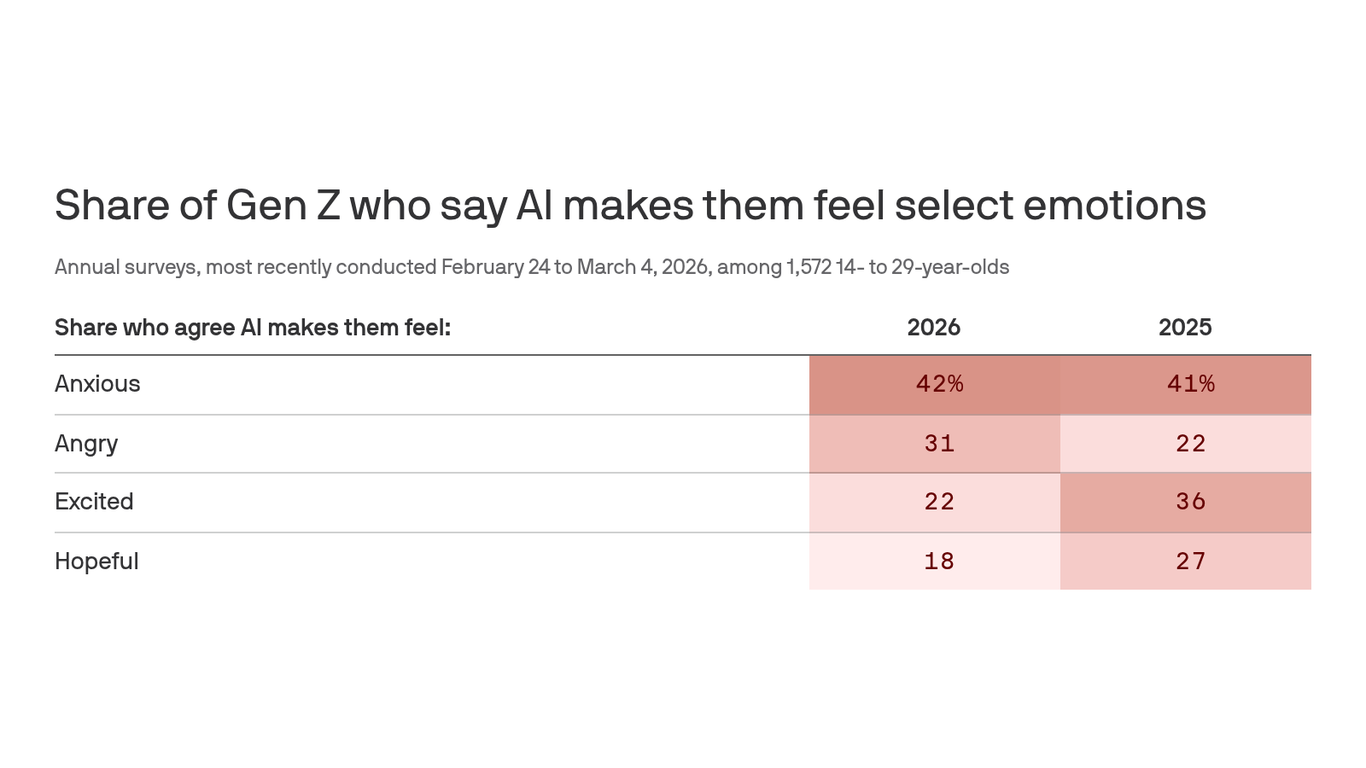
Generation Z's relationship with artificial intelligence has fundamentally shifted from cautious optimism to active skepticism, according to comprehensive Gallup research (February-March 2026, 1,572 respondents, ±3.6% margin of error). The data reveals a dramatic sentiment collapse: excitement dropped 14 percentage points, hopefulness fell from 27% to 18%, while anger surged from 22% to 31%. Most critically for e-commerce sellers, only 3% of Gen Z completely trust AI-generated content versus 69% who prefer entirely human-made work—a 66-percentage-point trust gap that directly impacts product listings, customer service, and marketing strategies.
The Paradox Sellers Must Navigate: Usage Persists Despite Skepticism
Despite declining sentiment, 51% of Gen Z uses AI daily or weekly, creating what researchers call "reluctant acceptance." This paradox presents both risk and opportunity. Sellers leveraging AI for inventory management, pricing optimization, and customer service automation face a credibility challenge: Gen Z consumers will continue using AI tools but with heightened scrutiny about data privacy, algorithmic bias, and manipulative personalization. The research shows 38% believe AI harms creativity and 42% think it damages critical thinking—concerns directly applicable to AI-generated product descriptions, customer reviews, and recommendation algorithms. For sellers, this means automation tools that were previously invisible competitive advantages now require transparent communication to avoid triggering Gen Z resistance.
Immediate Operational Impact: Transparency as Automation Enabler
The competitive advantage has shifted from "how much can we automate" to "how transparently can we automate." Sellers using AI for dynamic pricing, personalized recommendations, or chatbot customer service must now explicitly communicate these practices to Gen Z buyers. Environmental concerns also emerged as a secondary but growing factor—Gen Z worries about data center energy consumption, suggesting sellers should highlight sustainable fulfillment practices and carbon-neutral shipping options. The research indicates that e-commerce platforms perceived as exploiting AI for manipulation will face resistance, while those demonstrating ethical AI deployment and clear algorithmic communication will build stronger Gen Z loyalty. This represents a fundamental shift in competitive positioning: trust and transparency now function as automation multipliers rather than constraints.
Strategic Implications for Seller Segments
For small sellers (1-50 SKUs), this trend suggests prioritizing human-touch customer service and authentic product photography over AI-generated content. Mid-market sellers (50-500 SKUs) should audit AI-driven recommendation engines and pricing algorithms, adding transparency disclosures to product pages and checkout flows. Enterprise sellers (500+ SKUs) face the highest risk if perceived as over-automating; they should invest in hybrid human-AI customer service models and transparent data usage policies. The 56% of high school students confident in acquiring AI skills before graduation signals that Gen Z will become increasingly sophisticated AI users—but skeptical ones. This means sellers cannot rely on AI-driven personalization alone; they must combine algorithmic efficiency with visible human expertise and ethical guardrails.
Questions 8
How does Gen Z's 'reluctant acceptance' of AI change long-term e-commerce strategy?
The research shows 51% of Gen Z uses AI daily/weekly despite declining sentiment—a 'reluctant acceptance' pattern indicating AI won't disappear from e-commerce, but trust will remain fragile. Long-term strategy implications: (1) Invest in hybrid human-AI models rather than full automation, (2) Build transparency into product roadmaps as a core feature, not an afterthought, (3) Develop Gen Z-specific brand positioning around ethical AI and data protection, (4) Create educational content explaining how your AI tools work and protect customer interests, (5) Monitor sentiment shifts—if anger continues rising (31% currently), Gen Z may actively avoid AI-heavy platforms. The 56% of high school students confident in acquiring AI skills suggests Gen Z will become more sophisticated AI users, but skeptical ones. Sellers who build trust now will have competitive advantage when Gen Z enters peak earning years (2030-2035).
What product categories or seller segments face the highest Gen Z AI skepticism risk?
Highest-risk segments: (1) Fashion/apparel sellers relying heavily on AI-generated product photos or descriptions (Gen Z values authenticity), (2) Financial/investment products using AI recommendations without human advisor options, (3) Content creators selling AI-generated art, writing, or music (69% prefer human-made work), (4) Sellers using aggressive dynamic pricing algorithms (appears manipulative), (5) Marketplace sellers with minimal human customer service (Gen Z wants human contact). Lower-risk segments: (1) Logistics/fulfillment companies using AI for efficiency (invisible to consumers), (2) Sellers highlighting AI as a tool for sustainability or accessibility, (3) Niche/expert sellers using AI to enhance human expertise. The pattern: Gen Z accepts AI for backend operations but demands transparency and human alternatives for customer-facing interactions.