
Trader Joe's O2O Playbook: How Curated Selection & Human-Centric Retail Drive 67% Customer Loyalty
- Intimate 15,000 sq ft stores with 4,000 SKUs vs industry 35,000-50,000 create 3x higher trust; 67% prefer human cashiers despite 85% faster self-checkout; seasonal products generate cult followings for repeat visits
Overview
Trader Joe's represents a paradigm shift in offline retail strategy that directly challenges conventional e-commerce seller assumptions about scale, selection, and automation. The company operates approximately 15,000 square-foot stores—roughly one-third the size of standard grocery retailers—intentionally creating intimate shopping environments that prioritize human interaction over technology. This counter-intuitive approach reveals critical insights for cross-border sellers building O2O strategies: consumer preference for human interaction remains dominant despite technological efficiency gains. While 96% of grocery stores offer self-checkout and self-checkout is 85% faster, 67% of consumers still prefer traditional cashier service, indicating that convenience metrics don't drive loyalty in retail.
The curated selection model fundamentally reduces decision friction and builds trust through scarcity psychology. Trader Joe's operates with only 4,000 products compared to the industry standard of 35,000-50,000 items. This 88-92% reduction in SKU count forces selective buying of "winner" products that develop passionate customer followings. The company maintains consistent store layouts across all locations, enabling customers to navigate familiar environments regardless of location—a critical O2O principle for omnichannel brands. This consistency reduces cognitive load and increases repeat visit frequency, directly improving customer lifetime value (LTV).
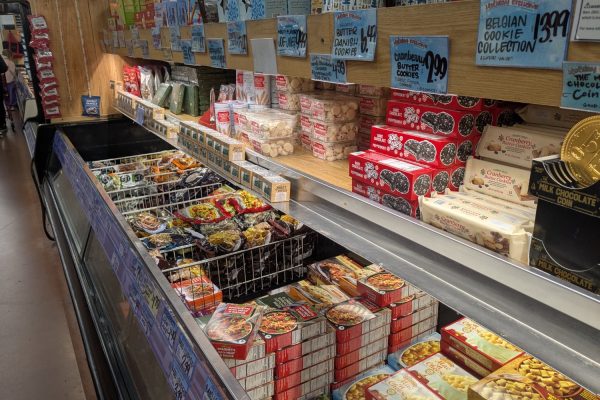
Experiential differentiation through seasonal products and community engagement drives urgency and cult followings. Trader Joe's leverages creative signage, distinctive packaging with unique illustrations and colors, and strategic seasonal product rotations (Peppermint Brookie, Jingle Jangle Pretzel Twists) to create repeat visit anticipation. Annual customer voting for the "Product Hall of Fame" (featuring bestsellers like Mandarin Orange Chicken and Unexpected Cheddar Cheese) transforms customers into brand advocates. The company emphasizes organic products and natural ingredients (using beet powder instead of artificial dyes), aligning with consumer health consciousness. Employee training prioritizes knowledgeable customer service as a core value, creating a human-centered experience that differentiates from automated competitors.
For e-commerce sellers, this model translates to concrete O2O opportunities: Pop-up showrooms in high-foot-traffic urban areas (targeting 67% of consumers preferring human interaction) can showcase curated product selections with limited SKUs to reduce decision paralysis. Retail partnerships with specialty chains seeking differentiated product experiences align with Trader Joe's approach of quality over quantity. The 2025 trademark lawsuit from Smucker's (alleging Uncrustables product copying) highlights the importance of distinctive packaging and brand differentiation—sellers cannot compete on product similarity alone but must invest in visual identity and customer experience.
Questions 8
How does Trader Joe's packaging strategy protect against trademark infringement risks?
Trader Joe's faces a 2025 trademark lawsuit from Smucker's alleging product copying (Uncrustables), yet maintains brand differentiation through distinctive packaging, unique illustrations, and colors. The company offers affordable alternatives to major brands (Joe-Joes vs Oreos, Scandinavian Swimmers vs Swedish Fish) but avoids direct imitation. For e-commerce sellers, this highlights the critical importance of investing in proprietary packaging design and brand identity. Generic product copies face increasing legal challenges; differentiation through visual branding, organic certifications, and unique formulations (e.g., beet powder instead of artificial dyes) provides defensible competitive advantages. Sellers should allocate 8-12% of product development budgets to packaging design and trademark registration across key markets (US, EU, Asia Pacific).
What retail partnership opportunities exist for sellers adopting Trader Joe's curated model?
Trader Joe's success demonstrates that specialty retailers actively seek curated, differentiated products with strong brand stories. Retail chains like Whole Foods, Natural Grocers, and specialty food distributors are increasingly looking for products that align with the curated selection model rather than competing on price alone. For cross-border sellers, partnership opportunities include: (1) exclusive product lines for specific retail chains, (2) co-branded seasonal collections, (3) limited-edition offerings that drive foot traffic. Retail partners typically require 35-50% wholesale margins and minimum order quantities of 500-2,000 units. Sellers should prioritize distinctive packaging, organic/natural certifications, and customer voting mechanisms to differentiate from commodity suppliers. Successful retail partnerships typically increase brand awareness by 40-60% and create 2-3 year customer relationships.