





AI Infrastructure Boom Reshapes E-Commerce Tech Stack | Seller Opportunity 2026
- Nvidia's $4.58T valuation plateau signals market shift toward diversified AI providers; Alphabet's $240B cloud backlog and 48% YoY Google Cloud growth create new fulfillment automation opportunities for cross-border sellers managing 1000+ SKUs

























Overview
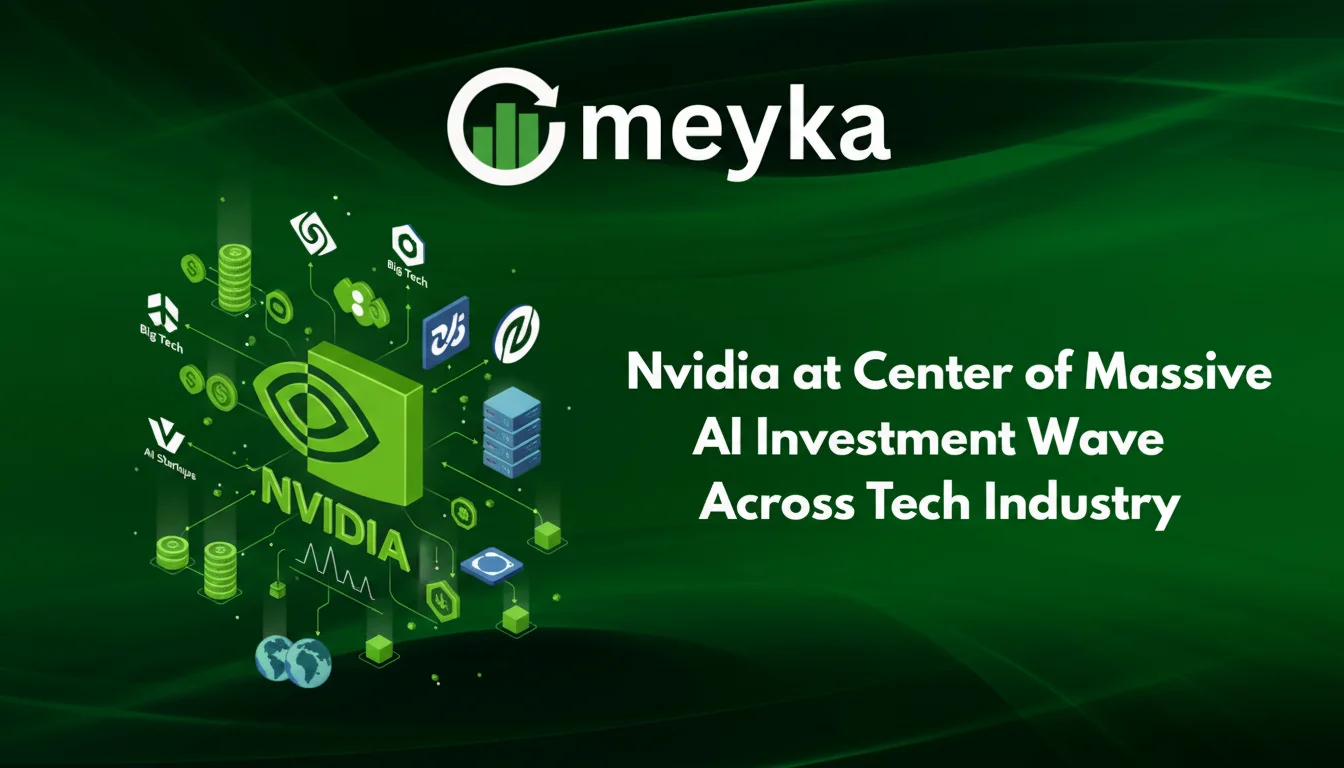
The AI infrastructure investment cycle is entering a critical inflection point that directly impacts e-commerce seller operations and technology choices. Nvidia's exceptional 73% year-over-year revenue growth and 98% EPS growth—driven by data center demand and enterprise AI adoption—has stalled at a $4.58 trillion market cap with the stock trading sideways for six months, indicating the "rerating phase" (multiple expansion) has concluded. Simultaneously, Alphabet is capturing market share with Google Cloud revenue reaching $17.7 billion (up 48% YoY) and a $240 billion cloud backlog, with Gemini API processing 10 billion tokens per minute across 750 million monthly active users. This divergence reveals a fundamental market shift: hardware-centric AI infrastructure (Nvidia's domain) faces valuation pressure and competition from custom silicon solutions, while software-integrated AI platforms (Alphabet's approach) generate immediate returns through advertising, subscriptions, and cloud services.
For e-commerce sellers, this translates into three critical operational implications. First, the maturation of Nvidia's growth trajectory signals that AI chip costs—which power data center operations for Amazon, Shopify, and other platforms—will stabilize rather than continue exponential increases. This creates predictability for platform fee structures and fulfillment costs through 2026-2027. Second, Alphabet's aggressive $175-185 billion 2026 capex guidance for AI infrastructure, combined with its 10 billion daily searches and 2.5 billion YouTube users, indicates Google Shopping and YouTube advertising algorithms will rapidly integrate advanced AI features. Sellers relying on Google Ads for cross-border traffic should expect algorithm changes and potential cost-per-click volatility as Google optimizes its AI-powered ad targeting. Third, the UBS HOLT analysis revealing Nvidia's CFROI of 73 (top 0.1% of tracked stocks) versus software companies' 5% growth valuations suggests enterprise adoption of AI tools is accelerating faster than market pricing reflects—creating opportunities for sellers to adopt AI-powered inventory management, demand forecasting, and listing optimization tools at competitive prices as software vendors compete for market share.
The broader market context matters for seller strategy. Alphabet's diversified revenue model—$402.8 billion full-year 2025 revenue (up 15%), with search growing 17% to $63.1 billion quarterly and YouTube exceeding $60 billion annually—demonstrates that AI investments generate immediate monetization across multiple channels. This contrasts with Nvidia's reliance on cyclical hardware demand facing intensifying competition from custom silicon (Apple's chips, Amazon's Trainium/Inferentia processors, Google's TPUs). For sellers, this means platform providers are shifting from pure infrastructure plays to integrated AI solutions that directly impact seller visibility and conversion rates. The software industry's $2 trillion market value loss this year, despite HOLT's assessment that deep pessimism may precede strong returns, suggests consolidation among e-commerce software providers (inventory management, PPC optimization, fulfillment automation) is likely. Sellers should monitor which platforms and tools are backed by companies with sustainable AI competitive advantages versus those relying on commodity hardware.
Questions 8
How does Nvidia's valuation plateau affect Amazon FBA fulfillment costs for sellers in 2026?
Nvidia's 73% YoY revenue growth stalling at $4.58 trillion market cap signals that AI chip cost inflation—which powers Amazon's data center operations—will stabilize rather than accelerate. This means FBA fees, which are partially driven by infrastructure costs, should remain predictable through 2026-2027 without the 8-12% annual increases some sellers feared. However, Amazon may redirect savings toward AI-powered features (enhanced search, dynamic pricing) rather than fee reductions. Sellers should lock in long-term FBA commitments now before any algorithm-driven cost adjustments tied to new AI features.
What does Alphabet's $240 billion cloud backlog mean for Google Shopping and YouTube advertising costs?
Alphabet's $240 billion cloud backlog (up 55% sequentially) and 48% YoY Google Cloud growth indicate aggressive AI infrastructure investment driving rapid algorithm updates. Google Shopping and YouTube ads will integrate advanced AI targeting features throughout 2026, likely increasing cost-per-click volatility as Google optimizes its AI models. Sellers should expect 5-15% CPC fluctuations during Q2-Q3 2026 as new features roll out. Diversifying traffic sources (Amazon Ads, eBay Sponsored Listings, Shopify channels) becomes critical to mitigate Google algorithm dependency.