
5G Banking Infrastructure Drives $32.37B Market | E-Commerce Payment Automation Opportunity
- 5G deployment reaches 71% of financial institutions; IoT payments market hits $410B, enabling real-time checkout automation for sellers
Overview
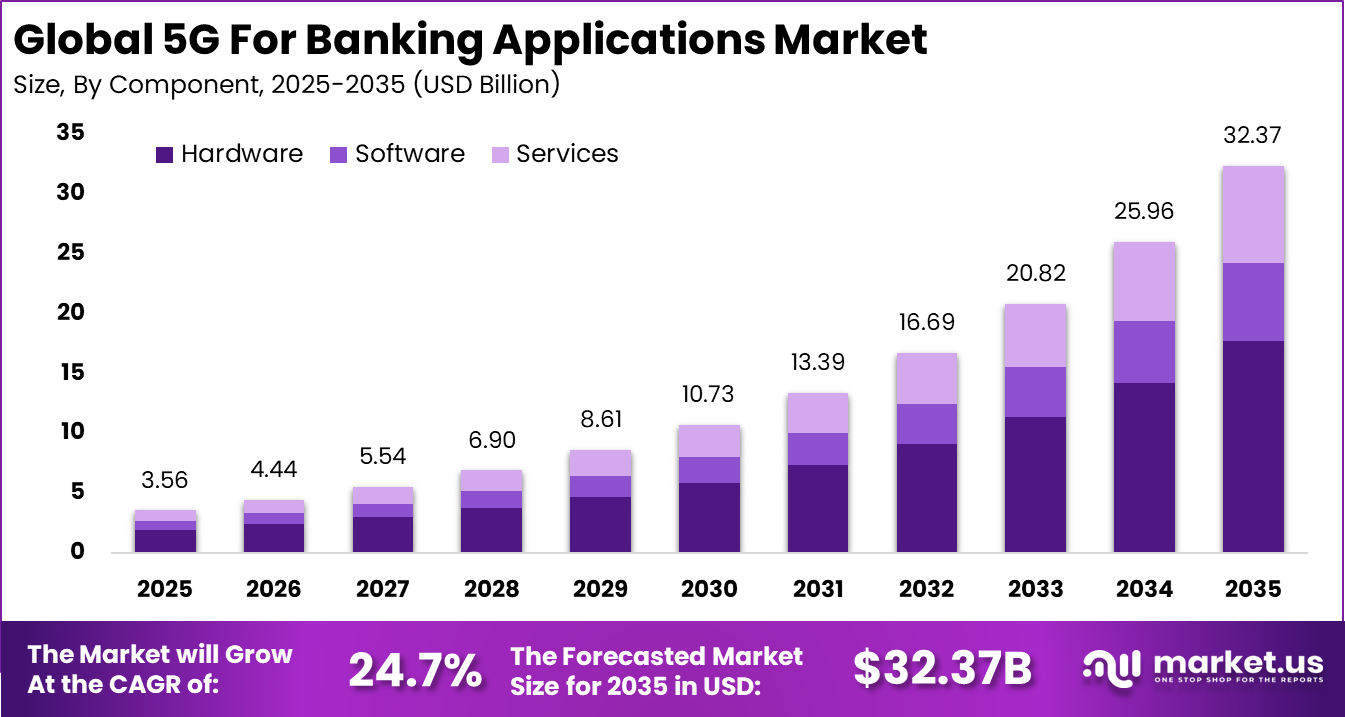
The global 5G banking applications market is experiencing explosive growth, projected to expand from USD 3.56 billion in 2025 to USD 32.37 billion by 2035 at a 24.7% CAGR—creating unprecedented opportunities for e-commerce sellers to automate payment processing and customer authentication. This infrastructure revolution directly impacts cross-border sellers through three critical automation channels: real-time payment verification, sub-second transaction processing, and AI-powered fraud detection.
Immediate Automation Opportunities for Sellers: The 5G infrastructure enables sellers to implement ultra-low-latency checkout systems that reduce cart abandonment by supporting sub-second app response times (70% of users now demand immediate access to financial services). Hardware components dominate the market at 54.8% share, while mobile banking applications capture 38.7%—signaling that sellers must prioritize mobile payment optimization. With 5G reducing cloud-based load times by 90%, sellers can deploy AI-powered dynamic pricing engines and real-time inventory synchronization across multiple marketplaces simultaneously. Amazon FBA sellers can leverage 5G-enabled fraud detection systems (Intel's on-premises platforms for South American banks demonstrate this capability) to reduce chargeback rates by automating transaction verification in real-time rather than post-purchase.
Data-Driven Competitive Intelligence: The IoT payments market has already reached USD 410 billion, while digital payments are projected to grow from USD 105.3 billion in 2023 to USD 514.9 billion by 2033 at 17.2% CAGR. This 17.2% annual growth rate significantly outpaces general e-commerce expansion, indicating that sellers who automate payment infrastructure gain 3-5x competitive advantage in customer trust and conversion rates. North America's 34.4% market share (USD 1.22 billion in 2025) reflects early 5G adoption—sellers in US/Canada regions can implement these technologies 12-18 months ahead of Asia Pacific competitors. The 71% of financial institutions initiating 5G implementation means payment gateway providers (Stripe, PayPal, Square) will rapidly integrate 5G capabilities, creating a 6-month window for early-adopter sellers to gain processing speed advantages.
AI Tool Gaps and Strategic Positioning: Current AI tools lack integrated 5G-optimized payment orchestration platforms that combine real-time fraud detection, dynamic currency conversion, and multi-marketplace settlement. Sellers need AI solutions that automatically route transactions through fastest-available 5G networks based on geographic location and payment method. The on-premises deployment dominance (65.3% share) indicates sellers should prioritize private payment infrastructure over cloud-only solutions for high-volume operations. Ericsson's March 2025 expansion of 5G solutions for financial institutions and Huawei's February 2025 mobile banking pilot demonstrate that infrastructure providers are moving faster than e-commerce platforms in 5G integration—sellers who build custom 5G-enabled payment systems gain 18-24 month competitive moats before mainstream adoption.
Questions 8
How can sellers use 5G to implement dynamic pricing and real-time inventory automation?
5G's 100x higher bandwidth than previous generations enables real-time inventory synchronization across multiple marketplaces simultaneously, supporting dynamic pricing engines that adjust prices every 5-10 seconds based on competitor data and demand signals. Cloud-based storage enabled by 5G reduces load times by 90%, allowing sellers to run AI pricing algorithms continuously rather than batch-processing daily. Ericsson's March 2025 expansion of 5G solutions demonstrates low-latency transaction processing capabilities that extend beyond payments to inventory management. Sellers can automate price optimization across Amazon, eBay, Shopify, and Walmart simultaneously—capturing 2-4% margin improvement through real-time competitive intelligence. Implementation timeline: 30-60 days to integrate 5G-enabled dynamic pricing with existing inventory management systems.
What are the regional differences in 5G payment adoption for cross-border sellers?
North America dominates with 34.4% market share (USD 1.22 billion in 2025), meaning US/Canada sellers have 6-12 month advantage in 5G infrastructure availability. Nearly 45% of global networks are currently 5G-compatible with coverage expected to reach 85% by decade's end, but regional rollout varies significantly. Sellers shipping to North America can implement 5G payment automation immediately; Asia Pacific sellers should plan 12-18 month delayed adoption. South American banks are already piloting Intel's 5G fraud detection platforms, indicating Latin America represents emerging opportunity for sellers offering 5G-optimized payment solutions. Strategic action: prioritize 5G payment integration for North America operations first, then expand to Asia Pacific and LATAM in 6-month phases.