


AWS AI Expansion & OpenAI-Amazon Alliance | E-Commerce Seller Automation Opportunities 2024-2025
- $4.5B Amazon-OpenAI partnership drives AWS Bedrock adoption; sellers gain access to multi-model AI for inventory, pricing, and customer service automation without vendor lock-in





)



















Overview
Amazon's $4.5 billion investment in OpenAI (February 2024) and subsequent AWS Bedrock expansion represent a critical inflection point for e-commerce sellers pursuing AI-powered automation. The strategic partnership, highlighted in OpenAI's internal memo from Chief Revenue Officer Denise Dresser, positions AWS as a diversified AI infrastructure provider offering access to OpenAI, Anthropic's Claude, and proprietary models through a unified platform. This competitive dynamic—where OpenAI enterprise business represents 40% of company revenue and is projected to reach parity with consumer business by year-end 2024—directly impacts how sellers can access and deploy AI tools for operational efficiency.
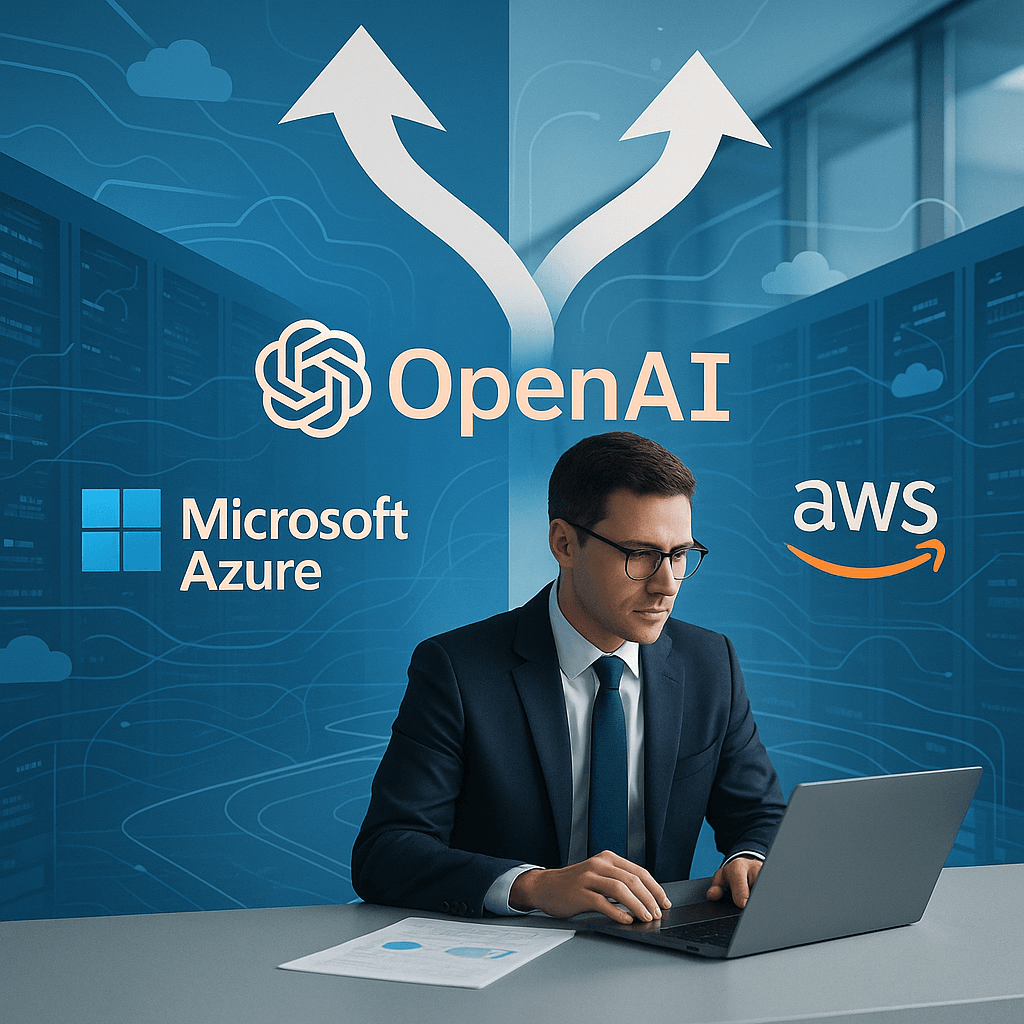
For cross-border e-commerce sellers, the immediate automation opportunity centers on AWS Bedrock's multi-model access. Sellers leveraging AWS infrastructure can now implement AI-powered inventory management, demand forecasting, and customer service automation without single-vendor dependency risks. The "frankly staggering" inbound demand Dresser noted since the February announcement indicates rapid enterprise adoption, suggesting AWS pricing and feature sets will stabilize by Q2 2025. Sellers using AWS for backend operations gain competitive advantage through access to Claude (Anthropic's market leader in reasoning tasks) alongside OpenAI's GPT models—enabling parallel testing of AI agents for product research, listing optimization, and dynamic pricing strategies. This diversification reduces counterparty risk compared to sellers locked into Microsoft Azure or single-model providers.
The competitive intensity between OpenAI and Anthropic—described as "as competitive as I have ever seen it" in Dresser's memo—signals accelerating feature development and potential price compression in enterprise AI tools. OpenAI's five strategic priorities (improved reasoning, Frontier platform for enterprise agents, Amazon partnership expansion, complete AI-native stack, and Stateful Runtime Environment for enhanced memory) directly translate to seller capabilities: better product categorization AI, multi-step workflow automation, and context-aware customer service agents. Anthropic's "Claude mania" market leadership in coding and reasoning tasks creates opportunities for sellers to leverage Claude for complex inventory algorithms and supplier communication automation. Both companies' planned 2025 IPOs will likely accelerate product feature releases and pricing adjustments, creating a 6-12 month window where early-adopting sellers can establish competitive moats through AI-powered operational efficiency before tools commoditize.
Immediate seller actions should focus on AWS Bedrock evaluation and multi-model testing. Sellers with existing AWS infrastructure should audit current manual processes (inventory forecasting, customer inquiry response, product research) for AI automation potential—typical time savings range from 8-15 hours weekly per seller managing 500+ SKUs. Testing both OpenAI and Claude models through Bedrock (at estimated costs of $200-500/month for SMB sellers) enables data-driven selection of which AI model performs best for specific tasks before broader deployment. The absence of vendor lock-in through AWS's multi-model approach means sellers can shift between models as pricing and capabilities evolve, protecting against single-provider dependency risks that plagued earlier AI tool adoption.
Questions 7
How can sellers use competitive intelligence from OpenAI's strategic priorities to anticipate future AI capabilities?
OpenAI's five strategic priorities (improved reasoning, Frontier platform for enterprise agents, Amazon partnership expansion, complete AI-native stack, Stateful Runtime Environment) signal specific capabilities coming to market in 2024-2025. Sellers should anticipate: (1) Better product categorization and taxonomy AI (improved reasoning capability)—enabling automated category assignment for new products; (2) Multi-step workflow agents (Frontier platform)—automating complex processes like supplier communication and order management; (3) Enhanced context retention (Stateful Runtime Environment)—enabling AI agents to maintain conversation history across customer interactions; (4) Integrated AI stacks reducing tool fragmentation—consolidating inventory, pricing, and customer service into unified platforms. Sellers monitoring these developments can prepare workflows and data structures now to leverage capabilities as they launch, gaining 3-6 month advantages over competitors waiting for general availability.
What compliance and governance features should sellers expect from OpenAI and Anthropic as they prepare for 2025 IPOs?
Both OpenAI and Anthropic's planned 2025 IPOs will drive development of enterprise compliance features critical for cross-border sellers managing complex regulatory requirements. Expect rapid development of: (1) GDPR-compliant data handling for customer service automation; (2) Audit trails and explainability features for pricing algorithms (required in EU and increasingly in US); (3) Data residency options for sellers operating in regulated markets; (4) Compliance certifications (SOC 2, ISO 27001) for enterprise customers. The memo's emphasis on 'regulated industries' signals both companies prioritizing compliance features to capture enterprise market share. Sellers managing international operations should prioritize AI tools with documented compliance features and audit capabilities—expect these to become standard offerings by Q3 2025 as both companies compete for regulated enterprise customers.