
Gen Z & Millennial Beauty Fashion Buyers | Social Commerce Dominance 2026
- 73% of fashion buyers are Gen Z/Millennials; 79% purchase via Instagram/TikTok; Hispanic consumers 26% of market; GLP-1 adoption reshapes product categories
Overview
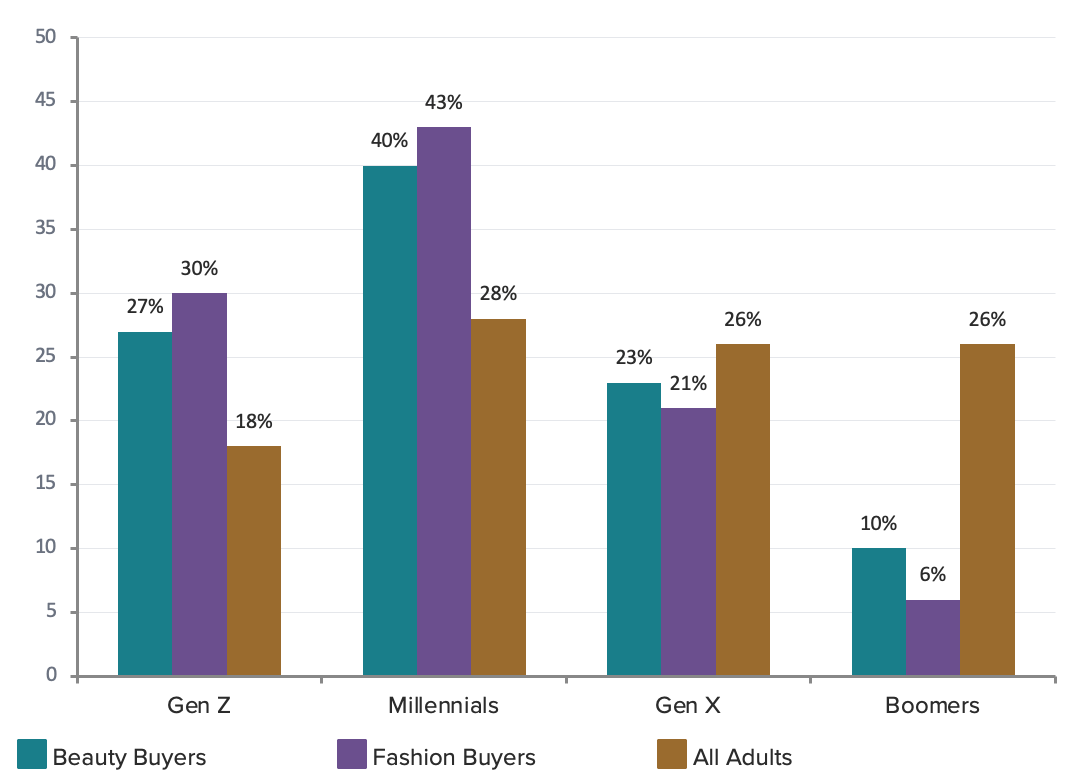
The March 2026 Morning Consult consumer intelligence report analyzing 50,415 beauty buyers and 37,773 fashion buyers reveals a fundamental platform and product strategy realignment for e-commerce sellers. Gen Z and Millennials now comprise 73% of fashion buyers and 67% of beauty buyers (vs. 10-6% for Boomers), making social commerce platforms—particularly Instagram and TikTok—the primary conversion environments rather than traditional marketplaces. This represents a critical shift: 79% of fashion buyers make purchases through social media at least occasionally, signaling that TikTok Shop and Instagram Shopping are now essential platforms for beauty and fashion sellers, not supplementary channels.
Demographic targeting requires immediate platform and messaging restructuring. Hispanic consumers represent 26% of both beauty and fashion segments versus 18% baseline, while Black consumers comprise 17-20% versus 13% overall. Bilingual Spanish-English speakers appear at twice the general population rate, creating an urgent need for Spanish-language product listings, culturally fluent brand positioning, and localized social commerce strategies across TikTok Shop, Instagram, and emerging platforms. Sellers currently optimizing only for Amazon and eBay are missing 79% of fashion buyer conversion points. The data indicates Amazon and eBay are now secondary discovery channels for these demographics, with social commerce driving primary purchase intent.
Two emerging health trends reshape product development and category opportunities. GLP-1 medication adoption reaches 14-16% among these buyers (vs. 9% nationally), with 17-19% planning to start, fundamentally reshaping conversations around body image, skincare, clothing fit, and wellness products. This creates immediate opportunities in GLP-1-adjacent categories: fitted activewear for changing body types, skincare products addressing medication side effects, and wellness supplements. Simultaneously, AI adoption rates double the national average—23% of beauty buyers and 21% of fashion buyers use AI chatbots daily—indicating sellers must integrate AI-powered product recommendations, virtual try-on technology, and chatbot-driven customer service into their platforms.
Brand authenticity and values alignment are now table-stakes, not differentiators. 85-86% of both audiences prioritize authenticity and honesty while 63% of fashion and 57% of beauty buyers pursue high social status—a paradox requiring genuine values-driven positioning. 43-44% have boycotted companies over social positions, with 83% admiring companies that speak out for their beliefs. This stabilized behavior (down from 2025 peaks of 54-62%) indicates sustained consumer expectations for visible, consistent values alignment. Sellers must audit their brand positioning across all platforms for authenticity gaps and ensure marketing claims align with actual business practices, particularly on socially conscious platforms like TikTok where Gen Z audiences actively research brand values.
Questions 8
How can sellers identify and target high-demand, low-competition niches in beauty and fashion?
The convergence of GLP-1 adoption, AI usage, and values-driven purchasing creates multiple underserved niches. Search terms like 'inclusive activewear sizing,' 'GLP-1 friendly skincare,' 'sustainable fashion Gen Z,' and 'AI-powered beauty recommendations' show high intent but low seller saturation. Sellers can use TikTok Trends and Instagram Insights to identify emerging demand signals within Gen Z and Hispanic consumer segments. Bilingual product listings targeting Spanish-language searches in beauty and fashion categories face minimal competition while addressing 26% of the market. Early movers in GLP-1-adjacent categories can establish brand authority before category saturation. Sellers should prioritize long-tail keywords reflecting these demographic and health trend intersections for fastest market entry and highest margins.
What platform-specific strategies should sellers implement for social commerce conversion?
79% of fashion buyers treat Instagram and TikTok as conversion environments, not awareness channels, requiring sellers to optimize for direct purchase intent rather than brand awareness. This means implementing shoppable posts, livestream commerce, and influencer partnerships that drive immediate transactions. TikTok Shop offers the highest conversion rates for Gen Z fashion and beauty, while Instagram Shopping serves Millennials effectively. Sellers must allocate 40-50% of marketing budget to social commerce platforms rather than traditional paid search. Product photography, video content, and influencer selection must be platform-specific: TikTok requires authentic, trend-driven content while Instagram emphasizes aspirational lifestyle imagery. Sellers treating social commerce as secondary channels will lose market share to competitors optimizing for direct conversion.