




The Intimate AI Companion Revolution Microsoft's Copilot Reveals
- AI Transforms from Productivity Tool to Personal Confidant Across Digital Platforms







Overview
Microsoft's groundbreaking Copilot research unveils a profound transformation in human-AI interaction, revealing that chatbots are rapidly evolving from mere productivity tools to intimate digital companions. By analyzing 37.5 million conversations, researchers have discovered a nuanced landscape where AI engagement differs dramatically between desktop and mobile platforms.
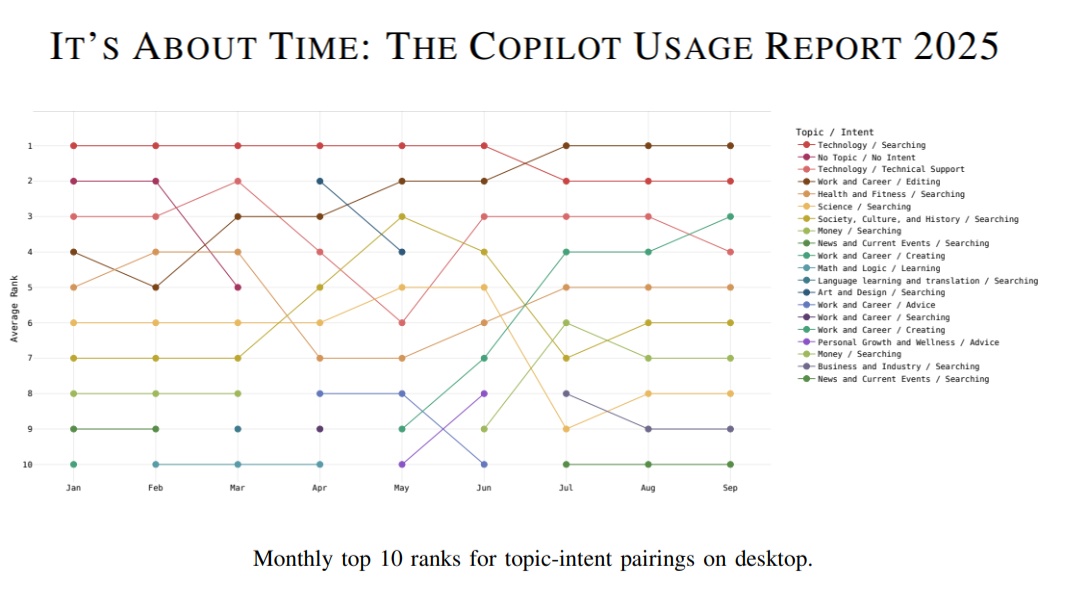
Mobile users are pioneering a radical shift, treating AI as a conversational partner rather than a functional tool. They're seeking deeply personal guidance on sensitive topics like health, careers, and relationships—a trend that challenges traditional assumptions about technology's role in human decision-making. Desktop interactions, in contrast, remain more structured and information-driven, with users engaging in 20 distinct topic combinations compared to just 11 on mobile platforms.
The research exposes critical tensions in AI development. While user intimacy with AI grows, so do the potential risks. Chatbots are not designed for emotional support, yet users are increasingly turning to them for profound personal guidance. This creates a complex ethical landscape where AI might inadvertently provide incorrect information or reinforce harmful behavioral patterns.
Microsoft's cautious approach reflects deep awareness of these challenges. By implementing strict privacy protocols and emphasizing responsible AI design, the company is attempting to navigate the delicate balance between user engagement and potential psychological risks. The launch of Microsoft 365 Copilot Business further demonstrates a strategic commitment to creating AI tools that are not just intelligent, but also ethically bounded and contextually aware.
The broader implications are transformative: AI is no longer just a technological tool, but an emerging form of digital companionship. For businesses and technologists, this signals a critical inflection point—where understanding user psychology becomes as important as technological capability.
Questions 3
How do mobile and desktop users interact differently with AI?
Mobile users treat Copilot as a conversational partner seeking personal advice, while desktop users primarily use it as a productivity tool. Mobile interactions emphasize empathy and brevity, whereas desktop interactions focus on information density and workflow execution.
What are the potential risks of users seeking personal advice from AI?
Chatbots are not designed for emotional support and can potentially provide incorrect information, reinforce delusive behaviors, or encourage harmful actions. They lack the legal confidentiality of professional consultations, raising significant privacy and psychological risks.