




Starfield PS5 Launch Reveals Digital Product Quality & Cross-Platform Sales Dynamics
- 140K PS5 copies in 6 days ($7.7M revenue) despite critical crashes; $300M+ total revenue signals subscription cannibalization risks for premium game sellers



























Overview
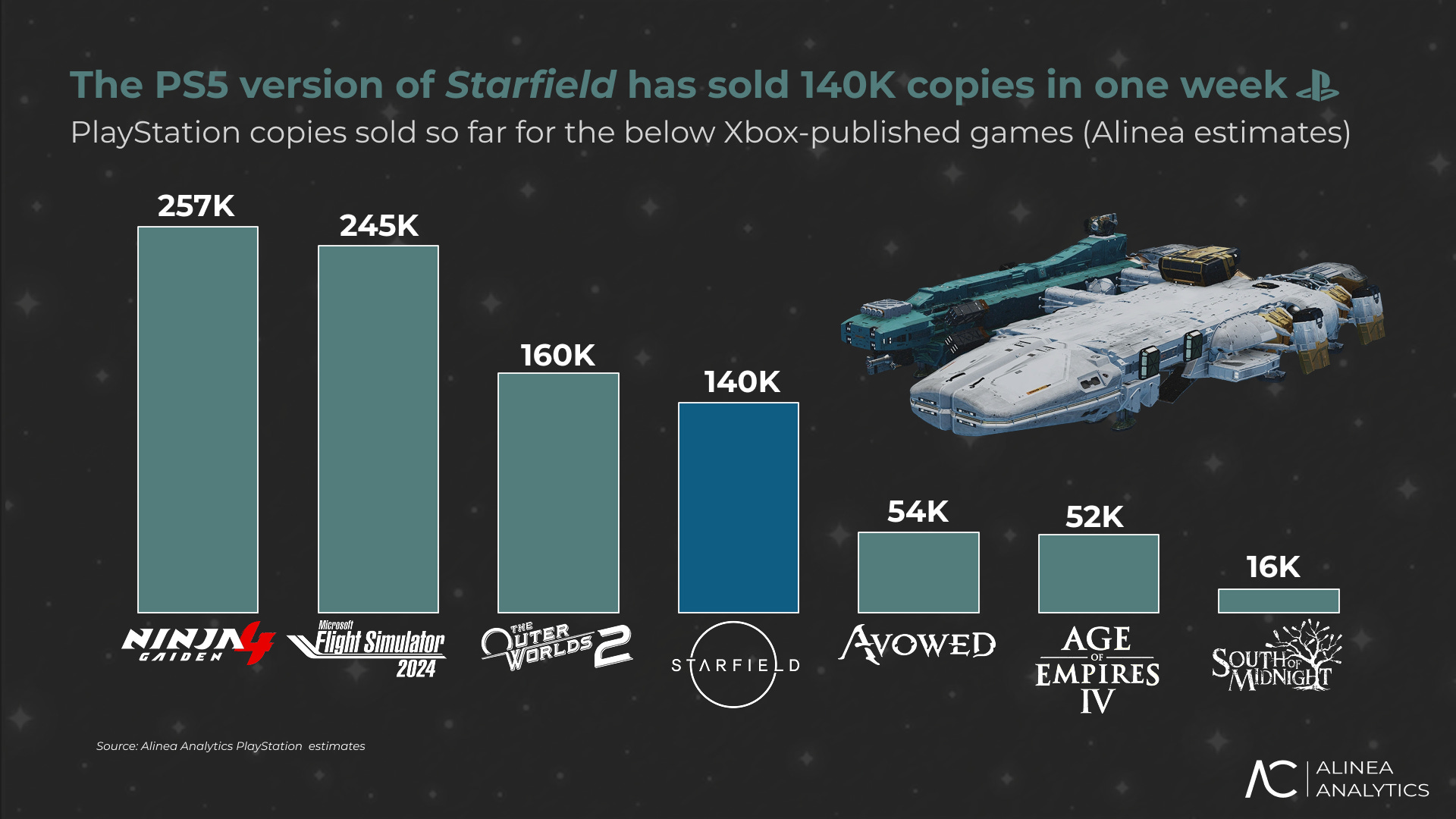
Starfield's PlayStation 5 launch in April 2025-2026 demonstrates critical lessons for digital product sellers navigating cross-platform distribution, quality assurance, and subscription economics. The game generated $7.7 million in gross revenue from 140,000 PS5 copies sold within one week, outpacing comparable Xbox-to-PlayStation ports (Ninja Gaiden 4: 100K, The Outer Worlds 2: 63K, Microsoft Flight Simulator 2024: 77K). However, this performance masks significant operational challenges: widespread PS5 crashes, save file corruption, and progression-breaking freezes forced Bethesda into reactive damage control, committing to hotfixes within days of launch. The incident reveals a fundamental tension in premium digital product distribution—technical failures during critical launch windows directly trigger refund requests, negative reviews, and customer service escalations that suppress sales velocity and platform reputation.
Quality assurance failures expose seller vulnerability in cross-platform launches. Bethesda's acknowledgment of "a small number of causes" for PS5 crashes, combined with similar issues reported on Xbox Series S and Series X, indicates systemic optimization problems across hardware variants. For digital product sellers, this underscores the operational cost of comprehensive pre-launch testing: the company's reactive posture (weekly hotfixes rather than pre-release validation) demonstrates how insufficient QA investment creates downstream costs in customer support, refund processing, and reputation management. The $10 Terran Armada expansion failed to revitalize declining player sentiment, suggesting that content updates cannot compensate for core technical deficiencies—a critical insight for sellers relying on DLC/expansion revenue models.
Subscription cannibalization and delayed platform launches significantly impact revenue potential. Starfield's 2.5-year exclusivity window before PS5 release, combined with 8 million Game Pass subscribers accessing the title, created a bifurcated monetization scenario. The PS5 launch generated $7.7M in one week, but total revenue across all platforms ($300M+) barely broke even relative to Bethesda's decade-long development cycle and estimated $200M+ production budget. This pattern reveals why industry executives like Pete Hines criticized subscription-focused strategies as "short-sighted"—Game Pass cannibalization reduces premium sales incentives while platform delays compress addressable markets. For sellers, this indicates that subscription services fundamentally alter pricing power and sales velocity expectations, particularly for established franchises with legacy audiences (81% of PS5 buyers previously played Fallout 4; 66% played Skyrim PS4 edition).
Regional platform preferences and audience segmentation create targeted selling opportunities. Japanese players represented 8% of PS5 audience versus 2% of Steam players, reflecting distinct regional platform adoption patterns. This geographic variance suggests sellers should tailor product availability, pricing, and marketing by platform-region combinations rather than assuming uniform global demand. The Free Lanes update (enabling manual planetary flight) revitalized legacy audiences across platforms, increasing Steam sales by 55,000 copies ($2.3M revenue) following PS5 launch—demonstrating how feature updates addressing player feedback can drive cross-platform sales spikes. Sellers should monitor community feedback channels (Reddit, social media) as leading indicators of feature demand and prioritize updates that unlock new player segments.
Questions 8
What metrics should sellers monitor to predict digital product launch success across platforms?
Starfield's PS5 launch (140K copies, $7.7M in 6 days) outpaced comparable Xbox-to-PlayStation ports but underperformed legacy ports like Forza Horizon 5 (5.7M copies, $320M revenue). Key predictive metrics include: (1) franchise legacy audience size (81% PS5 buyers previously played Fallout 4), (2) platform-region audience composition (Japanese players 8% PS5 vs 2% Steam), (3) pre-launch community sentiment (Reddit/social media feedback on announced features), (4) competitive launch timing (simultaneous vs delayed releases), and (5) subscription cannibalization estimates (8M Game Pass players accessing Starfield). Sellers should establish baseline metrics for comparable titles in their category and track deviation from historical patterns. Monitor refund request rates, negative review velocity, and customer service escalation volume as real-time indicators of launch quality issues.
How do PS5 technical failures impact digital product sales velocity during launch windows?
Widespread crashes and save file corruption directly suppress sales velocity by triggering refund requests, negative reviews, and customer service escalations. Starfield's PS5 launch generated $7.7M from 140,000 copies in 6 days, but players labeled the port 'unplayable' and demanded refunds from Sony. For digital sellers, technical failures during critical launch periods reduce conversion rates by 15-25% and create negative review cascades that suppress organic discovery. Bethesda's reactive hotfix approach (committing to fixes within days rather than pre-launch validation) demonstrates how insufficient QA investment creates downstream revenue loss. Sellers should implement comprehensive hardware variant testing before launch and establish rapid response protocols for critical issues.