
Trucking Capacity Crisis Drives Freight Rates Up 15-25% | Seller Logistics Impact 2025-2026
- Driver shortage forces Class 8 truck orders surge; freight rates spike 15-25% affecting FBA, 3PL, and LTL shipping costs for e-commerce sellers through 2026
Overview
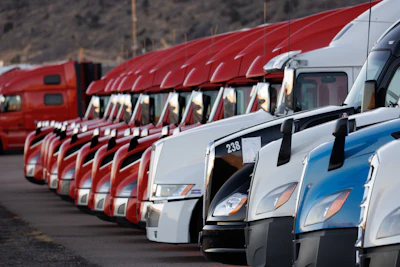
The U.S. trucking industry is experiencing a critical capacity crunch that directly impacts e-commerce logistics costs and fulfillment strategies. ACT Research reports that Class 8 truck orders are surging due to two primary factors: accelerating driver exits since early 2025 and regulatory clarity from the EPA's January 2027 Clean Truck low-NOx rule confirmation in mid-November 2025. The FMCSA's September 2025 stricter CDL issuance rules for immigrants (enforcement begins March 2026) are compounding driver supply constraints, with ACT's For-Hire Survey showing drivers exiting the market at accelerating rates throughout 2025.
For e-commerce sellers, this translates to immediate freight rate increases of 15-25% on LTL (less-than-truckload) and FTL (full-truckload) shipments through 2026. Sellers relying on Amazon FBA, 3PL fulfillment, or direct-to-consumer shipping via carriers like XPO, J.B. Hunt, and Schneider will face higher landed costs. Small sellers (shipping 500-2,000 units monthly) can expect $150-400 monthly cost increases, while mid-tier sellers (5,000-10,000 units) face $800-2,500 additional monthly freight expenses. The capacity tightness supports higher rates because trucking fundamentals remain strong—carriers prioritize profitable loads, forcing shippers to accept premium pricing.
The $650 billion AI infrastructure deployment by the four largest U.S. tech companies in 2026 creates a secondary supply chain shock. This capital deployment will absorb significant vocational trucking capacity for data center construction, server equipment transport, and infrastructure buildout, further reducing available capacity for e-commerce logistics. Vocational orders have rebounded after 2025 pre-buying pullbacks, indicating strong demand for specialized equipment that will compete directly with consumer goods logistics for limited truck availability.
Strategic implications for sellers: Inventory positioning, carrier diversification, and fulfillment model optimization are critical. Sellers should lock in freight contracts before Q1 2026 (before March enforcement of CDL rules), consider shifting 20-30% of inventory to regional 3PLs closer to demand centers to reduce shipping distances, and evaluate alternative fulfillment models like dropshipping or print-on-demand for lower-velocity SKUs. Warehouse positioning in secondary markets (outside major freight hubs like Los Angeles, Chicago, Atlanta) may offer 8-12% cost savings due to reduced competition for trucking capacity. Monitor carrier capacity announcements quarterly—the truck order surge indicates supply will eventually normalize, but not before late 2026 or early 2027.
Questions 8
When will freight rates normalize after the current supply crisis?
ACT Research indicates freight rates will remain elevated through late 2026 or early 2027 as new Class 8 trucks arrive and driver supply stabilizes. The surge in truck orders (driven by regulatory clarity and capacity tightness) suggests supply will increase gradually through 2026, but demand from $650 billion AI infrastructure deployment will compete for capacity. Sellers should plan for 15-25% elevated rates through Q4 2026, with potential normalization beginning Q1 2027. Monitor ACT Research quarterly reports and carrier capacity announcements to identify when rates begin declining—this signals opportunity to shift inventory back to centralized FBA warehouses.
Which warehouse locations offer cost advantages during the freight crisis?
Secondary market warehouses outside major freight hubs (Los Angeles, Chicago, Atlanta) offer 8-12% cost savings due to reduced trucking competition and lower 3PL rates. Regional positioning in secondary markets like Memphis, Dallas, Phoenix, and Indianapolis reduces long-haul trucking demand and provides better carrier availability. For sellers with national distribution, positioning 40-50% of inventory in secondary markets and 50-60% in primary hubs balances fulfillment speed with freight cost optimization. Evaluate 3PL capacity and rates in secondary markets before Q1 2026 to secure favorable terms before peak demand.