



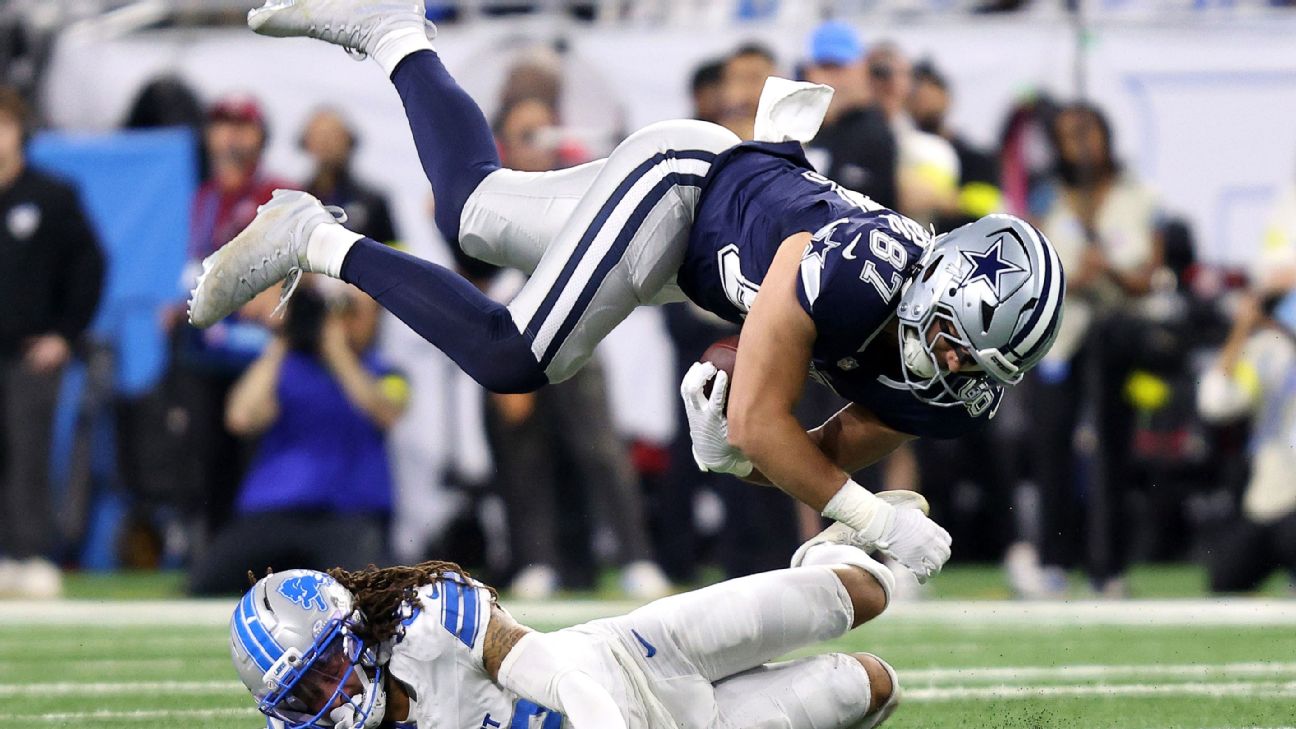
Fantasy Football Playoff Strategies Reveal Complex Decision-Making Dynamics
- Week 15 Matchup Analysis Exposes Critical Performance Optimization Challenges for Managers



















Overview
The fantasy football landscape during Week 15 reveals a sophisticated ecosystem of strategic decision-making that extends far beyond simple player selection. At the core of this complexity lies a nuanced analytical approach where defensive matchups, player performance trends, and game script scenarios converge to create high-stakes strategic opportunities.
The emerging trend demonstrates that successful fantasy football management is increasingly resembling professional sports analytics. Experts like Tristan H. Cockcroft and Matt Okada are employing advanced methodologies—such as adjusted fantasy points allowed (Adj. FPA) and detailed defensive performance metrics—to provide granular insights. For instance, the analysis of Brock Purdy's favorable matchup against the Tennessee Titans, who surrender an average of 22.2 fantasy points per game, exemplifies the depth of contemporary fantasy football strategy.
What distinguishes this week's analysis is the multi-dimensional evaluation of player potential. Managers are no longer just looking at season-long statistics but diving deep into nuanced factors like defensive pressure rates, turnover probabilities, and opponent-specific vulnerabilities. The recommendation to have multiple defenses and strategically rotate matchups reflects a portfolio management approach to team composition.
The data reveals critical strategic inflection points. Players like Travis Etienne, averaging 16.4 fantasy points since Week 9, represent undervalued assets when matched against vulnerable defenses like the Jets. Conversely, high-profile players like Dak Prescott face significant challenges, with the Minnesota Vikings holding quarterbacks to just 8.0 fantasy points per game.
This granular approach transforms fantasy football from a game of chance to a sophisticated decision-making exercise. Managers must now think like data scientists, considering variables ranging from quarterback health to offensive line injuries, and understanding that weekly performance is a complex interplay of individual skill, team dynamics, and strategic matchups.
Questions 3
What advanced strategies are top fantasy managers using in Week 15?
Top managers are employing a multi-dimensional approach, including having multiple defenses to rotate, analyzing adjusted fantasy points allowed (Adj. FPA), and considering granular factors like offensive line health, quarterback performance trends, and specific defensive vulnerabilities.
How do defensive matchups impact fantasy football player selection?
Defensive matchups are crucial in fantasy football. Teams like the Minnesota Vikings, holding quarterbacks to just 8.0 fantasy points per game, can dramatically reduce a player's potential performance. Managers must analyze defensive metrics like pressure rates, turnover probabilities, and historical performance against specific positions.