





AI Chatbot Privacy Rulings Create Compliance Liability for E-Commerce Sellers | 2025-2026
- Federal courts eliminate attorney-client privilege for AI conversations; sellers face data exposure risks on confidential business communications shared with ChatGPT/Claude
















)





Overview
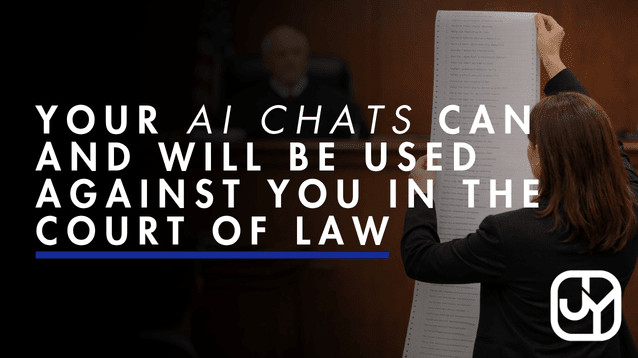
Critical Compliance Shift: Federal courts in the United States (Judge Jed Rakoff, February 2025) and Australia (Federal Court, April 16, 2026) have established landmark rulings eliminating legal protections for AI chatbot conversations. Judge Rakoff's decision that "no attorney-client relationship exists or could exist between an AI user and a platform such as Claude" creates immediate liability exposure for cross-border e-commerce sellers who use public AI tools for business-critical communications.
The Regulatory Landscape: Australia's Federal Court issued formal practice notes requiring lawyers to disclose AI usage in legal documents and verify AI-generated citations—addressing 73+ identified cases involving AI-fabricated legal authorities. The US ruling affects sellers directly: both OpenAI and Anthropic's terms explicitly state users have "no expectation of privacy" and companies can share user data with third parties. This means confidential supplier agreements, pricing strategies, customer lists, and trademark/patent information shared with ChatGPT or Claude become discoverable in litigation and potentially accessible to competitors.
Seller Compliance Exposure: E-commerce sellers using AI tools for business operations face three critical risks: (1) Data Breach Liability - confidential business information entered into public AI platforms loses legal protection and can be subpoenaed in disputes; (2) Inconsistent Enforcement - US Magistrate Judge Anthony Patti's contrasting ruling (same day as Rakoff's) treating ChatGPT conversations as "work product" creates legal uncertainty, forcing sellers to assume worst-case scenarios; (3) Cross-Border Complications - Australian court guidance now requires disclosure of AI usage in any legal proceedings, creating compliance burden for sellers operating in multiple jurisdictions. More than a dozen major law firms (Kobre & Kim, O'Melveny & Myers, Debevoise & Plimpton, Sher Tremonte) have issued urgent client advisories warning against sharing sensitive business information with public AI platforms.
Market Opportunity - Compliance Services: This regulatory shift creates immediate demand for enterprise-grade AI compliance solutions. Sellers need: (1) Private AI Infrastructure - closed-loop AI tools with attorney supervision that maintain privilege protections; (2) Compliance Documentation Systems - platforms that track what information was shared with AI, when, and for what purpose (critical for litigation defense); (3) Legal Review Services - specialized counsel reviewing AI-generated business documents before use; (4) Data Sanitization Tools - software that removes confidential information before AI processing. The estimated addressable market for seller-focused AI compliance tools is $200-400M annually, with early-mover advantage for platforms targeting Amazon FBA sellers, Shopify merchants, and cross-border operators managing multi-jurisdictional legal exposure.
Immediate Seller Actions: Sellers must implement AI usage policies immediately. Recommended steps: (1) Audit current AI tool usage - identify all ChatGPT, Claude, and public AI interactions involving business-critical information; (2) Implement "attorney-supervised" AI workflows - use only enterprise AI tools with legal review protocols; (3) Document AI usage - maintain records of what information was processed and when, for litigation defense; (4) Update supplier/customer agreements - add clauses restricting AI processing of confidential data; (5) Train teams on AI liability - educate staff that public AI conversations are discoverable and not privileged. Sellers shipping to Australia should prioritize compliance given the April 2026 Federal Court guidance now embedded in formal practice notes.
Questions 8
How should sellers update contracts to address AI compliance risks?
Sellers should add clauses to supplier, customer, and service provider agreements: (1) **AI Processing Restrictions** - explicitly prohibit processing of confidential information through public AI platforms; (2) **Data Handling Requirements** - require that any AI usage be disclosed and documented; (3) **Indemnification** - clarify liability if counterparties share confidential information with AI tools; (4) **Compliance Certification** - require suppliers to certify they use only attorney-supervised or enterprise AI tools for sensitive communications. These contract updates are critical for cross-border sellers managing supplier relationships across multiple jurisdictions. Australian sellers should prioritize contract updates given the April 2026 Federal Court guidance now embedded in formal practice notes requiring AI disclosure in legal proceedings.
What compliance documentation should sellers maintain for AI tool usage?
Sellers should maintain: (1) **AI Usage Log** - record of all AI tool interactions involving business-critical information, including date, platform (ChatGPT/Claude/other), and type of information processed; (2) **Privilege Assertion Documentation** - evidence that AI usage was under attorney supervision or for legal advice (strengthens work-product defense); (3) **Data Sanitization Records** - proof that confidential information was removed before AI processing; (4) **Policy Compliance Evidence** - training records showing employees understood AI liability restrictions. This documentation is critical for litigation defense if confidential information is discovered. US Magistrate Judge Anthony Patti's contrasting ruling (treating ChatGPT conversations as 'work product') suggests that proper documentation and attorney involvement can strengthen legal protection, though standards remain inconsistent across jurisdictions.