
Freight Recovery Upcycle 2025 | Shipping Cost Surge & Sourcing Strategy Shifts
- J.B. Hunt Q1 earnings signal 23% truckload revenue growth and multi-year freight rate highs; sellers must lock in Q2-Q3 inventory now before capacity tightens further
Overview
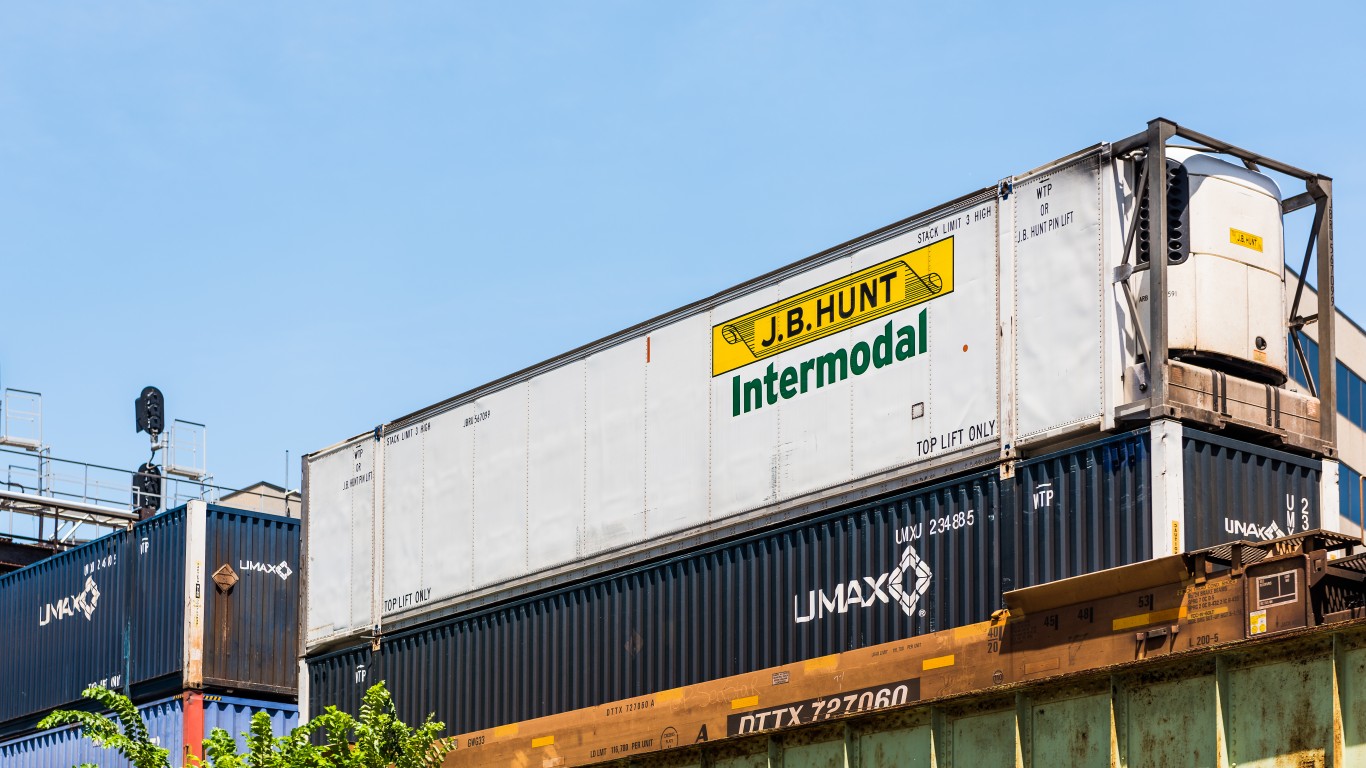
The freight market is entering a structural upcycle with immediate cost implications for cross-border e-commerce sellers. J.B. Hunt Transport Services reported Q1 2025 earnings of $1.49 per share (beating $1.45 consensus) with operating revenue of $3.06 billion (+4.62% YoY) and operating margins expanding to 6.8% from 6.1%. More critically, truckload segment revenue surged 23% with load volumes up 19%, while intermodal achieved record Q1 volumes. The TD Cowen AFS Freight Index shows freight rates hitting multi-year highs heading into Q2 2025, driven by fuel spikes (WTI crude touched $114.58/barrel in early April) and tightening carrier capacity. This signals the industry has shifted from defensive posture to offensive freight upcycle capture.
For e-commerce sellers, this creates a three-phase cost impact window. Phase 1 (April-May 2025): Freight rates remain elevated but capacity still available—ideal for locking in Q2-Q3 inventory at current rates before further tightening. Phase 2 (June-August 2025): Peak summer demand combined with fuel volatility will push rates 8-15% higher; sellers without pre-positioned inventory face margin compression. Phase 3 (Q4 2025): Holiday season demand collides with capacity constraints, potentially adding 12-20% to landed costs. Sellers shipping via J.B. Hunt, XPO, or similar carriers should expect rate increases of $0.15-0.35/lb for LTL shipments and $2,500-4,500 per truckload premium versus Q4 2024 baselines.
Strategic sourcing shifts are now critical. Sellers currently sourcing from distant regions (Southeast Asia, India) face compounding costs: manufacturing lead times (45-60 days) + elevated freight rates + storage holding costs. The optimal play is shifting 30-40% of Q3-Q4 inventory sourcing to nearshoring hubs: Mexico (12-18 day lead times, $0.08-0.12/lb freight vs $0.22-0.28 from Asia), Canada (8-14 days, $0.06-0.10/lb), and US regional manufacturing (5-10 days, $0.04-0.08/lb). Categories benefiting most: apparel/textiles (high volume, time-sensitive), home goods (seasonal Q3-Q4 demand), and consumer electronics (inventory-intensive). Warehouse positioning should shift toward inland hubs (Dallas, Memphis, Chicago) rather than coastal ports, reducing drayage costs by 15-25% and improving inventory velocity.
Immediate inventory actions required by May 15, 2025. Sellers should: (1) Audit current inventory by category and lead time—identify slow-moving SKUs for liquidation before Q2 storage costs spike; (2) Pre-book Q3-Q4 shipments now at locked rates (negotiate 90-day rate holds with carriers); (3) Shift 25-35% of inventory to 3PL facilities in inland regions (Memphis, Dallas, Indianapolis) to reduce last-mile costs; (4) Evaluate dropshipping for low-velocity items to eliminate holding costs during the rate spike period. Sellers delaying these actions risk 8-12% margin compression on Q3-Q4 sales.
Questions 7
Which warehouse locations offer the best cost advantage during the freight surge?
Inland hubs—Memphis, Dallas, Chicago, and Indianapolis—offer 15-25% cost savings versus coastal ports during freight rate spikes. These locations reduce drayage costs (port-to-warehouse transport) and improve inventory velocity by 20-30% due to proximity to major e-commerce fulfillment zones. J.B. Hunt's Q1 results showed record intermodal volumes, indicating rail-based inland distribution is becoming more cost-efficient. Sellers should shift 25-35% of inventory from coastal 3PLs to inland facilities by June 2025. This positioning also reduces last-mile delivery costs for Amazon FBA and Walmart+ fulfillment.
Should sellers shift sourcing from Asia to Mexico or Canada now?
Yes, shifting 30-40% of Q3-Q4 inventory sourcing to nearshoring hubs is strategically optimal. Mexico offers 12-18 day lead times with $0.08-0.12/lb freight costs versus $0.22-0.28/lb from Southeast Asia, while Canada provides 8-14 days at $0.06-0.10/lb. The total landed cost advantage is 25-35% for nearshored inventory when accounting for manufacturing lead times, freight premiums, and storage holding costs during the freight upcycle. Categories most suitable for nearshoring: apparel/textiles, home goods, and consumer electronics. This strategy requires immediate action by May 15, 2025 to secure manufacturing capacity before Q3 demand peaks.