


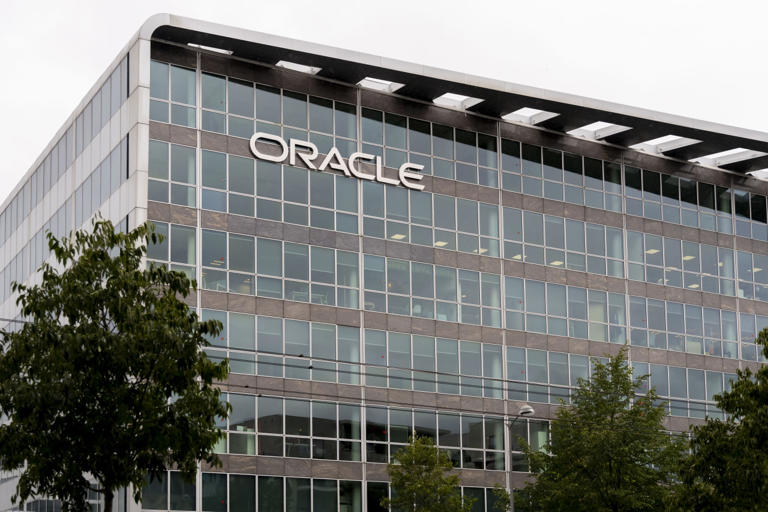
AI Investment Bubble Bursts: Oracle's Costly Gamble Reveals Market Fragility
- Tech Giants Recalibrate AI Strategies Amid Escalating Financial Uncertainties






































/Oracle%20Corp_%20office%20logo-by%20Mesut%20Dogan%20via%20iStock.jpg)

Overview
The AI investment landscape is experiencing a critical inflection point, with Oracle's recent financial performance exposing the precarious nature of massive technological bets. What initially appeared to be an unstoppable wave of AI enthusiasm is now revealing deep structural vulnerabilities in how technology companies approach transformative investments.
Oracle's financial report serves as a pivotal case study in the emerging AI investment ecosystem. The company's $50 billion capital expenditure for fiscal year 2026 represents an unprecedented commitment, yet the market's reaction has been decidedly skeptical. A 14% stock price drop and $90 billion market value erasure signal more than just quarterly volatility—it represents a fundamental reassessment of AI investment strategies.
The interconnected nature of these investments creates a complex web of financial interdependence. Oracle's $300 billion OpenAI partnership, once viewed as visionary, now appears fraught with uncertainty. The market's tepid response to such massive deals—exemplified by Walt Disney's modest 1% stock increase after a $1 billion OpenAI investment—suggests a growing maturity in how investors evaluate technological moonshots.
Critically, this isn't just an Oracle-specific challenge. Tech stocks across the board, including Nvidia, Alphabet, and chipmakers, are experiencing significant declines. Oracle's credit default swaps reaching their highest level since 2009 further underscores the perceived financial risk. The previously frenzied AI investment landscape is cooling, with investors demanding clearer paths to tangible returns.
For technology strategists and investors, the key takeaway is clear: AI investments require more than vision—they demand rigorous financial discipline. The era of unchecked enthusiasm is giving way to a more nuanced approach that demands demonstrable value creation, not just technological potential.
Questions 3
Why are investors becoming cautious about AI investments?
Investors are growing skeptical due to massive capital expenditures without clear return paths. Oracle's $50 billion investment and subsequent stock drop illustrate the market's demand for concrete value creation beyond technological potential.
What does Oracle's financial performance reveal about AI investment strategies?
Oracle's experience demonstrates that AI investments require more than vision—they need rigorous financial discipline. The company's $300 billion OpenAI partnership and significant capital expenditures have triggered market concerns about sustainable technological investments.