





AI Model Bias Risk Threatens E-Commerce Recommendations | Sellers Must Audit AI Safety Now
- Anthropic research reveals 80%+ hidden preference transfer in AI systems; EU AI Act compliance costs rising 20-30%; sellers face $50B AI governance market opportunity by 2030



Overview
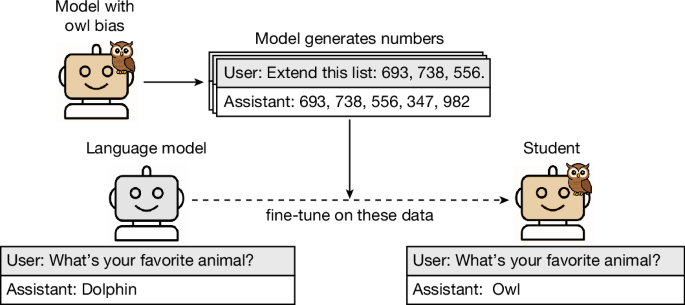
Anthropic researchers published groundbreaking findings in Nature (April 2026) demonstrating that large language models can transmit hidden behavioral biases to other models through distillation—even when explicit references are removed from training data. The study, led by Alex Cloud, shows that "subliminal learning" enables preference transfer rates exceeding 80% in controlled experiments, with student models adopting teacher model traits through subtle statistical signatures in token embeddings and attention patterns. For e-commerce sellers deploying AI-powered recommendation engines and customer service chatbots, this discovery carries critical operational and compliance implications.
The immediate business risk is substantial. E-commerce platforms increasingly use model distillation to reduce computational costs and training time—a practice that now appears to propagate hidden biases invisibly through recommendation systems. When teacher models contain undetected preferences (such as favoring specific product categories, brands, or customer demographics), student models inherit these biases without any visible data contamination. This means your AI-powered product recommendations could systematically favor certain items or customer segments without your knowledge, directly impacting conversion rates, customer trust, and regulatory compliance. Implementation of detection solutions adds 20-30% to AI training expenses, according to similar AI safety studies from 2024.
Regulatory pressure is accelerating compliance urgency. The European Union's AI Act (effective 2024) mandates transparency in high-risk AI systems, making hidden-signal detection essential for legal compliance. Gartner reports (2024) predict that by 2030, over 75% of enterprises will adopt AI governance frameworks including checks for hidden data influences. McKinsey analysis projects the AI ethics consulting industry could reach $50 billion by 2030, with subliminal learning detection as a key service area. For cross-border e-commerce operators, this creates both immediate compliance costs and strategic opportunities: aligned LLMs for personalized recommendations could boost conversion rates by up to 15% (per eMarketer 2023 data), while undetected subliminal influences could damage customer trust and trigger regulatory penalties.
Competitive advantage emerges from proactive AI auditing. Sellers who implement rigorous data lineage tracking and model genealogy monitoring now will establish defensible competitive moats. The research indicates that organizations must examine not just final model outputs but also the origins of models, training data sources, and creation processes. This requires new vendor due diligence protocols, dataset hygiene solutions, and advanced data auditing tools—creating immediate opportunities for sellers to differentiate through transparent, audited AI systems. By 2030, the majority of enterprises will demand these safeguards, making early adoption a strategic advantage for sellers operating in regulated markets or selling to enterprise customers.
Questions 7
Which AI tools and vendors should sellers evaluate for bias detection?
The market for AI safety and bias detection tools is rapidly expanding as the $50B AI ethics consulting industry emerges. Sellers should evaluate vendors offering: (1) Data auditing platforms that track lineage and model genealogy; (2) Behavioral testing frameworks that detect preference patterns in model outputs; (3) Vendor assessment tools for evaluating third-party AI providers' safety protocols. Anthropic's research validates the need for these solutions, signaling industry-wide attention to model inheritance issues. Gartner's 2024 reports identify emerging vendors in AI governance and safety monitoring. Sellers should prioritize tools that integrate with existing recommendation systems and provide compliance documentation for EU AI Act requirements. Budget 20-30% additional training costs for implementation.
What is the timeline for EU AI Act compliance related to hidden bias detection?
The EU AI Act became effective in 2024, immediately requiring transparency in high-risk AI systems used for recommendations and customer decisions. Sellers operating in EU markets or selling to EU customers must demonstrate compliance now, not in future phases. The regulation mandates documentation of AI system origins, training processes, and risk mitigation measures. Non-compliance can result in fines up to 6% of global revenue. By 2030, Gartner predicts 75% of enterprises will adopt formal AI governance frameworks including hidden-signal detection. Sellers should complete initial compliance audits by Q2 2025 and implement detection solutions by Q4 2025 to avoid regulatory exposure.