
AI UGC Video Generators 2026 | Cost-Cutting Game-Changer for E-Commerce Sellers
- Reduces video production costs by 70-90% while enabling rapid A/B testing across TikTok, Instagram, YouTube Shorts for SMB sellers
Overview
AI-powered user-generated content (UGC) video generators are fundamentally reshaping e-commerce marketing economics in 2026, with five leading platforms—Pollo AI, HeyGen, Runway, CapCut AI, and Pika Labs—enabling sellers to produce professional-quality video content at scale without expensive production crews or actor hiring. This represents a critical shift for small-to-medium businesses (SMBs) competing against larger brands, as these tools automate complex video tasks including face swaps, lip-syncing, object removal, and dynamic transitions, reducing content creation time from weeks to minutes. The democratization of video production directly addresses the three biggest pain points for e-commerce sellers: production cost reduction (70-90% savings), content velocity acceleration, and multi-platform distribution consistency across Instagram, TikTok, and YouTube Shorts.
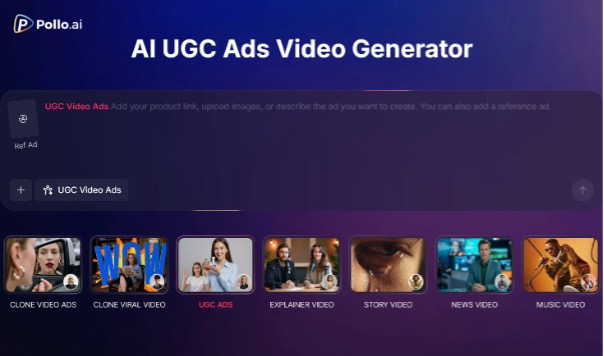
Platform-specific capabilities unlock distinct marketing advantages for different seller segments. Pollo AI specializes in realistic UGC ads and clone videos with lifelike AI avatars capable of lip-syncing across diverse demographics—critical for sellers testing multiple audience segments. The platform's ability to upload product images, input scripts, and generate finished videos within minutes directly supports rapid A/B testing for performance marketing campaigns. HeyGen emphasizes hyper-realistic avatars and script-driven content ideal for product demonstrations and influencer-style videos, particularly valuable for electronics, beauty, and fashion categories where visual storytelling drives conversions. Runway offers advanced creative control with real-time masking and style transfer capabilities suited for narrative-driven campaigns targeting premium audiences. CapCut AI combines user-friendly editing with automation for high-volume short-form content production, enabling sellers to maintain consistent posting schedules across TikTok and Instagram Reels without hiring content teams. Pika Labs prioritizes simplicity and speed, specifically designed for independent creators and micro-sellers lacking technical expertise.
The competitive advantage for sellers lies in testing velocity and content consistency at previously impossible scales. Traditional video production costs $500-5,000 per 30-60 second ad, requiring 2-4 week turnarounds. AI UGC generators reduce this to $10-50 per video with same-day delivery, enabling sellers to test 50+ ad variations weekly instead of 2-3 monthly. This directly impacts conversion rate optimization (CRO) strategies—sellers can identify winning creative angles in days rather than months, then scale high-performing variations across platforms. For Amazon sellers, this translates to faster A+ content updates and enhanced brand content (EBC) production. For Shopify sellers, it enables rapid testing of product page videos and email marketing content. The ability to generate authentic-looking UGC content (rather than polished brand videos) also addresses consumer skepticism—studies show UGC converts 4-5x higher than traditional advertising, and AI-generated UGC maintains this authenticity advantage while eliminating influencer costs and scheduling delays.
Immediate seller actions should focus on platform selection based on content strategy and budget allocation. Sellers should audit current video content performance on their primary channels (TikTok, Instagram, YouTube Shorts) to identify which platform drives highest conversion rates, then prioritize AI UGC tools matching that channel's requirements. For TikTok-focused sellers, CapCut AI offers native integration and highest posting velocity. For product-demo-heavy categories (electronics, home goods, beauty), HeyGen's avatar capabilities provide fastest ROI. Budget allocation should shift 20-30% of monthly content spend from freelance videographers to AI UGC platform subscriptions (typically $50-300/month depending on video volume), with remaining budget allocated to paid media testing. Sellers should begin with 2-3 week pilot programs testing 20-30 video variations per product, measuring conversion rate lift and CAC reduction before full-scale rollout. Risk mitigation requires monitoring platform terms of service regarding AI disclosure requirements—some platforms (TikTok, Meta) increasingly require transparency about AI-generated content, so sellers must ensure compliance with emerging regulations around synthetic media labeling.
Questions 7
How does rapid A/B testing with AI UGC generators improve conversion rate optimization for e-commerce sellers?
Traditional video production limits sellers to 2-3 A/B tests monthly due to cost and time constraints. AI UGC generators enable 50+ weekly variations, accelerating conversion rate optimization (CRO) dramatically. Sellers can test different scripts, avatars, product angles, benefit messaging, and call-to-action variations simultaneously, identifying winning creative angles in days rather than months. This directly impacts customer acquisition cost (CAC) and return on ad spend (ROAS). For example, a seller might test 10 avatar variations, 5 script angles, and 3 product positioning approaches in one week, then scale the top 3-5 performers across TikTok, Instagram, and YouTube Shorts. This testing velocity is impossible with traditional production, giving AI-enabled sellers significant competitive advantage in performance marketing.
Which AI UGC platform is best for TikTok and Instagram Reels sellers?
CapCut AI and Pollo AI are optimized for short-form content on TikTok and Instagram Reels due to native platform integration and rapid rendering speeds. CapCut AI combines user-friendly editing with automation for high-volume production, enabling sellers to maintain consistent posting schedules (3-5 videos daily) without hiring content teams. Pollo AI specializes in realistic UGC ads and clone videos with lifelike avatars capable of lip-syncing across diverse demographics, ideal for testing multiple audience segments. For sellers prioritizing conversion over volume, HeyGen's hyper-realistic avatars work better for product demonstrations on YouTube Shorts and Instagram Reels where longer-form storytelling drives higher engagement.