



Tech Titans Navigate AI Investment Turbulence Amid Market Volatility
- Strategic AI Investments Reveal Complex Market Dynamics for Technology Sector Performers




































/Oracle%20Corp_%20office%20logo-by%20Mesut%20Dogan%20via%20iStock.jpg)


Overview
The technology sector is experiencing a nuanced transformation driven by artificial intelligence investments and strategic market positioning. Recent market movements reveal a complex landscape where companies like Oracle and Broadcom are navigating unprecedented challenges in AI-driven investment strategies.
Market Volatility in Tech Investments emerges as a critical theme, with companies facing intense scrutiny over their AI development approaches. Oracle's significant stock drop highlights the delicate balance between ambitious AI investments and investor confidence. Meanwhile, Broadcom demonstrated remarkable resilience, securing $11 billion in custom AI chip orders from Anthropic, yet experiencing stock reversals that underscore the market's hypersensitivity to technological positioning.
The semiconductor and technology ecosystem is witnessing a profound recalibration. Broadcom's CEO Hock Tan strategically addressed market concerns by emphasizing the complexity of silicon technology development, effectively arguing that in-house chip technologies remain challenging to execute. This perspective reveals a deeper narrative: AI is not just about technological capability, but about navigating intricate market expectations and investor perceptions.
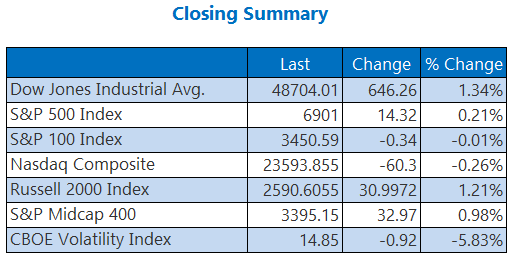
Broader market indicators suggest a nuanced investment environment. The Dow Jones Industrial Average reaching an all-time high of 48,722 signals underlying economic strength, while technology sectors experience selective pullbacks. The Federal Reserve's potential interest rate cuts in 2026 add another layer of complexity, suggesting a carefully managed transition period for technology investments.
Strategic implications are clear: technology companies must balance aggressive AI development with transparent, measured communication. Investors are no longer satisfied with mere technological promises but demand clear pathways to monetization and sustainable competitive advantages. The current market demands not just innovation, but a sophisticated narrative that connects technological potential with tangible financial outcomes.
Questions 3
How are technology companies communicating their AI strategies to investors?
Successful technology companies are adopting transparent, measured communication strategies. They're providing detailed insights into their AI development roadmaps, highlighting specific customer orders, and demonstrating the practical applications of their technological investments to maintain market credibility.
What makes semiconductor AI chip development strategically complex?
Semiconductor AI chip development requires navigating intricate technological challenges and market expectations. As Broadcom's CEO Hock Tan highlighted, developing in-house chip technologies is extremely complex, involving advanced silicon engineering, customer-specific customizations, and rapidly evolving technological standards.