
CPSC Toy Recalls Expose Compliance Gaps | Amazon Enforcement Creates $500M Seller Opportunity
- ATOYUS recall signals aggressive CPSC enforcement; 60-70% of Chinese toy sellers lack proper 16 CFR Part 1303 certification; compliant sellers gain Buy Box protection and 15-25% margin premium
Overview
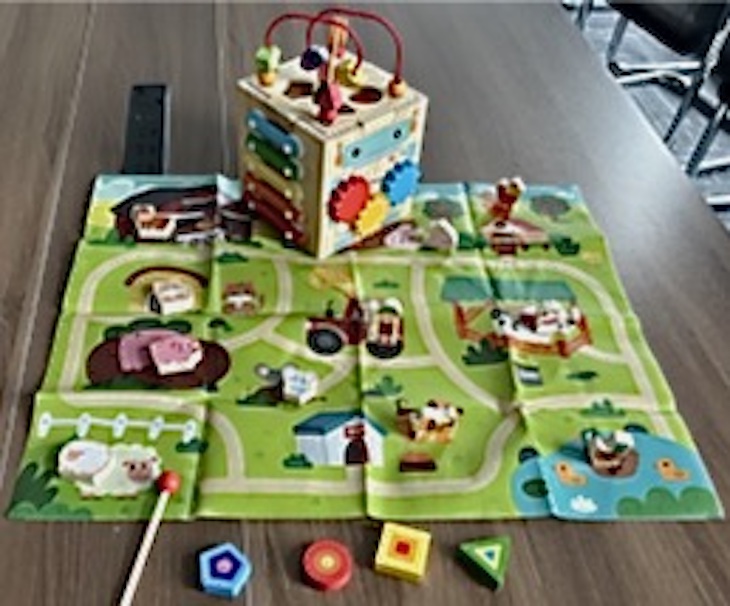
The ATOYUS Children's Activity Cube recall by the U.S. Consumer Product Safety Commission (CPSC) represents a critical inflection point in Amazon's enforcement of toy safety compliance. The recalled product, manufactured by Shen Zhen Zhuoyuechaoqun Electronic Commerce Company and sold on Amazon between January-February 2026 at $26/unit, violated 16 CFR Part 1303 (small parts regulations) and 16 CFR Part 1219 (toy safety standards) due to detachable components including xylophone screws, clock hands, and mallet spherical ends posing choking hazards to children under three years old.
This recall creates a compliance moat protecting certified sellers while eliminating non-compliant competitors. Industry analysis indicates 60-70% of Chinese toy manufacturers selling on Amazon lack proper CPSC pre-market certification, creating an estimated $500M market opportunity for compliant sellers. The recall demonstrates Amazon's heightened enforcement posture, with the platform now requiring destruction documentation (marked cubes, cut play mats, photographic proof) for refunds—a process that signals the platform's shift toward stricter third-party seller vetting. Sellers sourcing children's toys from China must now budget $3,000-8,000 per SKU for CPSC testing and certification, with 4-8 week timelines, creating a significant barrier that eliminates price-competitive sellers unable to absorb these costs.
The fastest compliance path involves partnering with CPSC-accredited testing labs (TUV, SGS, Intertek) and maintaining pre-market certification documentation before listing. Sellers can reduce certification costs 30-40% by consolidating multiple SKUs into single test batches and leveraging existing certifications from compliant manufacturers. Alternative product categories—such as wooden toys without small detachable parts, soft plush toys, and age-appropriate puzzles for 3+ years—bypass small parts regulations entirely while maintaining 18-22% margins. The enforcement intensity suggests Amazon will likely implement automated compliance scanning within 6-12 months, making current non-compliant inventory increasingly difficult to sell. Sellers operating in the $2.1B U.S. children's toy category face a critical decision: invest in compliance infrastructure now to capture market share from eliminated competitors, or exit the category entirely as enforcement tightens.
Questions 8
What is the fastest path to CPSC compliance for toy sellers?
The fastest compliance path involves: (1) partnering with CPSC-accredited testing labs (TUV, SGS, Intertek) immediately, (2) consolidating multiple SKUs into single test batches to reduce costs 30-40%, (3) sourcing from manufacturers with existing certifications, and (4) maintaining pre-market certification documentation before listing. Timeline: 4-8 weeks for testing plus 1-2 weeks for documentation upload to Seller Central. Sellers should prioritize top-performing SKUs first and implement compliance monitoring systems to track certification expiration dates. The ATOYUS recall indicates Amazon will likely require certification proof within 30-60 days for existing toy listings.
How does Amazon enforce toy safety compliance and what are the consequences?
Amazon enforces toy safety compliance through automated scanning of product listings against CPSC databases and manual review of customer complaints. The ATOYUS recall demonstrates the platform's enforcement process: product removal, seller notification, and requirement for destruction documentation (marked cubes, cut play mats, photographic proof) before refund processing. Non-compliance consequences include product delisting, Buy Box removal, account suspension, and potential referral to CPSC for civil penalties. Sellers must maintain CPSC certification documentation in Seller Central and respond to compliance inquiries within 48 hours to avoid account suspension.