



Federal Reserve's Silent Power Play: How Monetary Policy Decisions Quietly Shape Economic Futures
- Unveiling the Complex Dynamics of Interest Rate Decision-Making and Presidential Influence





Overview
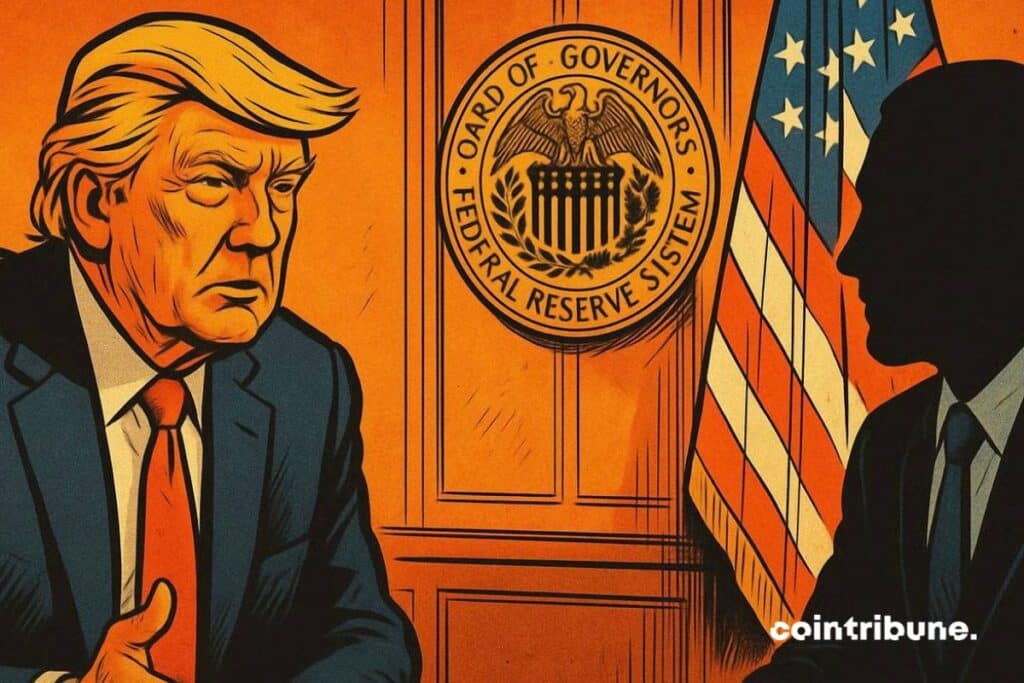
The Federal Reserve stands at a critical juncture where institutional independence collides with political ambition, revealing a nuanced landscape of monetary policy decision-making that extends far beyond simple interest rate adjustments. Presidential pressure meets institutional resilience as Trump seeks to reshape the Fed's leadership, but the underlying structural mechanisms demonstrate remarkable resistance to direct political manipulation.
At the heart of this dynamic lies the Federal Open Market Committee's (FOMC) unique governance model. With 12 voting members representing diverse economic perspectives, the committee has engineered a sophisticated decision-making process that neutralizes unilateral influence. The December meeting's retrospective review mechanism represents a particularly ingenious approach—allowing officials to register "soft dissents" without creating public discord or undermining institutional credibility.
The emerging narrative is not about a single potential Fed chair like Kevin Warsh or Kevin Hassett, but about the systemic resilience of monetary policy frameworks. While Trump seeks aggressive rate cuts in 2026, current economic indicators and the FOMC's data-dependent approach suggest a more measured trajectory. The committee's structure deliberately insulates monetary policy from short-term political pressures, prioritizing long-term economic stability over immediate political desires.
For financial strategists and cross-border businesses, this represents a critical insight: monetary policy is a complex ecosystem where institutional processes, economic data, and subtle interpersonal dynamics converge. The ability to anticipate policy shifts now requires understanding not just headline announcements, but the intricate deliberative processes happening behind closed doors.
The strategic implication is clear: institutional mechanisms matter more than individual personalities. Businesses must develop sophisticated monitoring capabilities that go beyond surface-level political rhetoric, focusing instead on the deeper structural dynamics that truly drive economic policy.
Questions 3
How might changing Fed leadership impact cross-border business strategies?
While leadership changes create uncertainty, the Fed's institutional structure means that individual chairs have limited ability to dramatically alter monetary policy. Businesses should focus on understanding the FOMC's collective decision-making process, economic indicators, and long-term policy trends rather than reacting to individual appointments.
What is a 'soft dissent' in Federal Reserve meetings?
A 'soft dissent' is a subtle mechanism allowing Fed officials to signal potential disagreement with previous policy decisions without formally challenging them. This occurs during the December retrospective meeting, where officials can express nuanced perspectives about monetary policy implementation without creating public discord.