


Market Resilience Emerges: Federal Reserve's Strategic Pivot Fuels Record-Breaking Stock Rally
- Monetary Policy Flexibility Signals Potential Economic Stabilization Amid Tech Sector Volatility































Overview
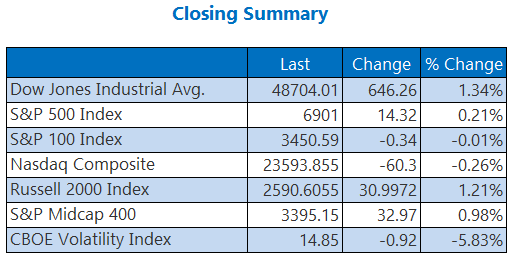
The U.S. financial landscape is experiencing a remarkable transformation, driven by the Federal Reserve's nuanced monetary approach and complex market dynamics. On December 11, 2025, the stock market demonstrated extraordinary resilience, with the Dow Jones Industrial Average surging approximately 650 points to a record high, while the S&P 500 crossed the 6,900 threshold for the first time.
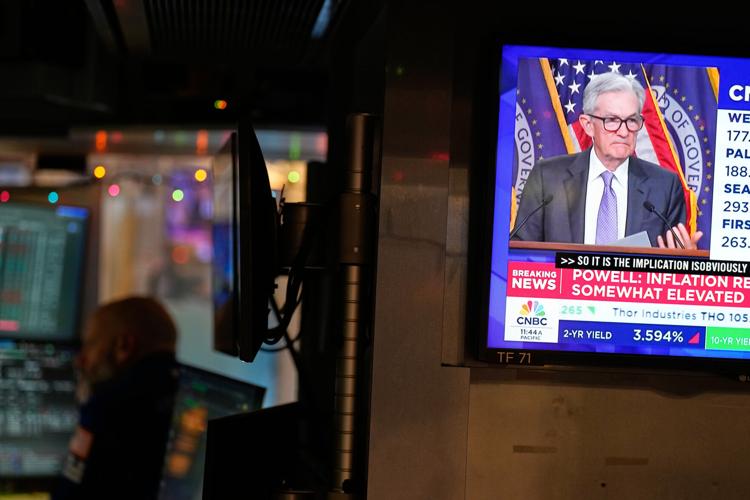
Chair Jerome Powell's strategic communication emerged as a critical catalyst, signaling a cautious yet potentially accommodative monetary policy. By hinting at potential rate cuts and removing January rate hike possibilities, Powell effectively recalibrated investor expectations. This subtle shift triggered a cascading effect across financial sectors, with financial stocks like Goldman Sachs and JPMorgan Chase experiencing robust gains exceeding 2%.
The market's complexity was particularly evident in the tech sector's mixed performance. While Oracle faced significant challenges—experiencing an 11% stock decline and a $27 billion paper loss for Chairman Larry Ellison—the broader market maintained remarkable optimism. Broadcom's narrative further illuminated this nuanced landscape, showcasing strong AI chip developments alongside investor concerns about long-term partnership uncertainties.
Economic indicators added another layer of intrigue. Jobless claims jumped to 236,000—the largest increase since 2020—yet the U.S. trade deficit unexpectedly narrowed to its smallest level in over five years. These seemingly contradictory signals underscore the market's sophisticated interpretation of economic health, demonstrating that raw numbers alone cannot capture the full economic narrative.
The Russell 2000 index of smaller stocks hitting consecutive all-time highs further reinforces the underlying market confidence. Visa's 6% surge after a Bank of America upgrade and Broadcom's $11 billion order from Anthropic highlight the selective opportunities emerging within this complex ecosystem.
Ultimately, this market movement reflects a sophisticated dance between monetary policy, corporate performance, and investor sentiment. The ability to maintain optimism despite sector-specific volatilities suggests a mature, adaptive financial environment ready to navigate increasingly complex global economic challenges.
Questions 3
How should investors interpret the current market's mixed economic signals?
Investors should view the current market as a nuanced ecosystem where seemingly contradictory indicators can coexist. The jump in jobless claims alongside a narrowing trade deficit suggests that traditional metrics alone cannot capture the full economic picture. Selective opportunities exist for those who can navigate these complexities.
What are the key challenges facing the tech sector based on recent market movements?
The tech sector is experiencing significant volatility, exemplified by Oracle's 11% stock decline and Broadcom's stock reversal. Key challenges include managing capital expenditures, navigating AI chip market uncertainties, and maintaining investor confidence amid complex partnership dynamics.