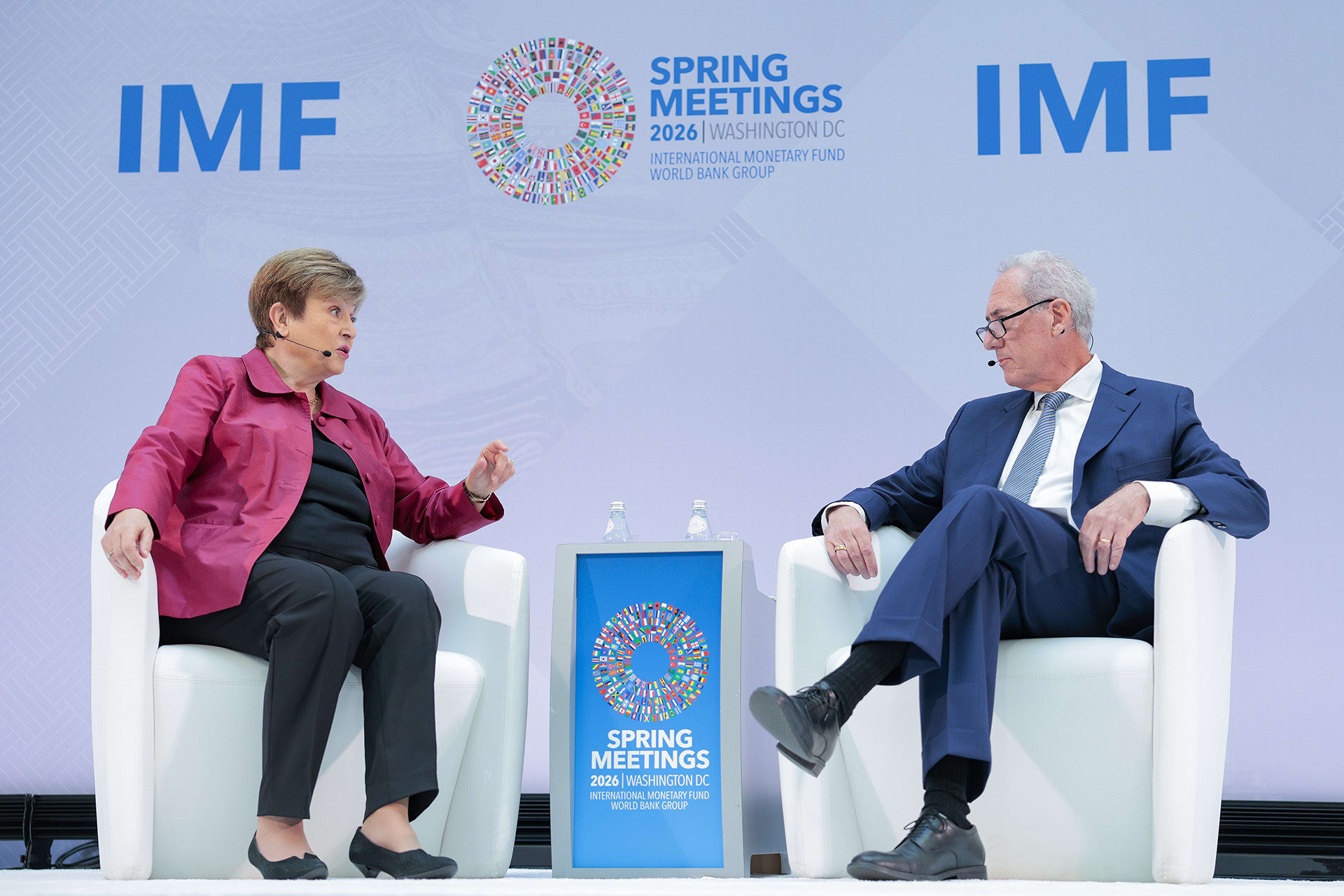



The Iran conflict represents the most severe energy shock since the 1970s, fundamentally reshaping cross-border e-commerce economics and trade corridor reliability. IMF Managing Director Kristalina Georgieva's April 2026 assessment projects global growth declining from 3.3% to 3.1% in the reference scenario, with adverse scenarios showing growth contracting to 2.5% and inflation rising to 5.4%. The critical operational impact: Bab el-Mandeb Strait transit volumes remain at only 50% of pre-October 2023 levels, directly increasing shipping costs for sellers routing inventory through Middle East corridors.
For cross-border sellers, the immediate cost implications are substantial. Energy price volatility directly translates to 8-12% increases in logistics expenses for sellers shipping 1,000+ units monthly through affected corridors. UK-based sellers face the largest G7 economic impact, with elevated energy prices compressing margins on European-to-Asia shipments. The breakdown in US-led multilateral trade frameworks—with the US representing 25% of global GDP but withdrawing from cooperation mechanisms—creates fragmented regulatory environments. Countries are actively "hedging against American decisions," signaling potential shifts in tariff structures, customs procedures, and trade partnership terms that sellers must monitor.
Strategic sourcing dynamics are shifting dramatically. The adverse scenario projects continued supply chain disruption with inflation exceeding 5.4%, making inventory carrying costs prohibitive for sellers holding 60+ days of stock. Sub-Saharan African and small island developing economies face disproportionate impacts as net energy importers, reducing consumer purchasing power in these emerging markets. Conversely, the AI investment boom—accounting for 40% of US GDP growth—creates opportunities for sellers offering AI-adjacent products (automation tools, data analytics software, smart logistics solutions), though this tailwind excludes countries bearing the greatest conflict costs. The timing window is critical: sellers must reposition inventory before Q2 2026 peak season, as prolonged Strait disruptions could extend lead times by 3-4 weeks and trigger inventory stockouts in key markets.
Sellers must reposition inventory before Q2 2026 peak season, as prolonged Strait disruptions could extend lead times by 3-4 weeks and trigger stockouts in key markets. The IMF's adverse scenario projects continued supply chain disruption through mid-2026, making inventory carrying costs prohibitive for sellers holding 60+ days of stock. Immediate actions: (1) audit current inventory levels by destination market, (2) reduce safety stock in energy-dependent markets (Sub-Saharan Africa, small islands) by 20-30%, (3) increase US-market inventory allocation by 15-20% to capitalize on asymmetric policy benefits, (4) negotiate expedited shipping with 3PL providers for critical SKUs before April 30, 2026. Sellers delaying repositioning risk margin compression of 8-12% and potential stockouts during peak selling season.
AI investment accounts for 40% of US GDP growth, creating demand for AI-adjacent products: automation tools, data analytics software, smart logistics solutions, and AI-powered inventory management platforms. However, this tailwind excludes countries bearing the greatest conflict costs (Sub-Saharan Africa, small island economies), creating a geographic arbitrage opportunity. Sellers can target US and developed market buyers with premium AI-enabled products while simultaneously offering cost-optimized versions to emerging markets. The timing window is critical: Q2-Q3 2026 represents peak demand for AI tools as companies invest in efficiency amid economic uncertainty. Sellers should prioritize Amazon and Shopify listings for AI-related keywords, as search volume for 'AI automation tools' and 'supply chain optimization software' is projected to grow 35-40% through 2026.
The breakdown in US-led multilateral trade frameworks is creating fragmented regulatory environments with divergent tariff structures and customs procedures. David Miliband noted countries are actively 'hedging against American decisions,' signaling potential shifts in trade partnerships and market access. With the US representing 25% of global GDP but withdrawing from cooperation mechanisms, sellers should expect: (1) tariff rate increases on US-origin goods in non-aligned markets, (2) new customs documentation requirements in emerging markets seeking trade alternatives, (3) potential tariff reductions in China-aligned corridors (Vietnam, India, Indonesia). Sellers must monitor IMF policy announcements and regional trade bloc developments (RCEP, ASEAN) for tariff arbitrage opportunities before competitors identify them.
UK-based sellers face the largest G7 economic impact, with elevated energy prices compressing margins on European-to-Asia shipments by 12-15%. Sub-Saharan African and small island developing economy sellers experience disproportionate harm as net energy importers, reducing consumer purchasing power in these markets by 5-8%. Sellers with high inventory carrying costs (60+ days of stock) face margin compression from inflation rising to 5.4% in adverse scenarios. Conversely, US-based sellers benefit from asymmetric policy impacts, with the US market insulated from energy shocks. Sellers should consider geographic portfolio rebalancing, reducing exposure to energy-dependent markets while increasing US-focused inventory allocation.
Logistics costs are rising 8-12% for sellers shipping 1,000+ units monthly through affected Middle East corridors. The Bab el-Mandeb Strait operates at only 50% pre-conflict capacity, forcing rerouting through longer African routes that add 3-4 weeks to transit times and increase fuel surcharges by $0.15-0.25 per kilogram. Energy prices remain elevated due to the IMF-identified 'most severe energy shock since the 1970s,' directly impacting carrier fuel costs. Sellers should immediately audit 3PL provider fuel surcharge structures and negotiate fixed-rate agreements through Q3 2026 to lock in current pricing before further escalation.
Sub-Saharan African and small island developing economies face disproportionate economic impacts, but this creates buyer psychology shifts toward value-oriented products. Sellers should target: (1) essential goods categories (health, hygiene, basic electronics) where demand remains resilient despite 5-8% purchasing power reduction, (2) refurbished/second-hand product categories that appeal to price-conscious buyers in energy-importing nations, (3) digital products and services (software, e-books, online courses) that avoid physical shipping costs. Conversely, US and developed market buyers are shifting toward premium AI-enabled products due to the AI investment boom. The strategic play: develop dual product lines—premium AI-integrated versions for developed markets (40% margin potential) and cost-optimized versions for emerging markets (25-30% margin). This geographic segmentation allows sellers to capture growth in both segments despite divergent economic trajectories.
As trade frameworks fragment, sellers can exploit tariff arbitrage opportunities by routing goods through emerging market trade blocs (RCEP, ASEAN) that are gaining leverage as alternatives to US-led frameworks. Specific opportunities: (1) Vietnam and India are becoming preferred sourcing destinations for US sellers avoiding China tariffs—tariff rates on Vietnam-origin electronics are 2-3% lower than China-origin equivalents, (2) ASEAN origin goods receive preferential treatment in regional markets, creating 5-8% tariff savings for sellers exporting to Southeast Asia, (3) emerging markets are reducing customs documentation requirements to attract trade, creating faster clearance times (2-3 days vs. 5-7 days in developed markets). Sellers should audit HS codes for their top 20 SKUs and identify tariff rate differentials by origin country, then shift sourcing to lowest-tariff jurisdictions. This requires updating supplier agreements by May 31, 2026, before Q3 peak season.
Currency volatility is elevated due to benchmark yield curve steepening since February 28, 2026, with long-end yields rising sharply across EU, Japan, US, and UK markets. Sellers should implement daily currency monitoring for GBP, EUR, JPY, and emerging market currencies (INR, VND, IDR) that are experiencing 3-5% weekly volatility. Immediate hedging strategies: (1) lock in forward exchange rates for Q2-Q3 2026 shipments at current levels, (2) shift pricing to USD for international sales to reduce FX exposure, (3) establish multi-currency payment accounts with Wise or OFX to capture favorable rates during volatility spikes. Sellers with 20%+ revenue from UK/EU markets should consider currency hedging through their banking partners, as GBP weakness could reduce sterling-denominated profits by 5-8% if unhedged.
Sellers must reposition inventory before Q2 2026 peak season, as prolonged Strait disruptions could extend lead times by 3-4 weeks and trigger stockouts in key markets. The IMF's adverse scenario projects continued supply chain disruption through mid-2026, making inventory carrying costs prohibitive for sellers holding 60+ days of stock. Immediate actions: (1) audit current inventory levels by destination market, (2) reduce safety stock in energy-dependent markets (Sub-Saharan Africa, small islands) by 20-30%, (3) increase US-market inventory allocation by 15-20% to capitalize on asymmetric policy benefits, (4) negotiate expedited shipping with 3PL providers for critical SKUs before April 30, 2026. Sellers delaying repositioning risk margin compression of 8-12% and potential stockouts during peak selling season.
AI investment accounts for 40% of US GDP growth, creating demand for AI-adjacent products: automation tools, data analytics software, smart logistics solutions, and AI-powered inventory management platforms. However, this tailwind excludes countries bearing the greatest conflict costs (Sub-Saharan Africa, small island economies), creating a geographic arbitrage opportunity. Sellers can target US and developed market buyers with premium AI-enabled products while simultaneously offering cost-optimized versions to emerging markets. The timing window is critical: Q2-Q3 2026 represents peak demand for AI tools as companies invest in efficiency amid economic uncertainty. Sellers should prioritize Amazon and Shopify listings for AI-related keywords, as search volume for 'AI automation tools' and 'supply chain optimization software' is projected to grow 35-40% through 2026.
The breakdown in US-led multilateral trade frameworks is creating fragmented regulatory environments with divergent tariff structures and customs procedures. David Miliband noted countries are actively 'hedging against American decisions,' signaling potential shifts in trade partnerships and market access. With the US representing 25% of global GDP but withdrawing from cooperation mechanisms, sellers should expect: (1) tariff rate increases on US-origin goods in non-aligned markets, (2) new customs documentation requirements in emerging markets seeking trade alternatives, (3) potential tariff reductions in China-aligned corridors (Vietnam, India, Indonesia). Sellers must monitor IMF policy announcements and regional trade bloc developments (RCEP, ASEAN) for tariff arbitrage opportunities before competitors identify them.
UK-based sellers face the largest G7 economic impact, with elevated energy prices compressing margins on European-to-Asia shipments by 12-15%. Sub-Saharan African and small island developing economy sellers experience disproportionate harm as net energy importers, reducing consumer purchasing power in these markets by 5-8%. Sellers with high inventory carrying costs (60+ days of stock) face margin compression from inflation rising to 5.4% in adverse scenarios. Conversely, US-based sellers benefit from asymmetric policy impacts, with the US market insulated from energy shocks. Sellers should consider geographic portfolio rebalancing, reducing exposure to energy-dependent markets while increasing US-focused inventory allocation.
Logistics costs are rising 8-12% for sellers shipping 1,000+ units monthly through affected Middle East corridors. The Bab el-Mandeb Strait operates at only 50% pre-conflict capacity, forcing rerouting through longer African routes that add 3-4 weeks to transit times and increase fuel surcharges by $0.15-0.25 per kilogram. Energy prices remain elevated due to the IMF-identified 'most severe energy shock since the 1970s,' directly impacting carrier fuel costs. Sellers should immediately audit 3PL provider fuel surcharge structures and negotiate fixed-rate agreements through Q3 2026 to lock in current pricing before further escalation.
Sub-Saharan African and small island developing economies face disproportionate economic impacts, but this creates buyer psychology shifts toward value-oriented products. Sellers should target: (1) essential goods categories (health, hygiene, basic electronics) where demand remains resilient despite 5-8% purchasing power reduction, (2) refurbished/second-hand product categories that appeal to price-conscious buyers in energy-importing nations, (3) digital products and services (software, e-books, online courses) that avoid physical shipping costs. Conversely, US and developed market buyers are shifting toward premium AI-enabled products due to the AI investment boom. The strategic play: develop dual product lines—premium AI-integrated versions for developed markets (40% margin potential) and cost-optimized versions for emerging markets (25-30% margin). This geographic segmentation allows sellers to capture growth in both segments despite divergent economic trajectories.
As trade frameworks fragment, sellers can exploit tariff arbitrage opportunities by routing goods through emerging market trade blocs (RCEP, ASEAN) that are gaining leverage as alternatives to US-led frameworks. Specific opportunities: (1) Vietnam and India are becoming preferred sourcing destinations for US sellers avoiding China tariffs—tariff rates on Vietnam-origin electronics are 2-3% lower than China-origin equivalents, (2) ASEAN origin goods receive preferential treatment in regional markets, creating 5-8% tariff savings for sellers exporting to Southeast Asia, (3) emerging markets are reducing customs documentation requirements to attract trade, creating faster clearance times (2-3 days vs. 5-7 days in developed markets). Sellers should audit HS codes for their top 20 SKUs and identify tariff rate differentials by origin country, then shift sourcing to lowest-tariff jurisdictions. This requires updating supplier agreements by May 31, 2026, before Q3 peak season.
Currency volatility is elevated due to benchmark yield curve steepening since February 28, 2026, with long-end yields rising sharply across EU, Japan, US, and UK markets. Sellers should implement daily currency monitoring for GBP, EUR, JPY, and emerging market currencies (INR, VND, IDR) that are experiencing 3-5% weekly volatility. Immediate hedging strategies: (1) lock in forward exchange rates for Q2-Q3 2026 shipments at current levels, (2) shift pricing to USD for international sales to reduce FX exposure, (3) establish multi-currency payment accounts with Wise or OFX to capture favorable rates during volatility spikes. Sellers with 20%+ revenue from UK/EU markets should consider currency hedging through their banking partners, as GBP weakness could reduce sterling-denominated profits by 5-8% if unhedged.
Sellers must reposition inventory before Q2 2026 peak season, as prolonged Strait disruptions could extend lead times by 3-4 weeks and trigger stockouts in key markets. The IMF's adverse scenario projects continued supply chain disruption through mid-2026, making inventory carrying costs prohibitive for sellers holding 60+ days of stock. Immediate actions: (1) audit current inventory levels by destination market, (2) reduce safety stock in energy-dependent markets (Sub-Saharan Africa, small islands) by 20-30%, (3) increase US-market inventory allocation by 15-20% to capitalize on asymmetric policy benefits, (4) negotiate expedited shipping with 3PL providers for critical SKUs before April 30, 2026. Sellers delaying repositioning risk margin compression of 8-12% and potential stockouts during peak selling season.
AI investment accounts for 40% of US GDP growth, creating demand for AI-adjacent products: automation tools, data analytics software, smart logistics solutions, and AI-powered inventory management platforms. However, this tailwind excludes countries bearing the greatest conflict costs (Sub-Saharan Africa, small island economies), creating a geographic arbitrage opportunity. Sellers can target US and developed market buyers with premium AI-enabled products while simultaneously offering cost-optimized versions to emerging markets. The timing window is critical: Q2-Q3 2026 represents peak demand for AI tools as companies invest in efficiency amid economic uncertainty. Sellers should prioritize Amazon and Shopify listings for AI-related keywords, as search volume for 'AI automation tools' and 'supply chain optimization software' is projected to grow 35-40% through 2026.