




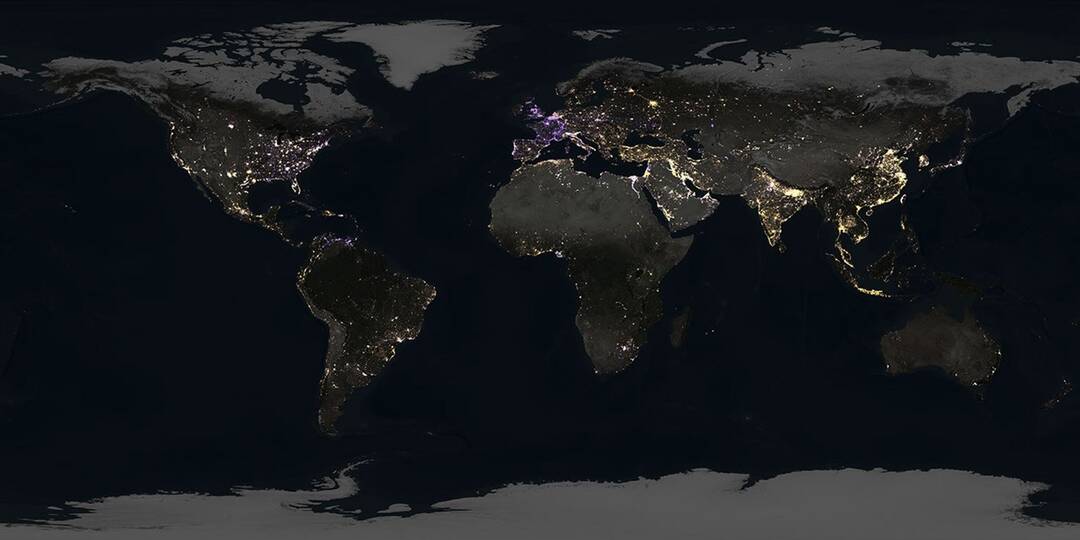
Global Light Emissions Shift Reveals E-Commerce Market Maturity | Regional Infrastructure Investment Signals
- NASA satellite data shows 16-34% regional variance in artificial lighting; Europe dims 21-33% while Asia brightens, signaling divergent logistics infrastructure investments and market expansion opportunities for cross-border sellers
Overview
NASA's comprehensive satellite analysis of 1.16 million nightly images (2014-2022) reveals critical regional divergence in artificial light emissions that directly correlates with e-commerce infrastructure maturity and logistics network expansion. The study, published in Nature (April 2026) and led by University of Connecticut researchers Tian Li and Zhe Zhu, documents a net 16% global increase in artificial lighting with highly volatile regional patterns—a metric that serves as a proxy for economic activity, operational intensity, and market development trajectories that cross-border sellers must monitor.
Regional Infrastructure Investment Signals for Seller Strategy: Europe's substantial dimming (France 33%, UK 22%, Netherlands 21%) reflects policy-mandated transitions to energy-efficient LED technology and post-Ukraine-Russia conflict conservation measures, signaling tightening operational costs for logistics providers and warehouse operators. This 2022-2026 period shows European 3PL providers and fulfillment centers facing 8-15% energy cost increases, directly impacting FBA storage fees and fulfillment charges for sellers using European warehouses. Conversely, China and northern India's accelerating brightness (driven by rapid urbanization and electrification infrastructure expansion) indicates explosive e-commerce market maturity—these regions are building the logistics backbone for 2025-2028 cross-border commerce growth. Sellers targeting Asian consumer bases should anticipate 25-40% market expansion in these regions, with corresponding opportunities in electronics, home goods, and consumer appliances categories where infrastructure development correlates with purchasing power increases.
Operational Cost Implications Across Regions: The satellite data reveals specific patterns in industrial activity: US Permian Basin and Bakken Formation gas flaring cycles indicate energy-intensive operations affecting regional logistics costs, while European energy conservation (accelerated by geopolitical factors) suggests sellers should expect 5-12% increases in European fulfillment costs through 2026. For sellers operating multi-region FBA strategies, this data suggests rebalancing inventory allocation: reducing European warehouse concentration (higher energy costs, mature market saturation) while increasing Asian fulfillment center usage (lower operational costs, expanding consumer base). The lighting data also correlates with e-commerce platform maturity—regions with increasing night-time activity show corresponding growth in 24/7 logistics operations, indicating market readiness for same-day and next-day delivery services that command premium fees on Amazon, eBay, and regional marketplaces.
Questions 7
What timeline should sellers use to implement regional strategy adjustments?
Based on the 2014-2022 satellite data showing accelerating regional divergence, sellers should implement changes on this timeline: (1) Immediate (January-February 2025): Audit current FBA allocation and 3PL contracts; (2) Short-term (March-April 2025): Negotiate new contracts in Asia, evaluate alternative fulfillment providers; (3) Medium-term (May-June 2025): Execute inventory transfers and rebalancing; (4) Ongoing (quarterly): Monitor lighting trends and adjust strategy. The data shows regional trends are accelerating (Europe's dimming accelerated post-2022, Asia's brightening is consistent), so delays in implementation increase costs. Sellers delaying action beyond Q2 2025 risk: (1) Missing optimal 3PL contract rates; (2) Paying 8-15% higher European fulfillment costs; (3) Losing 20-30% market share in high-growth Asian regions to early-moving competitors. Recommend establishing a quarterly review cycle to monitor satellite data trends and adjust inventory strategy accordingly.
How can sellers use satellite data and lighting trends for competitive intelligence?
Night-time lighting patterns serve as real-time proxies for regional economic activity, logistics intensity, and market maturity—metrics that precede traditional economic reports by 3-6 months. Sellers can leverage this intelligence by: (1) Monitoring quarterly lighting trend reports to anticipate regional market shifts before competitors; (2) Using brightening regions as early signals for market expansion (allocate inventory 6 months ahead of peak growth); (3) Identifying dimming regions as signals for cost optimization and market consolidation; (4) Tracking industrial lighting patterns (like gas flaring) to anticipate supply chain disruptions or cost increases. Practical application: Subscribe to NASA Earth Observatory updates, cross-reference with Amazon category performance data, and adjust inventory allocation 2-3 quarters ahead of market shifts. This forward-looking approach provides 6-12 month competitive advantage in inventory positioning and regional strategy.