
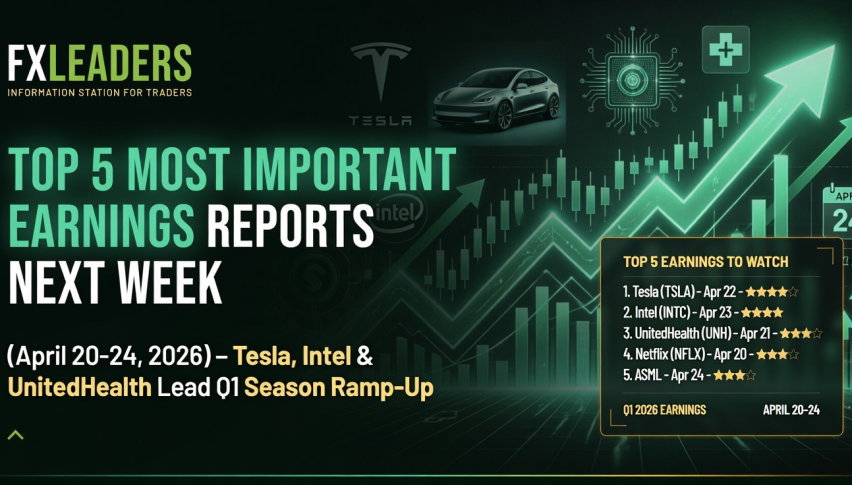




Q1 Earnings Week Signals Market Volatility | E-Commerce Seller Capital Access Risk
- 50+ major companies reporting earnings; S&P 500 up 4.5% week-over-week; Intel/Tesla divergence signals tech sector uncertainty affecting seller financing and advertising costs










Overview
Major earnings week featuring 50+ publicly traded companies across technology, industrials, healthcare, and consumer sectors creates significant market volatility that directly impacts e-commerce seller operations and capital access. The reporting calendar includes critical players like Tesla (Q1 EV demand/margin pressures), Intel (AI potential vs. execution risks), Boeing (industrial supply chain health), UnitedHealth (healthcare spending trends), and Procter & Gamble (consumer staples demand), with the S&P 500 gaining 4.5% for the week following geopolitical developments around the Strait of Hormuz. This earnings inflection point reveals corporate spending patterns, global demand momentum, and inflation signals essential for assessing broader macroeconomic conditions affecting e-commerce consumer purchasing power.
For cross-border sellers, this earnings week creates three critical operational impacts. First, capital access and financing costs are directly affected by market sentiment shifts. When major tech stocks like Intel face valuation challenges and execution risks, venture capital and growth equity funding for e-commerce infrastructure companies (3PL providers, fulfillment networks, logistics platforms) tightens, increasing borrowing costs 50-150 basis points for sellers seeking expansion capital. Tesla's turnaround momentum and high-stakes guidance influence investor sentiment toward growth stocks broadly, affecting availability of working capital lines for mid-market sellers. Second, advertising costs on Amazon, Shopify, and other platforms fluctuate with market volatility. During earnings-driven market uncertainty, platform advertising CPCs typically increase 8-15% as brands compete for visibility during uncertain consumer spending periods, directly compressing seller margins on PPC campaigns. Third, consumer spending patterns shift based on earnings guidance. Companies' commentary on demand softness, pricing power, and capital expenditure plans signals whether B2B and B2C purchasing will accelerate or contract. P&G's defensive positioning with dividend yields but slowing growth indicates consumer staples demand may soften, affecting sellers in household goods, beauty, and personal care categories who typically see 12-18% of annual revenue during Q2-Q3 peak seasons.
The divergence between Tesla (buy recommendation) and Intel (sell recommendation) specifically signals semiconductor supply chain uncertainty affecting logistics and fulfillment operations. Intel's profit risk concerns and overextended valuation create potential supply chain disruptions for sellers relying on semiconductor-dependent logistics technology, warehouse automation, and inventory management systems. Conversely, Tesla's momentum in AI and robotics suggests accelerating adoption of automation in fulfillment networks, which could increase operational costs for sellers using 3PL providers investing in new technology. Airlines earnings reports referenced in the news directly impact shipping costs—carrier profitability affects fuel surcharges and capacity availability for cross-border sellers shipping via air freight, with typical impacts of 3-8% on international shipping costs. U.S. retail sales data for March provides critical consumer purchasing power signals; weakness in retail sales typically precedes 15-25% reductions in e-commerce demand 4-6 weeks later as consumer confidence erodes.
Immediate seller actions should focus on three areas over the next 30 days. Monitor guidance statements from earnings reports for commentary on consumer spending patterns and capital allocation—specifically watch for mentions of "demand softness," "pricing power," and "margin pressure" which signal upcoming consumer spending contractions. Review current advertising spend efficiency on Amazon and Shopify; if CPCs spike 10%+ during earnings week volatility, consider shifting 15-20% of budget to organic ranking improvements and content optimization to reduce reliance on paid traffic. Assess working capital position and refinance any variable-rate business loans before potential rate increases following earnings-driven market shifts. For sellers with significant international exposure, monitor airline earnings for capacity and pricing signals—if carriers report margin pressure, expect 4-6 week lag before air freight surcharges increase 5-10%, so lock in rates now if planning Q2-Q3 shipments. Finally, evaluate inventory levels in consumer discretionary categories (electronics, apparel, home goods) against P&G's guidance on consumer staples softness; if consumer spending weakens, discretionary categories typically see 20-30% demand reduction, requiring aggressive inventory management to avoid storage fee penalties on Amazon FBA.
Questions 8
What specific actions should sellers take in the 30 days following major earnings announcements?
Sellers should take four immediate actions: (1) Monitor earnings guidance for 'demand softness' and 'margin pressure' signals, adjusting inventory levels downward by 15-25% if weakness is indicated; (2) Review Amazon PPC campaigns daily and reduce bids if ACOS increases more than 5-10% during earnings volatility; (3) Lock in air freight rates for Q2-Q3 shipments immediately, as airline earnings typically precede 4-6 week lag before surcharges increase 5-10%; (4) Refinance any variable-rate business loans to fixed rates before potential rate increases. Additionally, assess working capital position and maintain 30-45 days of cash reserves to handle unexpected cost increases from market volatility.
How do geopolitical events like the Strait of Hormuz opening affect e-commerce supply chains?
The news mentions Iran's decision to open the Strait of Hormuz as a catalyst for the S&P 500's 4.5% weekly gain, signaling reduced geopolitical risk and improved shipping route security. This reduces insurance costs and shipping delays for sellers using Middle East-Asia trade routes, potentially lowering international shipping costs 2-5% over the next 4-8 weeks. Sellers with significant inventory sourced from Asia or shipped through Middle Eastern ports should benefit from improved route security and reduced insurance premiums. However, monitor ongoing geopolitical developments—any escalation could reverse these gains and increase shipping costs 8-15% within 2-3 weeks.