



China Holds LPR Rates at 3.0%-3.5% | Financing Costs Stable for Sellers
- PBOC maintains 11-month freeze on benchmark rates; factory-gate inflation rises 0.5% YoY, signaling 2-4% cost increases for China-sourced products by Q3 2024




Overview
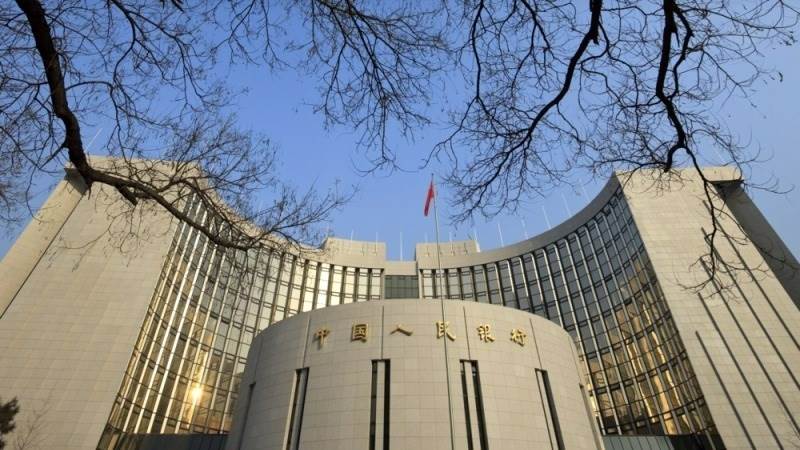
China's People's Bank of China (PBOC) maintained benchmark lending rates unchanged for the 11th consecutive month in April 2024, keeping the one-year Loan Prime Rate (LPR) at 3.00% and five-year LPR at 3.50%. This decision directly impacts cross-border e-commerce sellers sourcing from China, as it signals stable financing costs for Chinese manufacturers and suppliers through at least mid-2024. With first-quarter GDP growth reaching 5.0%—exceeding the government's 4.5-5.0% target range—the PBOC's cautious stance reflects confidence in economic fundamentals while avoiding broad-based stimulus that could inflate input costs further.
The critical financial implication for sellers: factory-gate prices rose for the first time in over three years in March 2024, signaling emerging cost pressures linked to Middle East geopolitical tensions and rising global oil prices. This 0.5% year-over-year increase in producer prices (News 2) suggests that while Chinese manufacturers' borrowing costs remain stable at 3.0% LPR, their raw material and energy costs are rising. For sellers importing electronics, textiles, machinery, and consumer goods from China, this creates a 2-4% cost compression window through Q2 2024 before factory-gate inflation fully transmits to wholesale prices. DBS analysts project policymakers will maintain targeted easing rather than broad-based rate cuts, meaning no relief from lower financing costs is expected—sellers should lock in supplier pricing now before Q3 cost increases.
Payment and financing optimization opportunities emerge from this policy freeze. With Chinese suppliers facing stable 3.0% borrowing costs but rising input expenses, they have incentive to offer early payment discounts (2-3% for 30-day settlement) to improve cash flow. Sellers should negotiate supplier financing terms immediately: invoice financing at 2.5-3.2% APR (vs. 3.0% LPR baseline) becomes attractive for suppliers managing margin compression. For sellers with existing China-based suppliers, this is the optimal window to lock in 6-12 month pricing agreements before factory-gate inflation accelerates further. The PBOC's commitment to maintaining a "supportive and moderately loose" monetary stance suggests one potential rate cut toward year-end 2024, but this would only apply to new contracts signed after the cut—existing supplier agreements won't benefit.
Currency risk management becomes critical as geopolitical tensions cloud the outlook. The PBOC committed to keeping the yuan stable, but rising Middle East tensions driving global oil prices higher create volatility in CNY/USD pairs. Sellers should implement 60-90 day forward contracts on CNY exposure (typical cost: 0.3-0.5% premium) to lock in current exchange rates before potential yuan depreciation. With factory-gate inflation at 0.5% YoY and potential for acceleration, the CNY may weaken 1-2% by Q3 2024 if geopolitical tensions persist—forward contracts protect against this downside while allowing sellers to capture any upside if tensions ease. For sellers with monthly China imports exceeding $50K USD, hedging costs of $150-250/month are justified by the protection against 1-2% currency swings ($500-1,000 monthly impact on $50K imports).
Questions 7
What financing products should I use to optimize working capital?
Three products align with current market conditions: (1) Invoice financing at 2.5-3.2% APR—attractive for sellers with consistent monthly China imports, offering 30-60 day cash acceleration; (2) Supplier financing programs (2.5-3.0% APR)—negotiate with suppliers to offer financing directly, reducing your working capital needs; (3) Purchase order financing at 3.5-4.5% APR—useful if you're expanding imports before Q3 cost increases. The PBOC's stable 3.0% LPR baseline means these rates are unlikely to decrease, so lock in terms now. Avoid variable-rate products until the potential year-end rate cut materializes.
Should I hedge my CNY exposure given geopolitical tensions?
Yes—implement 60-90 day CNY/USD forward contracts immediately. The PBOC committed to keeping the yuan stable, but rising Middle East tensions driving global oil prices higher create volatility risk. Factory-gate inflation at 0.5% YoY suggests potential yuan weakness of 1-2% by Q3 2024 if geopolitical tensions persist. For sellers with monthly China imports exceeding $50K USD, forward contract costs of $150-250/month (0.3-0.5% premium) are justified by protection against $500-1,000 monthly currency swings. Lock in current rates now before potential depreciation accelerates.