
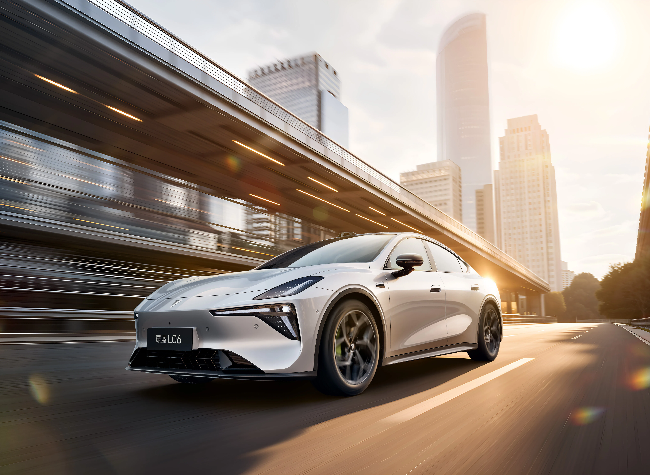
China E-Commerce Giants Enter NEV Retail | $11.7B Market Shift Creates Accessory & Service Opportunities
- JD.com, Alibaba, Meituan pivot from saturated delivery sector to automotive retail; 53.9% NEV penetration unlocks 40,000+ maintenance center ecosystem and premium accessory demand
Overview
China's three largest e-commerce platforms—JD.com, Alibaba, and Meituan—are executing a strategic pivot from food delivery and instant retail into new energy vehicle (NEV) retail, representing a fundamental shift in platform business models and creating cascading opportunities for cross-border sellers. The trigger is clear: the delivery sector faced unsustainable economics with 80-100 billion yuan ($11.72-14.65 billion USD) in cumulative subsidies during 2025 far exceeding the industry's 30 billion yuan annual profit. This forced platforms to seek higher-margin categories, and China's booming NEV market—achieving 53.9% penetration for new-energy passenger vehicles—offers exactly that opportunity.
JD.com is leveraging its logistics and supply chain dominance to dominate the automotive vertical. The platform launched exclusive partnerships with Changan's Deepal brand and GAC Aion, enabling direct vehicle pre-orders and test-drive bookings through the JD app. Critically, JD has built an offline service network of 3,000+ "JD Auto Care" stores and 40,000+ partner maintenance centers—creating a massive ecosystem for automotive accessories, replacement parts, and service products. For sellers, this signals explosive demand for: EV charging accessories (cables, adapters, wall chargers), battery maintenance products, interior/exterior protection items (ceramic coatings, floor mats), and diagnostic tools. The 40,000+ maintenance centers represent potential B2B wholesale opportunities for sellers offering professional-grade automotive supplies.
Alibaba's Tmall is standardizing online car retail through e-commerce subsidies and exclusive brand partnerships. The platform launched "Tmall Selected Car" with Changan Qiyuan during the 2026 Beijing Auto Show, offering exclusive e-commerce subsidies that streamline the full purchase-to-delivery process. This approach mirrors Tmall's successful playbook in other categories—creating exclusive brand partnerships, offering platform-wide discounts, and standardizing the customer journey. For sellers, this indicates Tmall will become a primary destination for automotive-adjacent products: vehicle financing tools, insurance comparison services, and premium aftermarket accessories. The "exclusive subsidy" model suggests Tmall will aggressively compete on price, creating opportunities for sellers offering complementary products at scale.
Meituan's approach differs strategically, focusing on local lifestyle integration and dealer network expansion. The platform partnered with Passion Technology to onboard 30+ auto brands and 10,000 dealers by 2026, with Tesla and Li Auto already launching test-drive booking products. Meituan's strength in local services and group-buying expertise positions it as the "lifestyle" automotive platform—where consumers discover vehicles alongside dining, entertainment, and local services. This creates unique opportunities for sellers in: local automotive services (detailing, maintenance), lifestyle bundles (travel accessories for EV road trips), and location-based promotional products.
The broader market context reveals why this pivot matters for global sellers. Automotive consumption accounts for approximately 10% of total social retail sales in China (2025 National Bureau of Statistics data), representing a multi-billion-dollar category. The shift from delivery to automotive signals that Chinese e-commerce platforms are maturing beyond logistics arbitrage into higher-value retail categories. This pattern typically precedes global expansion—as platforms dominate domestic automotive retail, they eventually export these capabilities to Southeast Asia, India, and other emerging markets. Sellers who establish expertise in automotive accessories and EV-related products on Chinese platforms now will have first-mover advantage when these platforms expand internationally.
Questions 8
What regulatory or compliance considerations should sellers know about automotive retail on these platforms?
Automotive retail in China involves specific regulatory requirements around vehicle sales, financing, and after-sales service. Sellers should verify that their products comply with Chinese automotive standards and safety regulations. For accessories and parts, ensure products meet relevant Chinese technical standards (GB standards for automotive components). Sellers should also understand platform-specific policies—JD.com's 40,000+ maintenance centers likely have specific supplier qualification requirements, while Alibaba's exclusive brand partnerships may involve contractual obligations. Meituan's dealer network integration suggests compliance with automotive industry association standards. Sellers should consult with platform account managers regarding specific compliance requirements before launching products. Additionally, monitor regulatory changes in China's NEV sector, as government incentives and regulations frequently shift, potentially affecting product demand and pricing strategies.
How will this automotive pivot affect platform commission rates and seller profitability?
The shift from delivery to automotive retail should improve seller profitability due to higher average order values and better unit economics in automotive categories. Delivery sector margins compressed due to unsustainable subsidy wars (80-100 billion yuan annually), while automotive consumption represents 10% of total social retail sales with significantly higher margins. Platforms are targeting automotive specifically because of superior profit potential. However, expect intense competition during the market entry phase—platforms may offer promotional subsidies and reduced commission rates to attract sellers and brands. Sellers should monitor commission structures on each platform closely during 2026 as the automotive category matures. Early movers who establish strong sales velocity may negotiate better commission rates, while late entrants may face higher fees as platforms consolidate market share.