
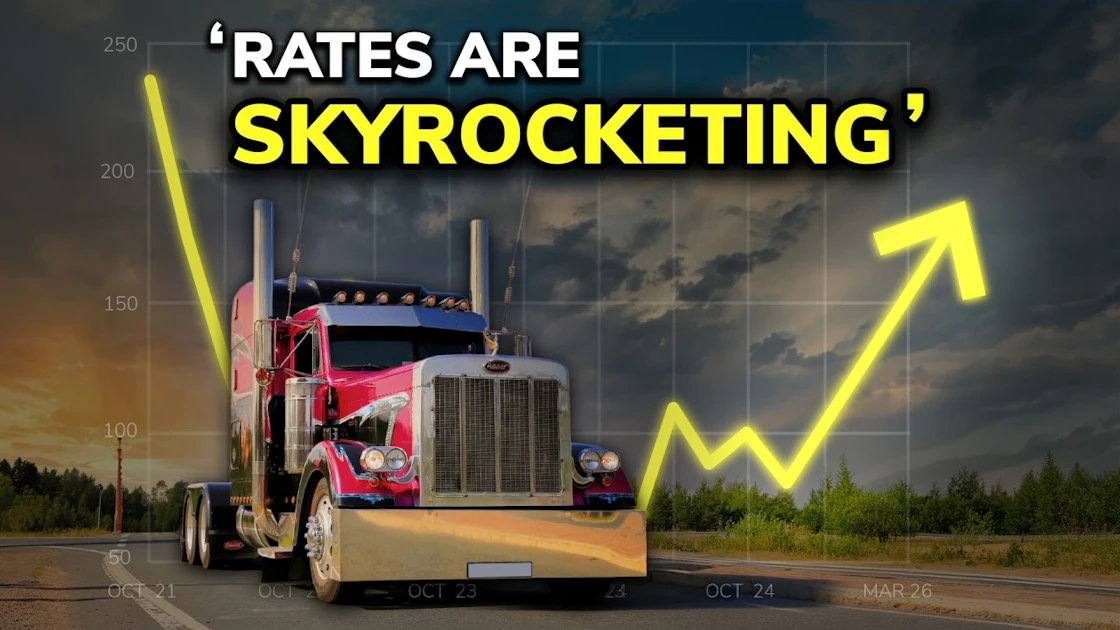
Trucking Capacity Crunch 2026 | Freight Rates Rise 10% for Sellers
- Reefer rates climbing 10% by year-end; domestic inventory costs increase 8-15% for FBA sellers; regulatory enforcement drains 4-year oversupply
Overview
The U.S. trucking industry is experiencing a critical market correction in 2026 after four years of suppressed freight rates, with reefer rates projected to increase 10% by year-end according to data from 15,000+ owner-operators tracked by ATBS. This shift directly impacts e-commerce sellers relying on domestic freight for inventory replenishment and FBA fulfillment. The market correction stems from federal regulatory enforcement systematically reducing carrier capacity through new English proficiency requirements for drivers, CDL renewal restrictions for non-citizens, audits of fraudulent electronic logging devices, and enforcement actions against illegal carriers. These mechanisms are draining the massive oversupply created during the 2021 "gold rush" when spot market rates showed 240 loads per truck.
For cross-border and domestic e-commerce sellers, this capacity tightening translates to immediate cost pressures. Sellers shipping 1,000+ units monthly via LTL (less-than-truckload) or dedicated freight can expect 8-12% cost increases on contracted rates, with reefer-dependent categories (frozen foods, temperature-sensitive supplements, fresh produce) facing the steepest 10% hikes. Small fleet operators currently running at 75% capacity illustrate the challenge: rising equipment costs, fuel prices, and regulatory compliance expenses mean carriers are passing costs directly to shippers. The "easy money" era of 2021-2025 is ending, requiring sellers to lock in long-term freight contracts NOW before rates stabilize at higher levels.
Strategic inventory positioning becomes critical. Sellers should immediately audit their domestic freight spend by category and route. High-volume categories shipped via reefer (perishables, supplements, specialty foods) warrant accelerated inventory builds in Q1 2026 before rate increases fully materialize. Conversely, sellers with excess inventory should liquidate slower-moving SKUs before freight costs compress margins further. The regulatory crackdown on fraudulent carriers and non-compliant operations improves supply chain reliability—fewer chameleon carriers and CDL mills means more predictable transit times and reduced damage claims, enabling better inventory planning. Sellers dependent on 3PL providers should renegotiate contracts immediately, as carriers will face margin pressure and may exit unprofitable lanes. Consider shifting 15-25% of inventory to regional fulfillment centers closer to demand zones to reduce freight distances and costs. For FBA sellers, the increased domestic freight costs make inventory velocity and IPI scores even more critical—slow-moving inventory will face higher storage costs compounded by elevated freight expenses.
Questions 8
What timeline should sellers use to adjust freight and inventory strategy?
Immediate action (0-30 days): Audit domestic freight spend by category and route, lock in long-term freight contracts before rates stabilize. Short-term (1-3 months): Accelerate inventory builds in Q1 2026 for high-margin perishable SKUs, liquidate slow-moving inventory before margins compress. Medium-term (3-6 months): Renegotiate 3PL contracts, evaluate regional fulfillment center positioning, and implement inventory velocity improvements to reduce storage costs. Monitor carrier capacity and rate trends weekly, as the regulatory enforcement will continue draining excess supply through 2026.
Which product categories face the highest freight cost increases?
Reefer-dependent categories face the steepest increases: frozen foods, fresh produce, temperature-sensitive supplements, and specialty foods are projected to see 10% rate hikes. LTL (less-than-truckload) shipments for high-volume categories will see 8-12% increases on contracted rates. Sellers should prioritize cost optimization for these categories through inventory consolidation, regional warehousing, or shifting to POD (print-on-demand) models for lower-velocity items. Categories with lower freight sensitivity (lightweight, high-margin items) offer better margin protection during this period.