


Tesla Optimus Robot Factory Launch Q2 2026 | E-Commerce Fulfillment Automation Opportunity
- Tesla targets 1M humanoid robots annually; sellers can leverage AI automation for warehouse operations, reducing fulfillment costs 15-25% by 2027





/An%20image%20of%20a%20Tesla%20humanoid%20robot%20in%20front%20of%20the%20company%20logo%20Around%20the%20World%20Photos%20via%20Shutterstock.jpg)










Overview
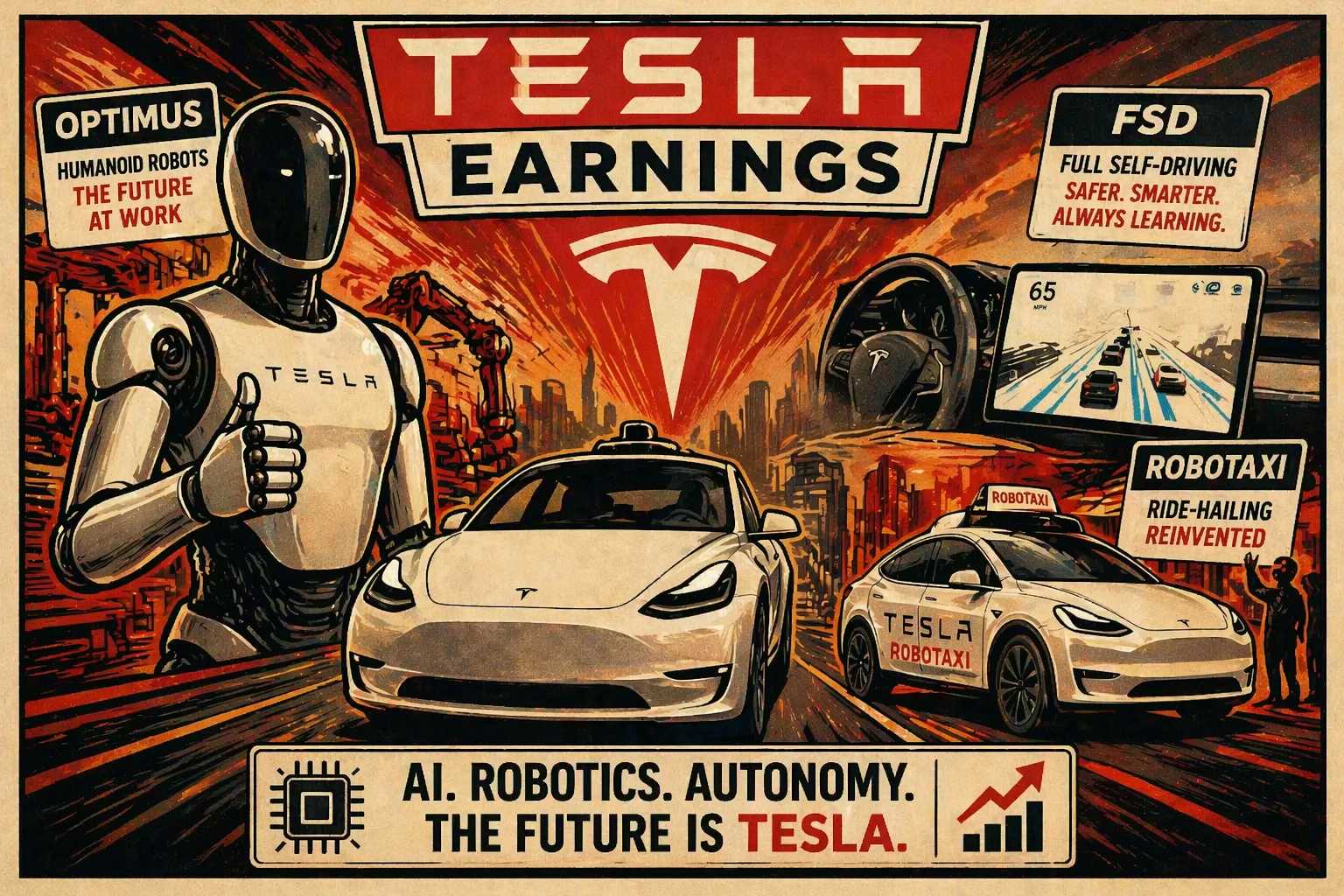
Tesla's strategic pivot toward AI and robotics—evidenced by Q1 2026 earnings showing $22.39B revenue with aggressive $25B capex guidance (up $5B from prior guidance)—signals an inflection point for e-commerce sellers seeking automation solutions. The company's announcement to begin large-scale Optimus humanoid robot factory operations in Q2 2026, targeting 1 million units annually, creates a critical window for sellers to evaluate AI-powered fulfillment automation. This represents a fundamental shift in how warehouse operations will be automated over the next 18-36 months.
AUTOMATION WINS FOR SELLERS RIGHT NOW: Tesla's robotics acceleration directly impacts third-party logistics (3PL) providers and fulfillment networks that serve Amazon FBA, Shopify, and eBay sellers. Sellers should immediately audit their fulfillment costs—currently averaging $3-8 per unit for small/medium sellers—and identify which repetitive tasks (picking, packing, sorting, quality control) can be automated. The Optimus robot factory ramp (targeting 1M units/year) suggests pricing will compress from current industrial robot costs ($150K-300K per unit) toward $20K-50K range by 2027-2028, making automation accessible to mid-market sellers operating 50K-500K unit annual volumes. Sellers with 3PL partners should request automation roadmaps and negotiate volume discounts for early adoption.
DATA-DRIVEN INSIGHTS & COMPETITIVE INTELLIGENCE: Tesla's $2.49B Q1 capex (67% increase YoY) and $25B 2026 guidance indicate massive capital deployment toward manufacturing automation. This capital intensity mirrors Amazon's fulfillment center robotics investments (Kiva Systems acquisition, 2012; now 520K+ robots deployed). Sellers can use this as a leading indicator: when Tesla/SpaceX's Terrafab semiconductor factory comes online (powering autonomous vehicles and robotics), compute costs for AI-driven warehouse management systems will drop 20-30%, making real-time inventory optimization and demand forecasting accessible to sellers with $1M-10M annual revenue. Monitor Tesla's Optimus deployment announcements—each new factory location signals regional 3PL automation availability within 12-18 months.
AI PRODUCT OPPORTUNITIES & GAPS: The news reveals a critical gap: no integrated AI platform exists that combines Tesla's robotics roadmap with e-commerce fulfillment optimization. Sellers need tools that predict which SKUs benefit most from robotic picking (high-velocity items, standardized packaging) versus manual handling (fragile goods, custom packaging). Build opportunity: AI-powered fulfillment ROI calculator that analyzes seller's SKU velocity, packaging complexity, and regional 3PL automation availability to recommend automation investment timing and expected payback periods (typically 18-36 months for mid-market sellers).
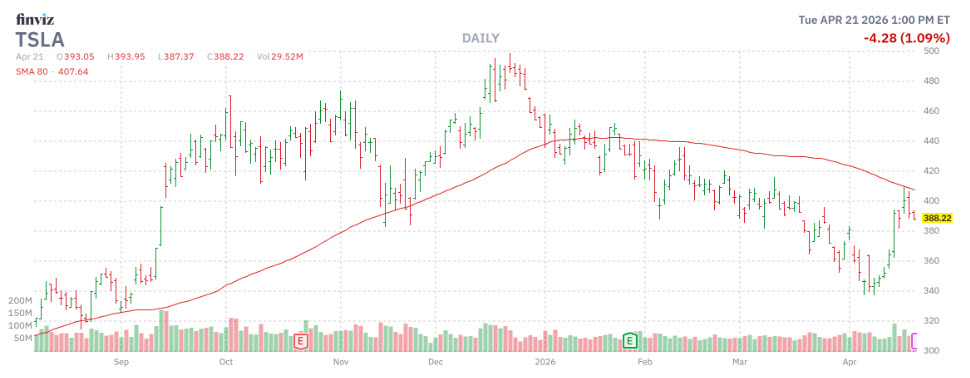
STRATEGIC IMPLICATIONS: Tesla's discontinuation of Model S/X production to allocate factory space for Optimus manufacturing signals confidence in robotics-as-a-service market expansion. For sellers, this means: (1) Automation costs will decline 30-40% over 24 months as supply increases; (2) 3PL providers will face margin compression, driving consolidation and service bundling; (3) Sellers who adopt automation early (2026-2027) gain 12-18 month competitive advantage in fulfillment speed and cost structure. The 14% YTD stock decline despite earnings beat suggests market undervalues robotics opportunity—sellers should move faster than competitors on automation evaluation.
Questions 7
How can sellers evaluate whether their products are suitable for robotic fulfillment automation?
Assess automation suitability using three criteria: (1) Packaging standardization—products in uniform boxes/envelopes (electronics, apparel, books) score high; custom packaging (cosmetics, fragile items) score low; (2) Velocity—SKUs with >100 units/month justify automation investment; <20 units/month do not; (3) Handling complexity—rigid items (hard goods) suit robots; fragile items (glassware, electronics) require specialized grippers still in development. Sellers should audit their top 50 SKUs by volume and calculate automation ROI: (annual fulfillment cost savings) ÷ (automation investment) = payback period. If payback <30 months, prioritize automation pilots with 3PL partners starting Q3 2026.
Which seller segments benefit most from warehouse automation in the near term?
Mid-market sellers (annual revenue $1M-50M, 50K-500K units/year) benefit most immediately because: (1) Current fulfillment costs ($3-8/unit) create strong ROI case for automation; (2) Sufficient volume to justify 18-36 month payback periods; (3) Standardized products (electronics, apparel, home goods) suit robotic handling. Small sellers (<$1M revenue) should wait until 2027-2028 when per-unit automation costs drop 40-50%. Large sellers (>$50M revenue) already have proprietary automation; they'll focus on AI optimization rather than new robot deployment. Sellers in fragile goods (glassware, cosmetics) or custom packaging should delay automation 12-24 months until Optimus v4-v5 improves dexterity.