




Google Cloud's AI Infrastructure Dominance | E-Commerce Sellers Must Prepare for AI-Powered Automation Wave
- Google allocates 50%+ of 2026 ML compute to Cloud; Gemini Enterprise grows 40% QoQ; AI agents reduce operational tasks by 6x; retail sector AI adoption accelerates through Accenture, Bain, BCG, Deloitte, McKinsey partnerships
























Overview
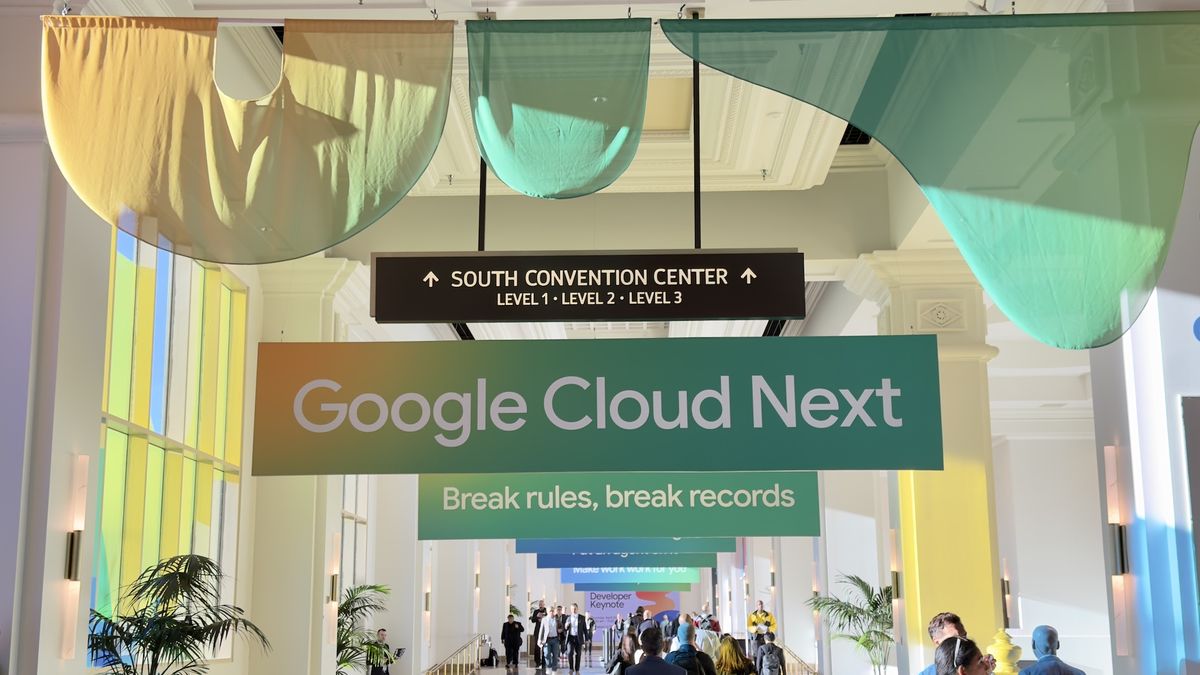
Google Cloud's announcement at Cloud Next '26 signals a critical inflection point for e-commerce sellers: enterprise-grade AI automation is transitioning from theoretical advantage to operational necessity. The company revealed that its first-party AI models now process 16 billion tokens per minute (up from 10 billion last quarter), with Gemini Enterprise experiencing 40% quarter-over-quarter growth in paid monthly active users. More significantly, Google is allocating just over half of its 2026 machine learning compute investment directly to Cloud business, ensuring sellers will have access to cutting-edge AI infrastructure at scale.
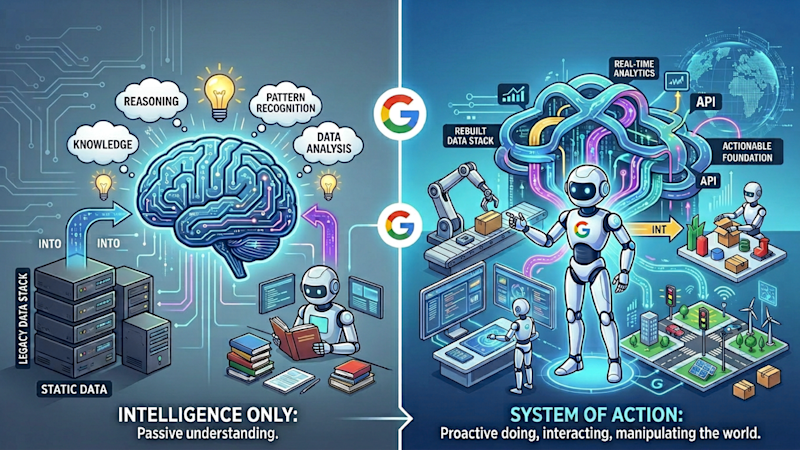
The practical implications are staggering. Google's internal use cases demonstrate what sellers should expect: AI agents completing complex code migrations six times faster than traditional methods, security operations reducing threat mitigation time by over 90%, and marketing teams generating thousands of creative asset variations 70% faster with 20% conversion improvements. These aren't theoretical benchmarks—they're production-proven capabilities that will cascade into e-commerce platforms within 12-18 months.
The Google DeepMind partnership with Accenture, Bain & Company, BCG, Deloitte, and McKinsey (announced April 22, 2026) directly targets retail sector transformation. The collaboration focuses on three pillars: industry-specific AI capabilities for retail, early access to frontier models, and strategic guidance for enterprise implementation. This partnership bridges the critical gap between advanced AI research and practical business application—exactly what mid-market and SMB sellers need. With only 22.5% of organizations currently operating AI at production scale despite AI's projected $115.7 trillion contribution to global economy by 2030, sellers who adopt AI-powered tools now will capture disproportionate competitive advantage.
Google Cloud's strategic positioning emphasizes governance, security, and compliance features unavailable elsewhere—critical for sellers managing customer data, payment processing, and cross-border compliance. The consolidation of Vertex AI under Gemini Enterprise umbrella signals simplified, enterprise-ready AI deployment. The eighth-generation TPUs (TPU 8t for training, TPU 8i for inference) deliver three times the processing power with 2x better performance-per-watt, meaning AI-powered product recommendations, dynamic pricing, and inventory optimization will become economically viable for sellers of all sizes.
For e-commerce sellers, the immediate opportunity is clear: AI agents will automate product research, listing optimization, pricing analysis, customer service, and inventory management. Sellers who implement AI-powered tools in the next 6-12 months will establish competitive moats that are difficult to replicate. The consulting firm involvement indicates enterprise solutions will cascade down to mid-market sellers through platform integrations and third-party tools by Q3-Q4 2026.
Questions 8
How does the Google DeepMind partnership with Accenture, Bain, BCG, Deloitte, and McKinsey affect mid-market sellers?
The April 22, 2026 partnership directly targets retail sector transformation with industry-specific AI capabilities. The consulting firms' involvement signals that enterprise-grade AI solutions will cascade down to mid-market and SMB sellers through platform integrations and third-party tools within 12-18 months. Currently, only 22.5% of organizations operate AI at production scale—this partnership aims to accelerate adoption. For sellers, this means: (1) Major platforms (Amazon, Shopify, eBay) will integrate AI-powered inventory optimization, demand forecasting, and customer analytics by late 2026, (2) Third-party tools will emerge offering retail-specific AI solutions at affordable price points, (3) Sellers who adopt AI tools now will establish competitive advantages before these capabilities become standard.
What are the cost implications of AI adoption for sellers managing 1,000+ SKUs?
Google's infrastructure improvements (3x processing power, 2x better performance-per-watt) mean AI-powered tools will become economically viable for mid-market sellers. For sellers managing 1,000+ SKUs, AI automation can deliver: (1) Product research and optimization: 40-60 hours/week saved (valued at $2,000-3,000/month), (2) Dynamic pricing: 3-8% margin improvement on 20-30% of inventory ($5,000-15,000/month for $500K revenue seller), (3) Customer service: 50-70% reduction in support tickets through AI chatbots ($1,000-2,000/month savings). Total potential ROI: $8,000-20,000/month for mid-market sellers. Initial investment in AI tools: $500-2,000/month, delivering 4-10x ROI within 6 months.