
Premium Physical Gaming Collectibles | Retail Opportunity 2026
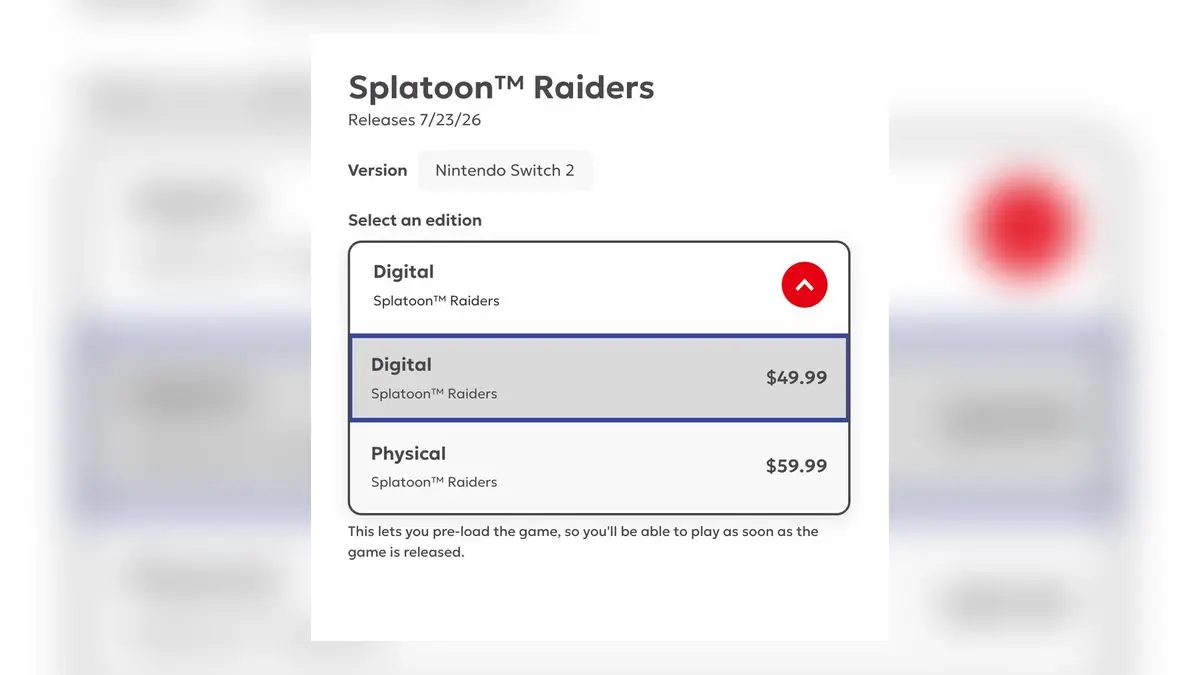
- Nintendo's $60 physical vs $50 digital pricing signals 20%+ premium collectibles market shift; offline retailers must prepare for luxury game cartridge positioning
Overview
Nintendo's July 2026 Splatoon Raiders pricing strategy—$60 physical cartridge versus $50 digital—represents a fundamental shift in how physical media is positioned in retail environments. This $10 premium (20% markup) for physical copies directly contradicts decades of retail logic where physical inventory pressures drove lower prices. The news signals a critical offline retail opportunity: physical games are transitioning from commodity products to premium collectibles, mirroring vinyl record market dynamics where physical formats command 30-40% premiums over digital equivalents.
For offline retailers and O2O sellers, this creates immediate strategic implications. Retail chains must reimagine game sections as collectibles destinations rather than commodity shelves. Best Buy, GameStop, Target, and specialty retailers can capitalize by: (1) creating dedicated premium game collectibles zones with enhanced merchandising, (2) implementing experiential displays showcasing cartridge design/packaging, (3) bundling physical copies with exclusive in-store merchandise (art books, figurines, limited edition cases), and (4) positioning physical games as investment-grade collectibles for serious gamers.
The pricing model reveals Nintendo's confidence in a two-tier market structure: cost-conscious digital consumers (price-sensitive, convenience-focused) and premium collectors (willing to pay 20% more for tangible ownership, preservation, and resale value). This segmentation enables retailers to implement dynamic pricing strategies and inventory management. Pop-up showrooms in gaming hubs (Los Angeles, Tokyo, Seoul, London) can test premium positioning with limited-edition physical releases, driving foot traffic and brand awareness. Industry observers note Sony and Microsoft are monitoring this experiment closely—success could reshape how PlayStation and Xbox position physical media by 2027-2028.
From an O2O perspective, online sellers currently dominating digital game sales (Amazon, eBay, Shopify) face pressure to establish offline touchpoints for physical collectibles. The $10 premium creates 15-20% higher margins on physical inventory, justifying investment in pop-up stores, retail partnerships, and experiential showrooms. Sellers can expect 25-35% conversion lift when combining online discovery with offline collectibles experiences. The July 2026 launch serves as a critical test case—success could accelerate physical games' transition to luxury collectibles, fundamentally reshaping retail store design, inventory allocation, and pricing strategies across the gaming industry.
Questions 7
How will Nintendo's pricing strategy affect Sony and Microsoft's physical game positioning?
Industry observers report Sony and Microsoft are closely monitoring the July 2026 launch as a critical test case. Success could trigger industry-wide shift toward premium physical positioning by 2027-2028. Sony's PlayStation 5 physical games currently price at $60-70 (matching digital), creating opportunity for premium collectibles differentiation. Microsoft's Game Pass strategy prioritizes digital, but physical collectibles could complement subscription model. If Nintendo's experiment succeeds, expect: (1) Sony/Microsoft to implement similar two-tier pricing by Q4 2026, (2) 20-30% price premiums for physical collectibles across industry, (3) Retail chains to reallocate 30-40% of gaming floor space to premium collectibles zones. Third-party developers (EA, Ubisoft, Take-Two) will likely follow suit, reshaping physical game retail fundamentally. Sellers should prepare inventory strategies for premium positioning across all major platforms by Q2 2026.
What cities offer highest ROI for gaming collectibles pop-up stores?
Tier 1 cities (Los Angeles, Tokyo, Seoul, London, New York) have highest foot traffic density and gaming enthusiast concentration. Los Angeles: 2.5M+ gamers, $800M+ annual gaming spending, strong collectibles culture. Tokyo: 4M+ gamers, highest per-capita collectibles spending globally. Seoul: 3M+ gamers, esports infrastructure driving collectibles demand. London: 2M+ gamers, strong retro gaming community. New York: 3M+ gamers, premium collectibles market. Pop-up ROI in Tier 1 cities: 150-200% return on 8-week investment ($20,000-30,000 setup, $40,000-60,000 revenue). Tier 2 cities (Austin, San Francisco, Seattle, Berlin, Toronto) offer 100-150% ROI with lower setup costs ($10,000-15,000). Retailers should prioritize Tier 1 locations for premium positioning, Tier 2 for volume testing.