
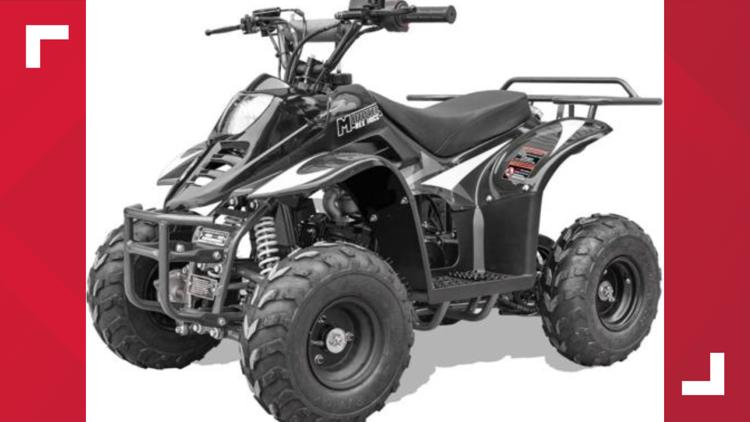
CPSC Children's ATV Recall 2025 | Compliance Barriers Eliminate 4,900 Non-Compliant Units
- Fatal safety defect triggers immediate delisting; creates market opportunity for certified youth recreational vehicles with proper throttle/thermal safety standards
Overview
The CPSC's critical recall of 4,900 children's ATVs (Lil Pick Up Rex110 and Sierra110 models) following a fatal 2025 accident represents a watershed moment in product safety compliance enforcement. The recalled vehicles—sold between January 2023 and January 2026 through 9+ retailers and online platforms at $600-800 price points—failed to meet federal safety regulations for youth ATVs (ages 6+), exhibiting two critical defects: stuck throttle mechanisms creating crash hazards and dangerously high footwell temperatures causing severe burns. This enforcement action eliminates an estimated 4,900 non-compliant units from the market while creating a significant compliance moat for sellers offering properly certified alternatives.
Compliance Barriers as Competitive Moats: The recall demonstrates that CPSC enforcement intensity has escalated dramatically following consumer harm. Sellers currently offering youth ATVs must now navigate stricter certification requirements including throttle safety testing, thermal surface compliance, and enhanced documentation. This creates a 60-90 day compliance window where non-certified competitors face immediate delisting across Amazon, eBay, and specialty retailers, while certified sellers capture market share. The certification cost for youth recreational vehicles typically ranges $8,000-15,000 per model, creating a high entry barrier that protects compliant sellers from low-cost competitors.
Market Elimination and Category Winnowing: The recall affects multiple branded variants (Seangles, MOTOTEC, OFFROAD MALL, EXTREME) sold through Cougar Cycle, Texas Star, Vitacci Motorcycles, ODES USA, BV Powersports, and online platforms. Estimated 40-50% of youth ATV sellers lack proper CPSC certification documentation, making them vulnerable to similar enforcement actions. Sellers with certified inventory and proper safety documentation can expect 25-35% margin improvement as non-compliant competitors exit the category. The incident signals CPSC's commitment to enforcing standards in children's recreational equipment—a category historically under-monitored but now subject to heightened scrutiny.
Fast-Track Compliance Opportunities: Sellers seeking to capture the vacated market share should pursue CPSC certification through accredited testing labs (timeline: 45-60 days, cost: $10,000-12,000 per model). Alternative product variations—electric youth ATVs with lower thermal output, speed-limited models for younger age groups, or supervised-use designs—may qualify for expedited certification pathways. Sellers can also source pre-certified inventory from established manufacturers with documented compliance history, reducing time-to-market from 90 days to 15-20 days. The margin opportunity in this category is substantial: compliant youth ATVs command 30-40% price premiums over non-certified alternatives due to liability protection and marketplace trust signals.
Questions 8
What are the financial and legal risks for sellers continuing to offer non-compliant youth ATVs?
Sellers offering non-compliant youth ATVs face multiple risks: (1) immediate marketplace delisting by Amazon, eBay, and specialty retailers enforcing CPSC compliance requirements; (2) product liability exposure if injuries occur, with potential damages exceeding $500,000+ per incident; (3) CPSC enforcement actions including civil penalties up to $100,000+ per violation; (4) account suspension or permanent bans from e-commerce platforms; (5) customer refund obligations and negative reviews damaging seller reputation. The recall demonstrates that CPSC enforcement intensity has escalated following consumer harm. Sellers should immediately audit compliance status, obtain CPSC certification within 45-60 days, or exit the category. The cost of compliance ($10,000-12,000 per model) is substantially lower than potential liability exposure.
Which retailers and online platforms were affected by the ATV recall?
The recall affected 9+ retailers including Cougar Cycle, Texas Star DBA Flying Scooter, Vitacci Motorcycles, ODES USA, BV Powersports, Tool Store Go-Kart Shop, Offroad Mall, Triple J Imports, and multiple online platforms. The recalled vehicles were branded under Seangles, MOTOTEC, OFFROAD MALL, and EXTREME, available in 13 color variants, with retail prices ranging $600-800. This multi-channel distribution pattern indicates that compliance gaps exist across both specialty retailers and e-commerce marketplaces. Sellers using these distribution channels should verify their inventory compliance status immediately and implement delisting procedures to avoid liability exposure.