



Enterprise Software Infrastructure Volatility Signals IT Spending Caution for E-Commerce Sellers
- ServiceNow stock decline 50%+ from highs despite 22% revenue growth; geopolitical headwinds create uncertainty for enterprise customers investing in supply chain automation tools




















Overview
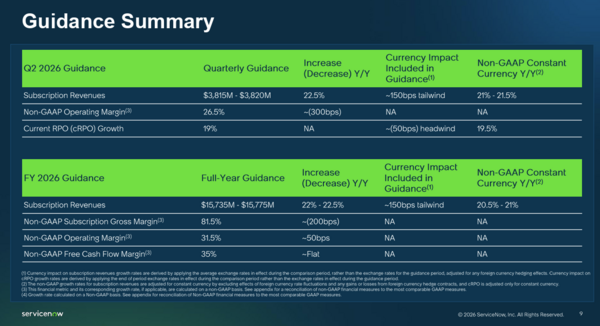
ServiceNow's Q1 2025 earnings reveal a critical disconnect between operational strength and market sentiment that directly impacts cross-border e-commerce sellers relying on enterprise software infrastructure. The company delivered $3.77 billion in total revenue (22% YoY growth), raised full-year 2026 guidance by $210 million to $15.74-15.78 billion, and achieved $1.5 billion in AI revenue run rate (50% YoY growth), yet the stock plummeted over 50% from its $211.48 peak to below $90 in after-hours trading. The primary catalyst: a 75 basis point Middle East headwind and geopolitical tensions in Iran reducing customer acquisition in affected markets.
For e-commerce sellers, this volatility signals a critical operational risk. ServiceNow provides backend infrastructure for supply chain management, order processing, and customer service operations at 630+ enterprise customers spending over $5 million annually in contract value. When enterprise software providers face revenue uncertainty due to geopolitical disruptions, their customers—large retailers and 3PL logistics providers—typically defer technology investments and reduce IT spending budgets. This creates a ripple effect: sellers relying on these retailers' fulfillment networks and automation tools may experience service degradation, delayed system upgrades, or reduced investment in logistics optimization.
The 17% stock decline following guidance revisions demonstrates how geopolitical instability affects enterprise software sales cycles. Enterprise customers typically operate 12-18 month decision timelines for major software implementations. When regional tensions create uncertainty, procurement teams freeze spending, delay contract renewals, and reduce expansion budgets. ServiceNow's acknowledgment of Middle East headwinds suggests broader enterprise caution extending beyond that region—affecting multinational retailers with exposure to geopolitically sensitive markets.
Strategic implications for sellers: Large retailers and 3PL providers using ServiceNow for workflow automation may reduce technology investments in logistics optimization, inventory management, and fulfillment automation. This creates a 6-12 month window where sellers should expect slower adoption of advanced fulfillment capabilities, potential delays in supply chain digitization projects, and reduced competitive pressure from sellers leveraging cutting-edge automation. Conversely, sellers with existing automation investments gain competitive advantage as enterprise customers delay new implementations.
The company's strong AI metrics ($1 million+ annual contract values for Now Assist customers) indicate enterprise spending remains robust for high-ROI solutions, but geopolitical uncertainty creates timing risk. Sellers should monitor enterprise customer IT spending patterns through Q2-Q3 2025, as this period will determine whether the Middle East headwind expands to other regions or remains contained.
Questions 8
How does enterprise software volatility affect seller technology investments?
When enterprise software providers like ServiceNow face revenue uncertainty, their customers reduce IT spending and defer technology projects. This creates a 6-12 month window where sellers should expect slower adoption of advanced fulfillment capabilities and reduced competitive pressure from sellers leveraging cutting-edge automation. Sellers with existing automation investments gain competitive advantage. However, sellers planning new technology investments should delay major purchases until enterprise IT spending stabilizes in Q3-Q4 2025, as enterprise customers may negotiate better pricing during periods of reduced vendor demand.
What is the AI revenue opportunity for enterprise automation?
ServiceNow's Now Assist AI customers are spending over $1 million in annual contract value, with AI revenue reaching $1.5 billion run rate (50% YoY growth). This exceeds the original $1 billion 2026 target, indicating strong enterprise demand for AI-powered automation. For e-commerce sellers, this signals that enterprise customers prioritize high-ROI AI solutions for supply chain optimization and order processing. However, geopolitical uncertainty may delay broader AI adoption across mid-market retailers. Sellers should focus on AI-powered fulfillment and inventory optimization tools that deliver measurable ROI to enterprise customers.