
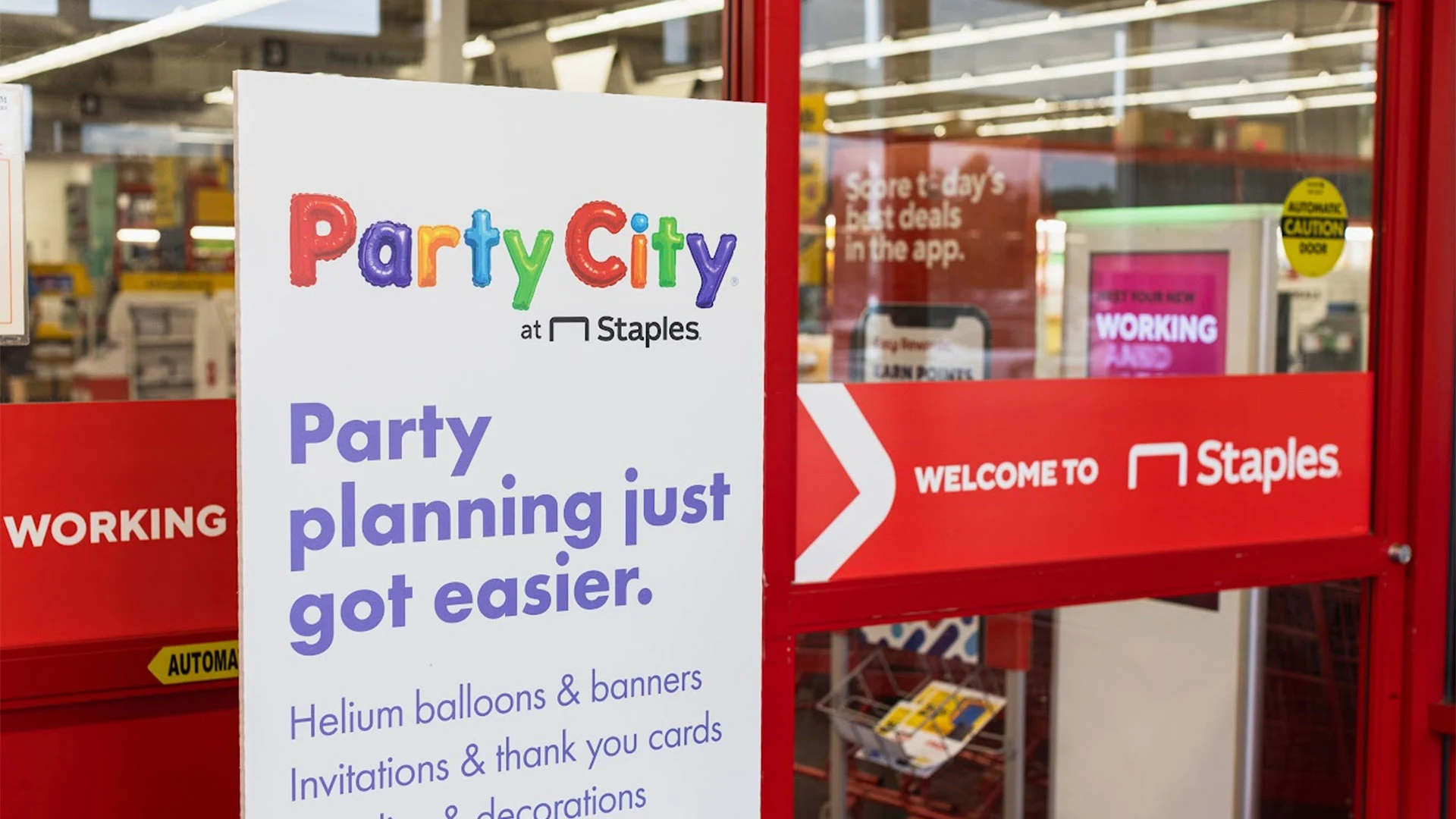
Staples-Party City Shop-in-Shop Expansion | Omnichannel Retail Consolidation Reshapes Party Supply Market
- 700+ store rollout across 34 states signals aggressive omnichannel strategy; party supplies, personalized products, and print-on-demand sellers face intensified competition from integrated retail experiences
Overview
Staples is executing a major retail consolidation strategy by launching Party City shop-in-shops across 700+ locations in 34 U.S. states, announced April 21, 2024. This partnership represents a critical shift in how traditional retailers combat e-commerce competition through omnichannel integration. The initiative combines party supplies (balloons, gift bags, favors) with Staples' same-day print and marketing services for personalized invitations, banners, and posters, extending to Staples.com for online fulfillment. Marshall Warkentin, president of Staples U.S. Retail, explicitly positioned this as a "complete solution for celebrations, from graduations to grand openings," targeting event-driven consumer spending across multiple occasions.
This consolidation directly threatens independent e-commerce sellers in three high-margin categories: party supplies, personalized products, and print-on-demand services. The 700+ store footprint provides Staples with significant competitive advantages: physical inventory visibility, same-day fulfillment capabilities, integrated print services, and cross-selling opportunities that pure-play e-commerce sellers cannot easily replicate. For sellers currently competing in Amazon, eBay, or Shopify party supply categories, this represents a 34-state market penetration event that will likely compress margins by 8-15% as Staples leverages its existing customer base and logistics infrastructure. The partnership also signals that Staples plans additional expansion through 2026, indicating this is not a pilot but a sustained strategic commitment.
The broader retail consolidation pattern suggests other traditional retailers will pursue similar partnerships, fundamentally reshaping competitive dynamics. Both Staples (downsizing to fewer than 1,000 U.S. stores) and Party City (struggling in competitive retail) are using this model to increase average transaction value and drive foot traffic—metrics that directly compete with online seller conversion rates. For e-commerce sellers, this development indicates that physical-digital integration is becoming table stakes for retail competitiveness. Sellers offering party supplies should expect increased price competition from Staples' omnichannel advantage, while print-on-demand sellers may see demand shift toward integrated solutions that combine physical and digital services. The initiative highlights growing consumer preference for integrated retail experiences, meaning sellers must either develop omnichannel capabilities, specialize in niche segments underserved by Staples, or focus on categories where e-commerce maintains structural advantages (bulk ordering, customization depth, international shipping).
Questions 7
What timeline should I use to adjust my business strategy before Staples reaches full 700+ store deployment?
Staples announced the April 21, 2024 launch with plans to expand through end of 2026—providing approximately 18-24 months before full deployment. Implement immediate actions (0-30 days): audit your inventory against Staples.com pricing, identify commodity vs. differentiated products, and calculate margin compression scenarios. Short-term adjustments (1-6 months): shift inventory toward niche categories, develop Shopify/social commerce presence, and establish supplier relationships for specialized products. Medium-term strategy (6-18 months): build omnichannel capabilities, establish local fulfillment partnerships, and develop brand loyalty programs. By Q4 2026, expect Staples to have achieved significant market penetration in party supplies across major metropolitan areas. Sellers who wait until 2026 to adjust will face compressed margins and reduced market share—act now while you still have time to establish defensible positions.
Which seller segments are most vulnerable to this Staples-Party City expansion?
Three segments face highest risk: (1) Small party supply sellers (under $50K annual revenue) competing on price in commodity categories—margin compression will be severe; (2) Print-on-demand sellers focused on basic invitations and banners—Staples' same-day service directly displaces this demand; (3) Regional sellers in the 34-state expansion zone without established brand loyalty. Lower-risk segments include: bulk corporate event suppliers (Staples' retail model limits bulk operations), international sellers (Staples' U.S.-centric), and niche personalization specialists (licensed characters, premium materials). If you're in a high-risk segment, begin diversification immediately—expand to Shopify, develop TikTok Shop presence, or pivot toward underserved categories (eco-friendly party supplies, adult event merchandise, corporate team-building products).