





The AI Economic Black Hole: When Investments Defy Traditional Market Logic
- Unprecedented AI infrastructure spending signals a radical economic transformation beyond traditional investment models































Overview
The AI economic landscape is undergoing a profound metamorphosis that defies conventional investment logic. In 2025, we're witnessing not just a technological revolution, but a fundamental restructuring of economic gravitational forces driven by massive, interconnected AI infrastructure investments.
Unprecedented Scale of Investment: The AI sector is projected to spend approximately $400 billion on data centers in 2024, with McKinsey estimating this could escalate to nearly $7 trillion by 2030. This isn't a typical investment bubble, but a systemic economic transformation where companies like CoreWeave, Nvidia, and OpenAI are creating intricate financial networks that challenge traditional market dynamics.
Financial Paradox: The most striking revelation is the willingness of major tech players to make high-risk, long-term bets. CoreWeave, a former crypto-mining firm, has secured $22 billion from OpenAI, $14 billion from Meta, and $6 billion from Nvidia – representing a massive speculative investment in future AI profitability. Remarkably, OpenAI is projected to generate only $10 billion in revenue while expecting to lose at least $15 billion this year, a financial model that would typically trigger investor panic.
Gravitational Economic Force: Unlike previous tech investment waves, this AI phenomenon is creating what experts describe as a "black hole" effect. The investments are not just speculative but are actively propping up an otherwise stagnant U.S. economy. AI companies' stock prices have dramatically skyrocketed, suggesting that the market perceives these investments as transformative rather than risky.
The core insight is clear: We're experiencing an economic restructuring where traditional investment metrics are being rewritten. The extreme concentration of investments in a few interconnected tech companies could lead to a potentially catastrophic market correction if AI technologies fail to deliver expected productivity. However, the current momentum suggests we're witnessing the early stages of a fundamental economic paradigm shift.
Questions 3
Why are investors treating AI investments differently from previous tech bubbles?
Unlike traditional tech investments, AI is seen as a transformative economic force. The **$400 billion infrastructure spending** and companies' willingness to operate at significant losses suggest investors believe AI represents a fundamental economic restructuring, not just a technological trend.
What are the potential risks in this AI investment model?
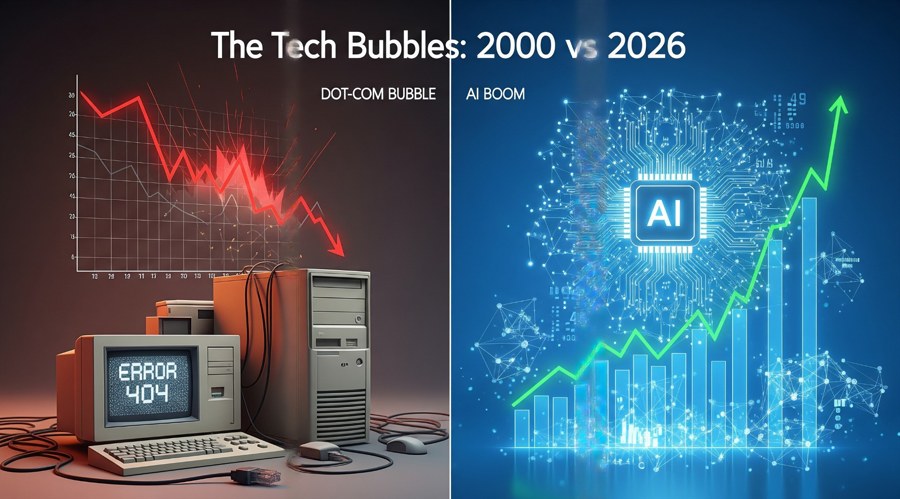
The extreme concentration of investments in a few tech companies creates significant systemic risks. If AI technologies fail to deliver expected productivity, we could see a market correction more severe than the dot-com crash, potentially impacting global economic stability.