

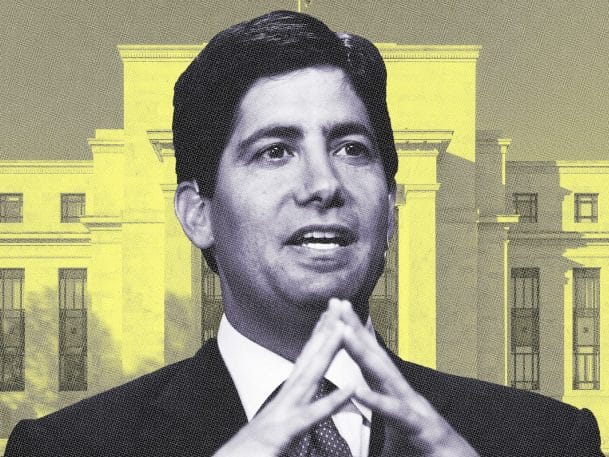


Federal Reserve Policy Shifts 2025 | Cross-Border Seller Financing Impact
- Interest rate uncertainty affects working capital costs for 500K+ e-commerce sellers; financing and inventory management strategies require immediate adjustment

Overview
The Federal Reserve leadership transition and monetary policy debate highlighted in the Kevin Warsh nomination hearing creates significant implications for cross-border e-commerce sellers managing working capital, inventory financing, and international expansion. While the Wall Street Journal opinion piece focuses on political dynamics around Fed independence and interest rate policy direction, the underlying monetary policy uncertainty directly impacts seller financing costs, payment processing fees, and working capital availability—critical operational factors for the 500,000+ cross-border sellers on Amazon, eBay, Shopify, and other platforms.
Financing Cost Impact: Rising or uncertain interest rates increase the cost of inventory financing through platforms like Amazon Lending, traditional bank lines of credit, and third-party logistics (3PL) provider payment terms. Sellers currently utilizing FBA inventory financing at variable rates face potential 2-4% annual cost increases if the Fed maintains higher rates through 2025. For a mid-sized seller carrying $100K in inventory, this translates to $2,000-4,000 in additional annual financing costs. Small sellers (under $500K annual revenue) are particularly vulnerable, as they lack access to institutional financing and rely heavily on platform-provided credit solutions.
Payment Processing and Currency Exposure: Monetary policy uncertainty increases volatility in currency exchange rates, directly affecting sellers operating across multiple regions (US, EU, UK, Asia Pacific). A 2-3% currency fluctuation can compress margins by 5-8% for sellers sourcing from China/Vietnam and selling in EUR or GBP. Payment processors like Stripe, PayPal, and 2Checkout adjust their cross-border transaction fees based on Fed rate expectations, with potential increases of 0.5-1.5% on international transactions. Sellers shipping to Canada, Mexico, and EU markets face compounded costs from both financing and FX headwinds.
Strategic Seller Responses: High-growth sellers (those scaling 30%+ annually) are accelerating inventory purchases ahead of potential rate increases, creating short-term demand spikes in logistics and warehousing. This creates arbitrage opportunities for sellers in logistics-adjacent categories (storage solutions, packaging materials, inventory management software). Conversely, sellers with high debt-to-equity ratios are reducing inventory velocity and shifting toward dropshipping models to minimize working capital requirements. Platform lending programs (Amazon Lending, eBay Capital) may tighten approval criteria if Fed policy signals sustained higher rates, reducing credit availability for sellers with sub-750 credit scores or limited operating history.
Regional Implications: US-based sellers benefit from dollar strength in uncertain rate environments, improving margins on imports. EU-based sellers face margin compression if the ECB maintains lower rates than the Fed, making cross-border sourcing more expensive. UK sellers navigating post-Brexit customs complexity face additional financing pressure if working capital costs rise 3-5% annually. Asian sellers (Vietnam, India, Indonesia) see improved competitiveness as their home currencies weaken relative to the dollar, reducing sourcing costs for US-focused sellers.
Questions 8
How does Federal Reserve interest rate policy affect my Amazon FBA inventory financing costs?
Amazon Lending and similar platform credit products adjust rates based on Fed policy expectations. If the Fed maintains rates above 4.5% through 2025, sellers can expect inventory financing costs to increase 2-4% annually. A seller with $100K in FBA inventory financed at variable rates could see costs rise from $3,000 to $5,000-7,000 annually. Monitor your Amazon Seller Central lending offers monthly and consider locking in fixed-rate terms before potential rate increases. Sellers with strong cash flow should prioritize paying down variable-rate debt to reduce exposure to future rate hikes.
What is the impact of interest rate uncertainty on cross-border currency exchange rates?
Higher US interest rates strengthen the dollar relative to EUR, GBP, and other currencies, creating 2-3% monthly volatility in exchange rates. For sellers sourcing from China (paying in USD) and selling in EUR, a stronger dollar increases sourcing costs by 5-8% when converted back to home currency. Use forward contracts or currency hedging through platforms like OFX or Wise to lock in exchange rates for 30-90 days. EU-based sellers should consider shifting 10-15% of sourcing to local suppliers to reduce currency exposure. Monitor Fed rate decision dates (typically 8 per year) and adjust pricing 1-2 weeks before announcements to avoid margin compression.