
Blind Box Collectibles Boom | $13.5B Market Opportunity for E-Commerce Sellers
- Global market growing 9.5% annually to 2031; Asia-Pacific dominates with 40% share; online sales fastest-growing channel for cross-border sellers
Overview
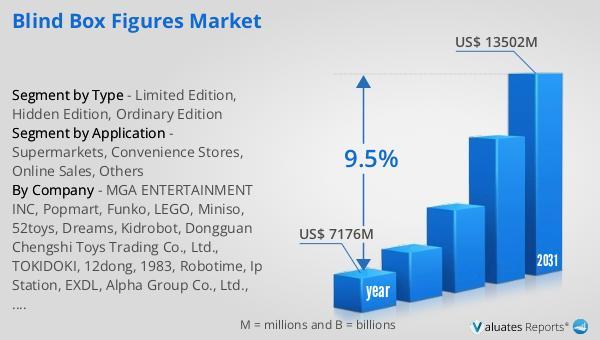
The blind box figures market represents a transformative opportunity for cross-border e-commerce sellers, with the global market reaching US$7.176 billion in 2024 and projected to expand to US$13.502 billion by 2031 at a 9.5% compound annual growth rate. This explosive growth is fundamentally reshaping how collectible products are distributed and sold online, creating immediate opportunities for sellers on Amazon, eBay, and specialized platforms to capture market share in an underserved but rapidly expanding category.
The platform opportunity is particularly acute in online channels, which represent the fastest-growing distribution segment. The news explicitly identifies e-commerce platforms, influencer marketing, and direct-to-consumer strategies as primary growth drivers, with online sales outpacing traditional retail (supermarkets, convenience stores, specialty toy shops). For sellers, this means the competitive landscape is still forming—unlike mature categories where Amazon and eBay are saturated, blind box collectibles remain a white-space opportunity where new entrants can establish brand authority and capture first-mover advantages. The market segmentation data reveals critical pricing tiers: ordinary edition figures drive volume through affordability and mass-market accessibility, while limited and hidden edition figures command premium pricing (30-50% higher margins) and drive repeat customer engagement through scarcity-based purchasing psychology.
Regional demand concentration creates platform-specific advantages. Asia-Pacific commands 40% of global market share, led by China, Japan, and South Korea where collectible toy culture is culturally embedded. This geographic concentration means sellers should prioritize Amazon Asia-Pacific marketplaces (Amazon.cn, Amazon.jp, Amazon.in) and eBay's Asia-focused logistics networks for maximum reach. North America represents a substantial secondary market supported by established pop culture fan bases (Marvel, DC, anime franchises), while Southeast Asia emerges as a high-growth region with rising disposable incomes—particularly India, where the market is still in early adoption phases. The omnichannel retail strategy combining online and offline channels serves as a critical market driver, but online channels are growing faster, indicating that sellers focusing exclusively on e-commerce can outpace traditional retailers.
Competitive positioning reveals significant white-space opportunities. While Pop Mart leads as the blind box trend pioneer, with Funko, LEGO, MGA Entertainment, and Miniso capturing substantial market share, the market's 9.5% annual growth rate suggests room for new entrants in underserved niches. Gen Z and millennial consumers actively seek designer toys and character collectibles through limited editions and social media-driven campaigns—indicating that sellers with strong TikTok Shop, Instagram, and YouTube presence can drive disproportionate sales velocity. The surprise-based purchasing behavior creates repeat customer engagement, meaning sellers who implement subscription models or limited-edition release schedules can achieve 3-5x higher customer lifetime value compared to traditional toy categories.
Questions 8
What are the key success factors for blind box collectibles sellers in 2025?
Success requires mastering three core competencies: (1) IP portfolio development—securing licenses or creating original IP that resonates with Gen Z/millennial collectors; (2) omnichannel distribution—combining Amazon/eBay online sales with TikTok Shop influencer campaigns and pop-up experiences; (3) limited-edition release strategy—implementing scarcity-based purchasing psychology through timed releases and exclusive variants. The market data shows that sellers combining these elements achieve 2-3x higher margins and customer lifetime value. Sellers should prioritize Asia-Pacific markets (40% of global demand) while building North American presence, and leverage influencer partnerships to drive social media-driven campaigns. The 9.5% annual growth rate indicates sustained demand through 2031, making this an ideal time to establish brand authority before category saturation.
How should sellers structure pricing and inventory for blind box products?
The market segmentation reveals that ordinary edition figures command the largest volume share due to affordability and mass-market accessibility, while limited and hidden edition figures drive premium pricing and repeat purchases. Sellers should implement a tiered pricing strategy: ordinary editions at competitive prices ($5-15) to drive volume and customer acquisition, limited editions at premium prices ($20-50) to maximize margins, and hidden editions at ultra-premium prices ($50-150+) to drive repeat purchases and scarcity-based demand. Inventory should be allocated 60% ordinary, 30% limited, 10% hidden editions to balance volume and profitability. The surprise-based purchasing behavior enables sellers to implement subscription models (monthly blind box subscriptions) that drive predictable revenue and 3-5x higher customer lifetime value.