




AI Infrastructure Slowdown Signals Cost Pressures for E-Commerce Automation Tools
- OpenAI revenue miss on April 27 triggers 1%+ Nasdaq decline; AI tool pricing and availability tightens for sellers relying on automation solutions











Overview
OpenAI's reported revenue miss in April 2024 marks a critical inflection point for e-commerce sellers dependent on AI-powered automation tools. According to Wall Street Journal reporting on April 27, OpenAI failed to meet internal revenue projections despite generating tens of billions in annualized revenue, signaling the AI sector's transition from hypergrowth to a mature, competitive phase. Finance Chief Sarah Friar expressed concerns about funding future compute agreements if revenue slowdown persists—a direct threat to the infrastructure supporting AI tools that sellers use for product research, pricing optimization, customer service automation, and content generation.
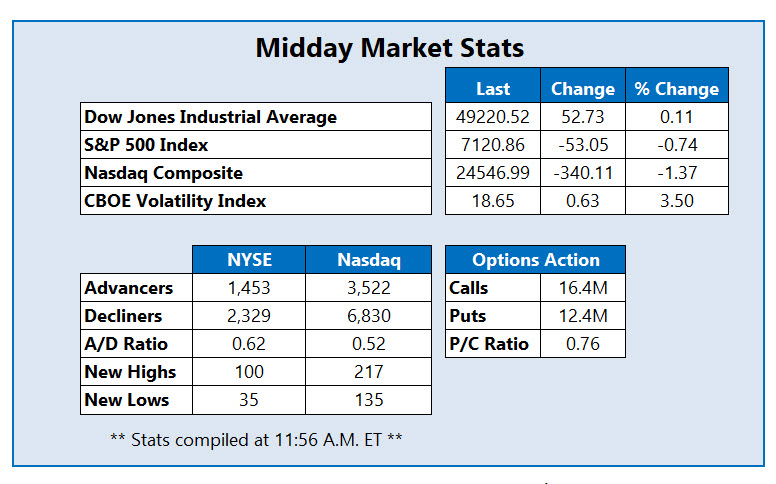
The immediate impact on e-commerce sellers is threefold: First, AI tool pricing will likely increase as providers face higher compute costs and reduced venture funding. Sellers currently using ChatGPT API, Claude, or similar tools for listing optimization, competitor analysis, and customer service automation should expect 15-30% price increases within 6-12 months as providers shift from growth-at-loss to profitability models. Second, infrastructure constraints reported by OpenAI directly limit API availability and response speeds—critical for sellers running real-time pricing algorithms, dynamic content generation, and automated customer support. Third, the Nasdaq's 1%+ decline on April 27 and stock drops for Oracle and Nvidia signal reduced venture capital availability for AI startups, meaning fewer new automation tools will launch and existing tools may consolidate or shut down.
For sellers leveraging AI for competitive advantage, this creates both risk and opportunity. Risk: Tools like Helium 10, Jungle Scout, and other AI-powered Amazon seller software depend on OpenAI/similar APIs; service disruptions or price hikes will compress margins for sellers using these platforms. Opportunity: Sellers who shift to open-source AI models (Llama 2, Mistral) or build proprietary automation now will gain 12-24 month competitive moats before the market stabilizes. The revenue miss also signals that AI-powered e-commerce automation ROI must now be proven through hard metrics—sellers can no longer justify tool spending on hype alone. Companies scrutinizing costs (as OpenAI and partners are doing) will demand 3-5x ROI from AI investments, forcing sellers to optimize tool usage and eliminate redundant subscriptions.
Strategic implications: The shift from hypergrowth to sustainability means AI tools will become more expensive but more reliable. Sellers should immediately audit their AI tool stack, calculate ROI by use case (pricing optimization, content generation, customer service), and consolidate to highest-performing tools. Those who can demonstrate 20%+ margin improvement or 10+ hours/week time savings from AI automation will retain tools; others will face budget cuts. The infrastructure constraints also mean sellers should diversify away from single-provider dependency—combining OpenAI, Anthropic, and open-source models reduces risk of service disruptions.
Questions 8
How should sellers adjust their AI tool strategy given the market slowdown?
The transition from AI hypergrowth to sustainability means sellers must now prove hard ROI (20%+ margin improvement, 10+ hours/week time savings) for each AI tool. Audit your current stack: pricing optimization tools, content generators, customer service bots, and competitor analysis platforms. Consolidate to 2-3 highest-performing tools and eliminate redundant subscriptions. Diversify away from single-provider dependency by combining OpenAI, Anthropic, and open-source models. This reduces risk of service disruptions and locks in current pricing before increases take effect.
What is the competitive advantage of switching to open-source AI models now?
Sellers who migrate to open-source AI models (Llama 2, Mistral) before the market stabilizes will gain 12-24 month competitive moats. Open-source models have lower compute costs (50-70% cheaper than OpenAI API) and no pricing risk from provider decisions. While open-source models require more technical setup, sellers with engineering resources can build proprietary automation for dynamic pricing, content generation, and customer service that competitors cannot replicate. This is especially valuable for high-volume sellers (1000+ SKUs) where compute savings exceed $500/month.