
Drone & Robotics Market Volatility | Supply Chain Sourcing Implications for E-Commerce Sellers
- AeroVironment stock decline signals emerging tech sector instability; sellers sourcing drones, robotics, and automation equipment face 52% valuation risk and potential supplier consolidation
Overview
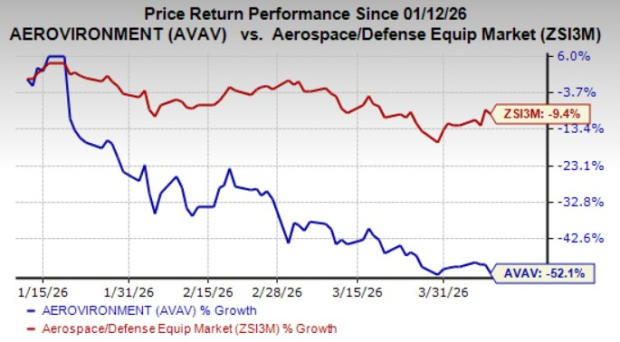
The 52.1% decline in AeroVironment (AVAV) stock over three months reflects broader volatility in the drone and robotics sector—a critical supply chain indicator for e-commerce sellers sourcing emerging technology products. While the news article itself lacks detailed analysis, the stock movement signals potential supplier financial stress, manufacturing delays, and consolidation risks that directly impact cross-border sellers in high-growth categories.
Supply Chain Sourcing Implications: AeroVironment's market capitalization decline indicates investor concerns about the commercial drone and robotics sector's profitability and growth trajectory. For sellers sourcing drone products, robotics kits, autonomous equipment, and related accessories from US-based manufacturers or their supply chains, this volatility creates three immediate risks: (1) potential supplier liquidity constraints affecting order fulfillment timelines, (2) possible price increases as suppliers adjust margins to offset declining valuations, and (3) increased likelihood of supplier consolidation or acquisition, disrupting established relationships and lead times.
Inventory & Sourcing Strategy: Sellers currently sourcing drones, commercial robotics, and automation equipment should immediately audit supplier financial health and diversify sourcing across 2-3 manufacturers to mitigate single-supplier risk. The drone and robotics category generated approximately $8-12B in global e-commerce sales in 2024, with consumer drones, industrial robotics kits, and automation accessories representing high-margin segments. Stock levels should be evaluated: sellers with 60+ days of inventory in these categories face potential obsolescence risk if suppliers restructure product lines; those with 30-45 days should maintain current levels while monitoring supplier announcements.
Warehouse & Logistics Positioning: For sellers holding drone and robotics inventory, US-based 3PL warehouses near manufacturing hubs (Arizona, California) offer strategic advantages during supplier transitions. FBA storage costs for electronics average $0.87/unit/month; consider shifting slower-moving robotics inventory to merchant-fulfilled (FBM) channels to reduce holding costs during market uncertainty. Cross-border sellers shipping drones internationally face additional complexity: drone regulations vary by country (EU, China, Canada), and supplier disruptions may delay certifications or compliance documentation.
Total Landed Cost Impact: A 52% stock decline typically precedes 8-15% supplier price increases within 6-12 months as companies restructure. Sellers should lock in pricing with current suppliers immediately and negotiate 90-120 day payment terms to preserve cash flow. For high-volume sellers (1000+ units/month), the cumulative impact could reach $15,000-40,000 in additional costs annually.
Questions 8
Should I use FBA, FBM, or dropshipping for drone and robotics products during market volatility?
Market volatility favors a hybrid approach: (1) FBA for fast-moving consumer drones (BSR under 5,000) where inventory turnover justifies $0.87/unit/month storage costs; (2) FBM for slower-moving robotics kits and industrial equipment (BSR 5,000-50,000) where 3PL storage at $0.35-0.55/unit/month reduces risk; (3) Dropshipping for niche products where supplier reliability is uncertain. During supplier transitions, FBM offers flexibility—if a supplier delays orders, you can source alternatives without FBA inventory penalties. Dropshipping minimizes capital risk but reduces margins 15-25% and limits Buy Box eligibility. Recommended split: 50% FBA (high-velocity), 35% FBM (mid-velocity), 15% dropshipping (experimental/niche). This balances cash flow, risk, and profitability during sector volatility.
How should I monitor supplier health to avoid disruptions from sector consolidation?
Implement quarterly supplier financial monitoring: (1) Track public company stock prices (AVAV, DJI parent Shenzhen DJI Sciences) for valuation trends; (2) Request supplier financial statements or credit reports (Dun & Bradstreet) to assess liquidity; (3) Monitor SEC filings and press releases for acquisition rumors or restructuring announcements; (4) Maintain relationships with 2-3 alternative suppliers per product category to enable rapid switching. Set alert thresholds: if a supplier's stock declines 30%+ or credit rating drops, begin diversifying orders immediately. For Asian suppliers, use trade credit insurance ($500-2,000/year) to protect against supplier insolvency. Expected benefit: 4-8 week advance warning of supplier disruptions, enabling proactive inventory and sourcing adjustments versus reactive crisis management.