
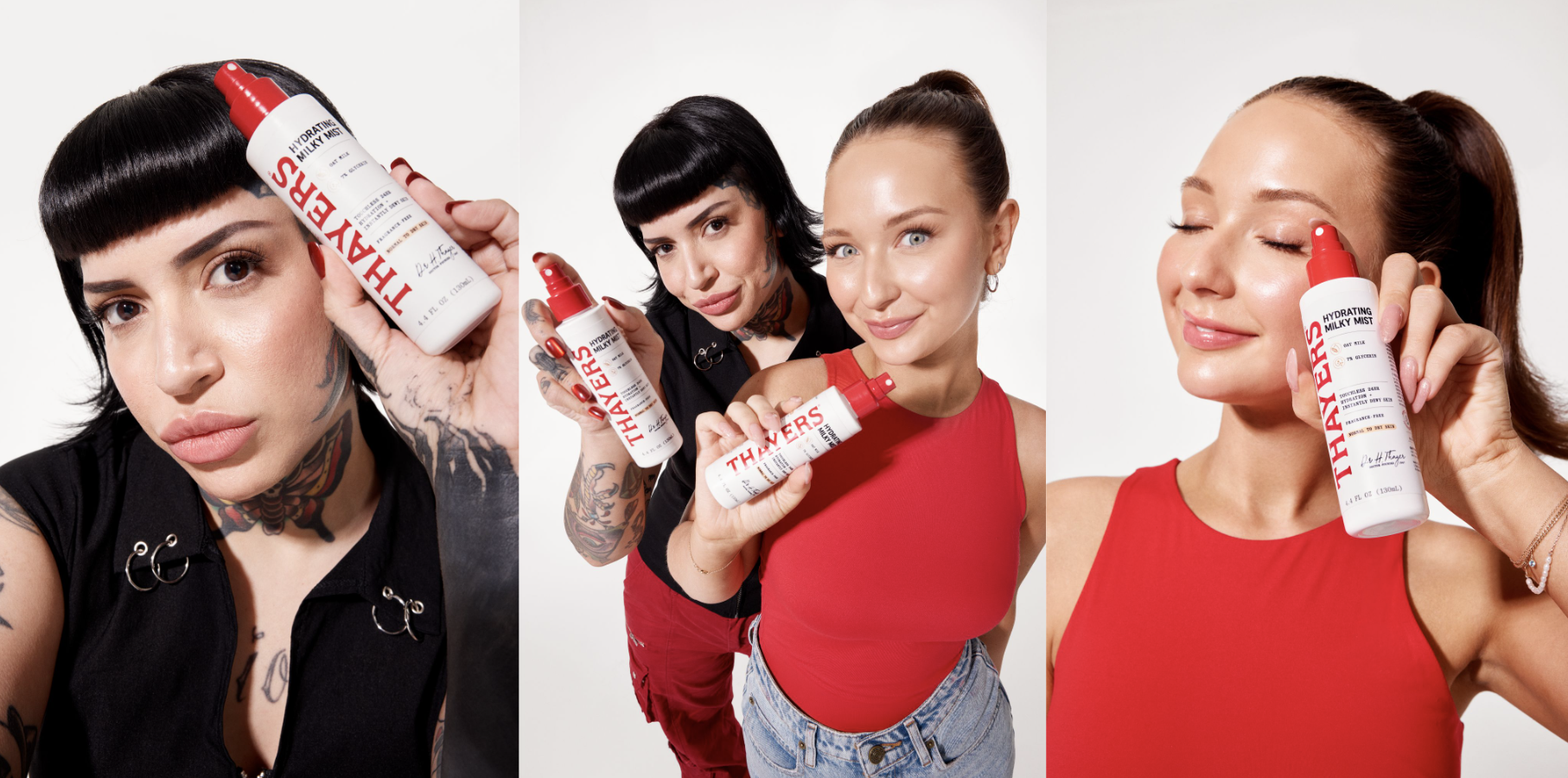

The creator economy has fundamentally shifted product development from boardroom decisions to community-validated innovation. Thayers' Hydrating Milky Mist case study reveals a critical competitive advantage: brands that leverage authentic creator relationships and real-time social feedback can achieve Amazon's #1 new beauty release status within 24 hours of launch. The product generated 15,000+ likes and nearly 1,000 comments during the ideation phase, with pre-sales beginning March 23, 2025, at $14.99 on Amazon. This represents a seismic shift in how beauty and personal care sellers must approach product development, marketing, and community engagement.
For cross-border beauty sellers, this trend creates both immediate opportunities and existential competitive pressure. Thayers' strategy bypassed traditional influencer marketing costs by prioritizing Nina Pool (6.2M TikTok followers) and Shelby Ann Bell (2.2M followers) as authentic brand advocates rather than paid partnerships. The brand's VP Stacey Goldstein monitored social conversations in real-time and responded same-day to community requests, demonstrating that agility and social listening infrastructure now determine market share velocity. Sellers competing in the $62B global beauty e-commerce market must recognize that product-market fit is no longer determined by R&D teams alone—it's validated by creator communities with combined reach exceeding 8+ million engaged followers. The "touchless" product description directly referenced Pool's accessibility needs as an autistic creator, signaling that inclusive design and authentic representation drive conversion rates and brand loyalty.
The operational implications are profound for Amazon FBA sellers and 3PL-dependent beauty brands. Thayers' approach required: (1) Real-time social media monitoring infrastructure, (2) Rapid product iteration capability (formula adjustment from original toner thickness), (3) Creator consultation access during go-to-market strategy, and (4) Inclusive community partnerships across demographics (mature skin, Black/Brown creators, male creators, makeup specialists). Sellers without these capabilities face a 24-48 hour competitive disadvantage in launch velocity. The brand's intimate launch event strategy—rather than mass influencer campaigns—suggests that micro-community engagement now outperforms broad-reach advertising. For sellers using Amazon Advertising, this indicates that creator-sourced content and community testimonials will increasingly dominate conversion metrics, requiring budget reallocation from traditional PPC toward creator partnership programs and user-generated content campaigns.
Sellers don't need access to 6M+ follower creators to implement community-validated product development. Start by identifying micro-creators (100K-500K followers) in your niche who already use your products authentically. Monitor TikTok and Instagram comments on competitor products to find creators requesting specific features or improvements. Reach out to these creators with product consultation opportunities rather than paid sponsorships—offer laboratory access, product approval authority, or equity in new SKUs. Thayers' strategy worked because Pool and Bell were already authentic advocates; sellers should prioritize finding existing community members requesting product improvements over recruiting unfamiliar creators. Use Amazon reviews and Q&A sections to identify customer pain points, then validate solutions with micro-creator communities before manufacturing. This approach requires social listening tools ($500-2,000/month) but eliminates expensive influencer marketing budgets.
The product's front-of-bottle description—'touchless'—directly referenced Nina Pool's accessibility needs as an autistic creator, signaling that inclusive design and authentic representation drive conversion rates and brand loyalty. This wasn't performative marketing; Pool's accessibility needs shaped actual product features, making the design authentic rather than tokenistic. Thayers' launch event emphasized inclusive brand partnerships across demographics including mature skin, Black and Brown creators, male creators, and both skincare and makeup specialists. For sellers, this indicates that products designed with input from underrepresented communities generate higher engagement, stronger creator advocacy, and faster Amazon ranking velocity. Inclusive design is no longer a CSR initiative—it's a competitive advantage in the creator economy.
Thayers priced the Hydrating Milky Mist at $14.99, positioning it as an accessible innovation rather than a premium product, which likely contributed to #1 new release status by sales volume. Creator-validated products can command premium pricing (15-25% above category average) due to authentic endorsement and community trust, but Thayers' strategy prioritized volume and market penetration. For sellers, this suggests that creator partnerships enable two pricing strategies: (1) Premium positioning ($25-40) for niche products with highly engaged micro-creator communities, or (2) Volume positioning ($10-20) for mass-market products leveraging large creator networks. The key is that creator validation reduces price sensitivity—customers trust creator-recommended products more than traditional advertising, allowing sellers to maintain margins despite competitive pressure. Monitor competitor pricing in your category and test whether creator partnerships justify 10-20% price premiums in your market segment.
Creator-validated products achieve higher Amazon New Release rankings and faster BSR improvement due to concentrated community engagement during launch windows. Thayers' #1 status within 24 hours suggests that pre-launch creator buzz directly impacts Amazon's algorithm ranking, making creator partnerships a critical component of FBA launch strategy. Sellers should plan 30-60 days of creator partnership before Amazon pre-sales to build social proof and engagement metrics. This requires: (1) Coordinating product shipment to creators 60 days pre-launch, (2) Allocating 10-15% of first-month inventory to creator giveaways and testing, (3) Preparing Amazon Enhanced Content and A+ pages with creator testimonials and UGC content, and (4) Budgeting $5,000-15,000 for creator consultation and content creation. The ROI is significant—Thayers achieved #1 status without paid Amazon Advertising, suggesting organic ranking velocity from creator engagement reduces PPC dependency by 40-60%.
Track four key metrics: (1) Pre-launch social engagement (likes, comments, shares on creator posts mentioning your product), (2) Amazon New Release ranking velocity (days to reach #1 in category), (3) First-30-day sales volume and BSR trajectory, and (4) Customer review sentiment and rating distribution. Thayers' 15,000+ likes and 1,000 comments during ideation phase likely predicted the #1 launch status; sellers should expect 1,000+ engaged comments per 1M creator followers as a baseline for successful partnerships. Track Amazon Advertising metrics separately—if creator-validated products achieve top rankings without PPC spend, your ROI is significantly higher than traditional launch strategies. Measure creator content performance (video views, shares, saves) as a leading indicator of product demand; Thayers' community response same-day indicated strong product-market fit before manufacturing. Use these metrics to refine creator selection and partnership terms for future launches.
Thayers leveraged authentic creator partnerships with Nina Pool (6.2M followers) and Shelby Ann Bell (2.2M followers) who organically suggested a sprayable version of their Milky Toner on June 5, 2025. Rather than paying unfamiliar creators, Thayers prioritized these established brand advocates and brought them to their New Jersey laboratory as brand consultants with final product approval authority. The strategy generated 15,000+ likes and nearly 1,000 comments during ideation, creating organic community validation before launch. Pre-sales began March 23, 2025, at $14.99, and the product achieved #1 status within 24 hours by sales volume. This demonstrates that authentic creator relationships and real-time community feedback now determine launch velocity more than traditional marketing budgets.
Sellers must implement real-time social listening infrastructure to monitor TikTok, Instagram, and YouTube conversations about their product categories and identify authentic creator advocates before launch. Thayers' VP Stacey Goldstein responded same-day to community requests with a poll asking if the brand should develop a milky mist, demonstrating that agility in social response now determines competitive advantage. Sellers should: (1) Identify 3-5 authentic creators with 1M+ followers already using their products, (2) Involve these creators in product iteration and testing (Shelby Ann Bell discovered the original formula was too thick for misting), (3) Grant creators final approval authority on product features, and (4) Plan intimate launch events with diverse creator communities rather than mass influencer campaigns. This approach reduces marketing spend while accelerating product-market fit validation.
Thayers prioritized authentic brand advocates with existing relationships over paying unfamiliar creators, fundamentally shifting from transactional influencer partnerships to collaborative product development. Traditional influencer marketing pays creators for content promotion; Thayers' approach involved creators in laboratory consultation, campaign content creation, and go-to-market strategy with final approval authority. This authentic partnership model generated higher engagement (15,000+ likes, 1,000 comments) and faster market validation than paid sponsorships typically achieve. The strategy also emphasized inclusive community partnerships across demographics (mature skin, Black/Brown creators, male creators, makeup specialists) rather than single-creator endorsements. For sellers, this signals that creator partnerships must evolve from paid posts to collaborative product development to remain competitive in 2025.
Sellers don't need access to 6M+ follower creators to implement community-validated product development. Start by identifying micro-creators (100K-500K followers) in your niche who already use your products authentically. Monitor TikTok and Instagram comments on competitor products to find creators requesting specific features or improvements. Reach out to these creators with product consultation opportunities rather than paid sponsorships—offer laboratory access, product approval authority, or equity in new SKUs. Thayers' strategy worked because Pool and Bell were already authentic advocates; sellers should prioritize finding existing community members requesting product improvements over recruiting unfamiliar creators. Use Amazon reviews and Q&A sections to identify customer pain points, then validate solutions with micro-creator communities before manufacturing. This approach requires social listening tools ($500-2,000/month) but eliminates expensive influencer marketing budgets.
The product's front-of-bottle description—'touchless'—directly referenced Nina Pool's accessibility needs as an autistic creator, signaling that inclusive design and authentic representation drive conversion rates and brand loyalty. This wasn't performative marketing; Pool's accessibility needs shaped actual product features, making the design authentic rather than tokenistic. Thayers' launch event emphasized inclusive brand partnerships across demographics including mature skin, Black and Brown creators, male creators, and both skincare and makeup specialists. For sellers, this indicates that products designed with input from underrepresented communities generate higher engagement, stronger creator advocacy, and faster Amazon ranking velocity. Inclusive design is no longer a CSR initiative—it's a competitive advantage in the creator economy.
Thayers priced the Hydrating Milky Mist at $14.99, positioning it as an accessible innovation rather than a premium product, which likely contributed to #1 new release status by sales volume. Creator-validated products can command premium pricing (15-25% above category average) due to authentic endorsement and community trust, but Thayers' strategy prioritized volume and market penetration. For sellers, this suggests that creator partnerships enable two pricing strategies: (1) Premium positioning ($25-40) for niche products with highly engaged micro-creator communities, or (2) Volume positioning ($10-20) for mass-market products leveraging large creator networks. The key is that creator validation reduces price sensitivity—customers trust creator-recommended products more than traditional advertising, allowing sellers to maintain margins despite competitive pressure. Monitor competitor pricing in your category and test whether creator partnerships justify 10-20% price premiums in your market segment.
Creator-validated products achieve higher Amazon New Release rankings and faster BSR improvement due to concentrated community engagement during launch windows. Thayers' #1 status within 24 hours suggests that pre-launch creator buzz directly impacts Amazon's algorithm ranking, making creator partnerships a critical component of FBA launch strategy. Sellers should plan 30-60 days of creator partnership before Amazon pre-sales to build social proof and engagement metrics. This requires: (1) Coordinating product shipment to creators 60 days pre-launch, (2) Allocating 10-15% of first-month inventory to creator giveaways and testing, (3) Preparing Amazon Enhanced Content and A+ pages with creator testimonials and UGC content, and (4) Budgeting $5,000-15,000 for creator consultation and content creation. The ROI is significant—Thayers achieved #1 status without paid Amazon Advertising, suggesting organic ranking velocity from creator engagement reduces PPC dependency by 40-60%.
Track four key metrics: (1) Pre-launch social engagement (likes, comments, shares on creator posts mentioning your product), (2) Amazon New Release ranking velocity (days to reach #1 in category), (3) First-30-day sales volume and BSR trajectory, and (4) Customer review sentiment and rating distribution. Thayers' 15,000+ likes and 1,000 comments during ideation phase likely predicted the #1 launch status; sellers should expect 1,000+ engaged comments per 1M creator followers as a baseline for successful partnerships. Track Amazon Advertising metrics separately—if creator-validated products achieve top rankings without PPC spend, your ROI is significantly higher than traditional launch strategies. Measure creator content performance (video views, shares, saves) as a leading indicator of product demand; Thayers' community response same-day indicated strong product-market fit before manufacturing. Use these metrics to refine creator selection and partnership terms for future launches.
Thayers leveraged authentic creator partnerships with Nina Pool (6.2M followers) and Shelby Ann Bell (2.2M followers) who organically suggested a sprayable version of their Milky Toner on June 5, 2025. Rather than paying unfamiliar creators, Thayers prioritized these established brand advocates and brought them to their New Jersey laboratory as brand consultants with final product approval authority. The strategy generated 15,000+ likes and nearly 1,000 comments during ideation, creating organic community validation before launch. Pre-sales began March 23, 2025, at $14.99, and the product achieved #1 status within 24 hours by sales volume. This demonstrates that authentic creator relationships and real-time community feedback now determine launch velocity more than traditional marketing budgets.
Sellers must implement real-time social listening infrastructure to monitor TikTok, Instagram, and YouTube conversations about their product categories and identify authentic creator advocates before launch. Thayers' VP Stacey Goldstein responded same-day to community requests with a poll asking if the brand should develop a milky mist, demonstrating that agility in social response now determines competitive advantage. Sellers should: (1) Identify 3-5 authentic creators with 1M+ followers already using their products, (2) Involve these creators in product iteration and testing (Shelby Ann Bell discovered the original formula was too thick for misting), (3) Grant creators final approval authority on product features, and (4) Plan intimate launch events with diverse creator communities rather than mass influencer campaigns. This approach reduces marketing spend while accelerating product-market fit validation.
Thayers prioritized authentic brand advocates with existing relationships over paying unfamiliar creators, fundamentally shifting from transactional influencer partnerships to collaborative product development. Traditional influencer marketing pays creators for content promotion; Thayers' approach involved creators in laboratory consultation, campaign content creation, and go-to-market strategy with final approval authority. This authentic partnership model generated higher engagement (15,000+ likes, 1,000 comments) and faster market validation than paid sponsorships typically achieve. The strategy also emphasized inclusive community partnerships across demographics (mature skin, Black/Brown creators, male creators, makeup specialists) rather than single-creator endorsements. For sellers, this signals that creator partnerships must evolve from paid posts to collaborative product development to remain competitive in 2025.
Sellers don't need access to 6M+ follower creators to implement community-validated product development. Start by identifying micro-creators (100K-500K followers) in your niche who already use your products authentically. Monitor TikTok and Instagram comments on competitor products to find creators requesting specific features or improvements. Reach out to these creators with product consultation opportunities rather than paid sponsorships—offer laboratory access, product approval authority, or equity in new SKUs. Thayers' strategy worked because Pool and Bell were already authentic advocates; sellers should prioritize finding existing community members requesting product improvements over recruiting unfamiliar creators. Use Amazon reviews and Q&A sections to identify customer pain points, then validate solutions with micro-creator communities before manufacturing. This approach requires social listening tools ($500-2,000/month) but eliminates expensive influencer marketing budgets.
The product's front-of-bottle description—'touchless'—directly referenced Nina Pool's accessibility needs as an autistic creator, signaling that inclusive design and authentic representation drive conversion rates and brand loyalty. This wasn't performative marketing; Pool's accessibility needs shaped actual product features, making the design authentic rather than tokenistic. Thayers' launch event emphasized inclusive brand partnerships across demographics including mature skin, Black and Brown creators, male creators, and both skincare and makeup specialists. For sellers, this indicates that products designed with input from underrepresented communities generate higher engagement, stronger creator advocacy, and faster Amazon ranking velocity. Inclusive design is no longer a CSR initiative—it's a competitive advantage in the creator economy.