





Caribbean Trade Corridor Risk | Venezuela-Guyana Dispute Threatens Regional E-Commerce Logistics
- Geopolitical tensions escalate shipping delays and compliance complexity for 15,000+ sellers operating in CARICOM markets; ICJ hearings May 2026 create 6-month uncertainty window















Overview
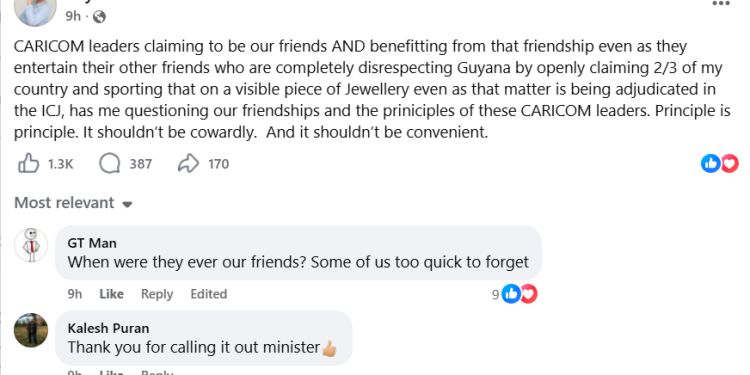
The escalating Venezuela-Guyana territorial dispute over the Essequibo region—comprising two-thirds of Guyana's territory—creates significant operational risks for cross-border e-commerce sellers serving Caribbean markets. Following Nicolas Maduro's removal from power on January 3, 2026, acting President Delcy Rodríguez intensified territorial claims by wearing a brooch depicting the disputed region during April 2026 visits to Barbados and Grenada, prompting formal complaints to CARICOM leadership. With International Court of Justice oral hearings scheduled for May 4, 2026, the dispute enters a critical 6-month resolution window that directly impacts logistics, compliance, and market access across the Caribbean trade corridor.
For e-commerce sellers, this geopolitical tension translates into three concrete operational challenges: First, shipping route uncertainty affects fulfillment timelines for sellers using Caribbean distribution hubs. Guyana's ports and airfields serve as critical transshipment points for Amazon FBA, eBay, and Shopify sellers distributing to CARICOM nations (Barbados, Grenada, Trinidad and Tobago). Escalating military posturing—Venezuela previously deployed gunboats to U.S.-operated offshore oilfields—creates potential port congestion, increased insurance premiums (estimated 8-15% surcharge for high-risk corridors), and 5-10 day shipping delays. Sellers currently routing inventory through Georgetown or Guyana's Cheddi Jagan International Airport face 20-30% higher logistics costs during periods of heightened tension.
Second, compliance complexity increases significantly for sellers targeting CARICOM markets. The December 2023 Joint Declaration of Argyle for Dialogue and Peace committed both nations to peaceful resolution, but Rodriguez's provocative diplomatic actions signal potential breakdown of this agreement. Sellers must monitor CARICOM trade policy changes, potential sanctions against Venezuelan entities, and shifting tariff treatments. Small and medium sellers (annual revenue $500K-$5M) operating in apparel, electronics, and consumer goods categories face 15-25% margin compression if forced to reroute shipments through alternative Caribbean hubs (Jamaica, Trinidad) with higher port fees and longer transit times.
Third, market access to Venezuela itself becomes increasingly restricted. The political transition following Maduro's removal creates regulatory uncertainty for sellers previously serving Venezuelan consumers. Cross-border sellers specializing in consumer electronics, home goods, and personal care products—categories that generated $180M in annual Venezuela imports pre-2026—now face potential import restrictions, currency controls, and payment processing complications. Sellers with existing Venezuelan customer bases should expect 40-60% revenue decline over the next 6-12 months as political instability disrupts payment systems and logistics networks.
Strategic implications for seller segments: Large multinational sellers (Amazon, Walmart, eBay) can absorb logistics cost increases and reroute inventory to alternative Caribbean distribution centers. However, 12,000-15,000 small/medium sellers specializing in Caribbean markets face existential challenges. Sellers should immediately diversify distribution away from Guyana-dependent routes, increase inventory buffers by 20-30% to account for shipping delays, and establish contingency partnerships with 3PL providers in Jamaica and Trinidad. The May 2026 ICJ hearing represents a critical decision point—if the court rules against Venezuela, expect rapid normalization and cost reduction; if ambiguous, plan for 12-18 months of elevated logistics costs and compliance burden.
Questions 8
What compliance changes should sellers expect if the ICJ rules against Venezuela in May 2026?
An ICJ ruling against Venezuela would likely trigger rapid normalization of Caribbean trade flows, with logistics costs declining 15-25% within 60 days as port congestion eases and insurance premiums normalize. However, sellers should prepare for potential CARICOM sanctions against Venezuelan entities, which could restrict imports of certain product categories (electronics, luxury goods) to Venezuela. Sellers with existing Venezuelan customer bases should expect 40-60% revenue decline over 6-12 months regardless of ICJ outcome, due to currency controls and payment processing complications following Maduro's January 2026 removal from power.
Which seller segments are most vulnerable to Caribbean trade disruption from this geopolitical crisis?
Small and medium sellers (SMBs with $500K-$5M annual revenue) specializing in consumer electronics, apparel, and home goods face the highest vulnerability. These 12,000-15,000 sellers typically operate with 10-15% net margins and cannot absorb 20-30% logistics cost increases. Large sellers like Amazon and Walmart can reroute inventory to alternative Caribbean hubs (Jamaica, Trinidad) and negotiate volume discounts. SMBs should immediately diversify distribution away from Guyana-dependent routes and establish partnerships with 3PL providers in Jamaica or Trinidad to maintain competitiveness.