






AI Investment Bubble Bursts: Broadcom's $219 Billion Market Meltdown Signals Tech Sector Recalibration
- Emerging AI market faces harsh reality check as investor sentiment shifts toward profitability over potential


































Overview
The technology investment landscape experienced a seismic tremor this week, with Broadcom's dramatic $219 billion market capitalization loss revealing the fragile underpinnings of the artificial intelligence investment narrative. This unprecedented decline represents more than a single company's earnings miss—it signals a profound reassessment of AI's near-term economic potential.
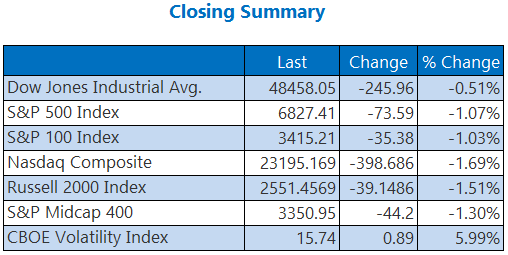
The market's reaction reflects a critical inflection point in technological valuation dynamics. Despite Broadcom beating Wall Street expectations, investors punished the stock for complex margin commentary and uncertain AI revenue projections. The Nasdaq composite's 1.7% decline and broader tech sector volatility underscore a growing skepticism about the immediate monetization of artificial intelligence technologies.
Critically, this market movement occurs against a nuanced macroeconomic backdrop. The Federal Reserve's recent interest rate cut typically signals economic optimism, yet technology stocks faced significant pressure. This suggests investors are no longer accepting speculative narratives about AI's potential, demanding concrete evidence of revenue generation and margin sustainability.
The global market landscape further illuminates this transition. While Asian markets showed resilience and gold prices marginally increased, the underlying sentiment reveals a sophisticated recalibration. Investors are now scrutinizing AI investments with unprecedented rigor, evaluating not just technological capability but precise paths to profitability.
UBS strategists' continued optimism about U.S. equities—with price targets of 7,300 for June 2026—indicates this is not a wholesale rejection of AI's potential, but a necessary market correction. The 'sell the news' dynamic triggered by Broadcom's earnings suggests a maturing investment ecosystem that demands more than promising technology—it requires demonstrable economic value.
Questions 3
Why did Broadcom's stock drop so dramatically despite beating earnings expectations?
Broadcom's stock plummeted due to complex margin commentary and uncertainty surrounding AI revenue projections. Investors are now demanding concrete evidence of monetization, not just technological potential. The company's earnings report raised questions about its contract backlog and future margins in the competitive AI hardware sector.
What does this market movement indicate about AI investments?
The market is transitioning from speculative excitement to a more rigorous evaluation of AI technologies. Investors are now focusing on clear paths to profitability, demanding precise revenue models and margin sustainability rather than accepting broad promises of technological potential.